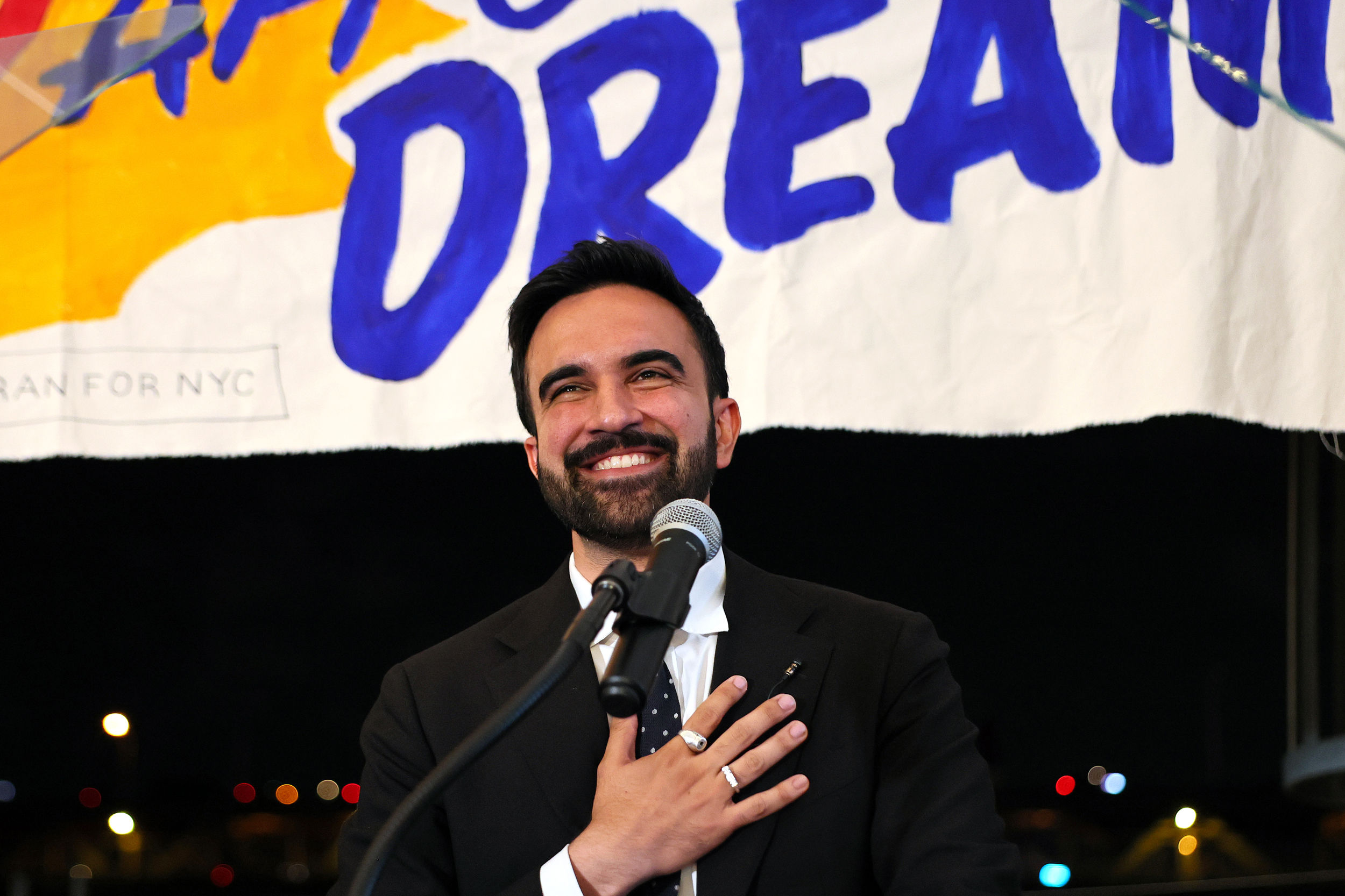
How the Rise of a Progressive Candidate in America’s Largest City Is Shifting the Political Orientation of the Country’s Dominant Party.
In a city like New York, which has always served as a symbol of financial elites and the Democratic Party’s “moderate” policies, the outcome of the 2025 mayoral election stands as a stark warning bell. Zohran Mamdani’s victory is not merely a personnel change at City Hall but a symbol of the shifting balance of power within the Democratic Party and a transformation in the national political landscape.
New York, comprising five key boroughs—Bronx, Queens, Brooklyn, Manhattan, and Staten Island—with their diverse social, economic, racial, and religious compositions, cannot have its election results reduced simply to the “low-income voters” or “minorities.” The present analysis demonstrates that Mamdani’s victory represents three principal axes:
- Transcending traditional regional voting divisions
- Forming a new coalition grounded in economic justice and identity
- Redefining the Democratic Party’s trajectory at the national level
A crucially important and noteworthy point is that Zohran Mamdani’s victory signals the onset of a new phase in American politics.
The Urban Context and Borough Diversity
The Bronx, recognized as the poorest borough with a predominantly Black and Latino population, contrasts sharply with Manhattan, which boasts a far higher median income and a different demographic makeup, encompassing middle and upper classes. Brooklyn, Queens, and Staten Island each possess their own distinct social coordinates.
Yet, the data reveal that, contrary to predictions, Mamdani did not secure first place in the Bronx; instead, he performed better in areas like Brooklyn and Manhattan. This indicates that his discourse has succeeded beyond low-income strata, managing to attract a broader array of urban classes and populations.
The Voter Coalition and the Discourse of Social Justice
One of the distinguishing features of this victory lies in the nature of the voter coalition. Mamdani, with promises such as providing free public transportation and healthcare for children, succeeded in drawing in a wide swath of the urban middle class and youth.
His immigrant identity, Muslim faith, and Ugandan-Indian background gave rise to an identity distinct from that of traditional Democratic candidates. This identity held particular appeal for the younger generation, the city’s new natives, and those who felt “voiceless.”
The result is that Mamdani’s success should not be attributed solely to the “votes of low-income neighborhoods”; rather, it speaks to the fact that policies centered on economic justice and reducing the cost of living can succeed even in elite, high-cost cities.
Redefining the Democratic Party and National Implications
Mamdani’s victory carries profound significance for the Democratic Party and American politics. It demonstrates that an emerging wing of the Democratic Party—young progressives with a discourse of economic justice and opposition to traditional financial structures—can thrive in the political marketplace.
On the other hand, the party’s moderate faction and financial elites have felt the sting of warning, as the result reveals the existence of an alternative path to the traditional strategy. In the realm of foreign policy, Mamdani’s positions on Palestine and his critique of America’s longstanding relationship with Israel suggest that the Democratic Party may need to reassess its policy lines.
This implies that the 2026 midterms and the 2028 presidential election could witness the emergence of candidates espousing a progressive discourse, or that moderate candidates will be compelled to adopt progressive language and platforms.
Limitations and Challenges
Despite this striking success, several challenges persist:
- The acceptability of the progressive discourse among independent and centrist voters remains unconsolidated. Some analysts have warned that the model of success in New York may not prove equally effective in swing states.
- Victory at the municipal level differs from triumph on the national stage; budgets, media, and entrenched financial interests are far more formidable, and it remains to be seen whether the new discourse can navigate these scales successfully.
- Focusing on major cities and urban minorities alone is insufficient, particularly in rural areas, among middle-class whites, and independent voters.
Nevertheless, a significant opportunity also exists: the wave of public fatigue with elite policies, the rising cost of living, and housing crises could pave the way for the success of the progressive discourse.
Zohran Mamdani’s victory is more than a local electoral success. It symbolizes a power shift from the bottom up and indicates that the Democratic Party finds itself in a new situation.
At the urban level, policies have pivoted toward social justice, public services, and reducing living costs. At the national level, this outcome suggests that future elections may present a different image of the Democratic Party.
If the current trend persists, it is likely that in the 2026 midterms or the 2028 presidential race, candidates will emerge who place the progressive discourse at their core. Yet the principal challenge lies in the acceptance of this discourse among independent voters in swing and urban areas—those who also harbor concerns about security and public order.
In the end, this victory poses a profound question before us: Is this merely an “electoral shock,” or the dawn of a “political leap” for the progressive discourse? The answer may become clear in the next elections.