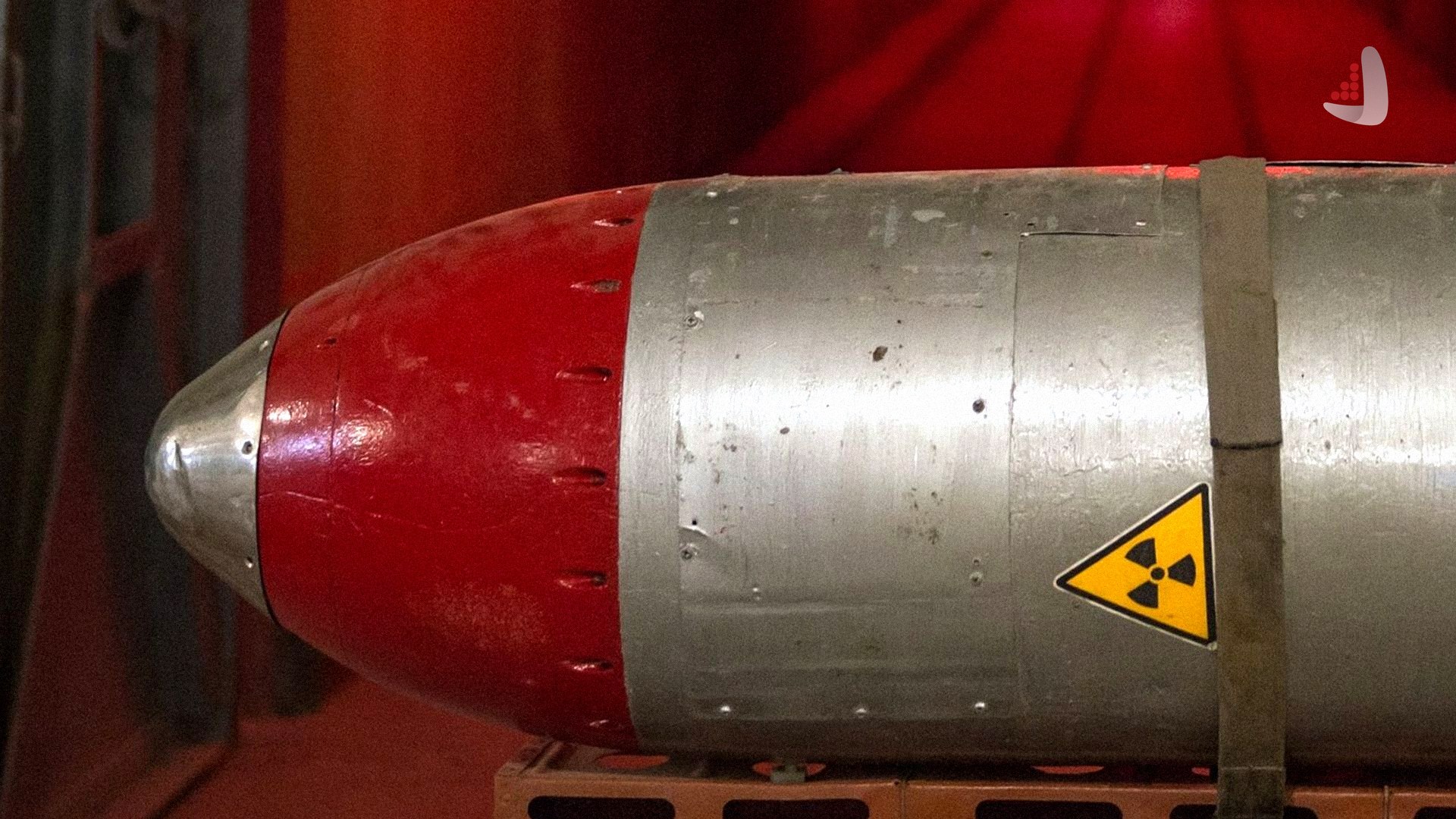
Conventional armaments cannot provide Iran with complete deterrence in the absence of a strategic weapon.
According to Atlas Diplomacy, an article titled “The Difference Between a Deterrent Weapon and Conventional Armaments,” written by Mohammad Monsan and published by Iranian Diplomacy, distinguishes between strategic weapons and conventional armaments. It argues that missile and drone capabilities, despite their operational importance, cannot substitute for a capacity capable of making the cost of attacking Iran intolerable for the enemy. This, the article suggests, makes a reconsideration of the foundations of the country’s defense doctrine necessary. What follows is a summary of the article.
The distinction between a deterrent weapon and conventional armaments is defined by the extent to which each affects an adversary’s calculations. A deterrent weapon is a strategic instrument that, by creating the possibility of extensive and intolerable damage, raises the cost of attack to such a level that choosing aggression becomes irrational. Within this framework, nuclear weapons are presented as the only example that has thus far succeeded in creating a form of mutual fear and deterrence equilibrium between rival powers.
The experience of U.S.-Soviet nuclear competition, the conflict between India and Pakistan, and relations between Russia and NATO demonstrates that the mutual possession of the capacity for large-scale destruction has reduced the likelihood of direct attack. By contrast, when only one side possesses nuclear weapons, the possibility of their use—or the threat of their use—increases. The bombings of Hiroshima and Nagasaki are presented as a historical example of this asymmetry, while nuclear threats against countries lacking such capabilities may likewise be analyzed within the same framework.
Under this classification, strategic nuclear weapons are intended to inflict damage on a national scale, while tactical nuclear weapons are designed to destroy major military or urban targets. Their principal distinction from conventional munitions lies not merely in explosive power, but also in their psychological, political, and decision-shaping effects. It is precisely this capacity for immediate destruction that can alter an aggressor’s calculations before a war begins, replacing defense after an attack with deterrence before one occurs.
Conventional armaments—from ballistic and cruise missiles to drones—are important for military operations, territorial defense, and imposing costs on an aggressor. On their own, however, they cannot establish complete deterrence against a power equipped with strategic weapons. Nor can a large quantity of such armaments substitute for the capacity of a strategic weapon to inflict immediate and extensive destruction. The comparison between a reinforced door and a collection of smaller defensive tools is used to explain this distinction: conventional tools may drive an attacker back, but they cannot necessarily prevent the initial breach or repeated attacks.
Applied to Iran’s defense posture, this argument concludes that recent attacks have exposed the limits of the country’s conventional deterrence. The large-scale launch of missiles and drones may inflict damage and demonstrate Iran’s ability to retaliate, but the financial cost, the depletion of stockpiles, and the difficulty of reproducing these systems raise questions about the sustainability of such an approach. In the event of another war, reliance on thousands of conventional projectiles could gradually erode the country’s defense and industrial resources.
By contrast, the limited nuclear arsenals of North Korea, Israel, Pakistan, and India are presented as examples of how a relatively small number of weapons can raise the cost of a direct attack. From this perspective, a strategic weapon is not merely an instrument of warfare, but a means of preventing war from beginning in the first place. The ultimate conclusion is that Iran must move its defense doctrine beyond exclusive reliance on conventional retaliation and decide whether to establish a credible strategic deterrent. In the absence of such deterrence, the threat of further attacks and the targeting of command centers will remain.