Although Turkey’s original justifications for deploying troops in Iraq and Syria have waned, Ankara is setting new security conditions to preserve its military footprint.
According to Atlas Diplomacy, an analysis titled “Ankara’s Open-Ended Conditions for Maintaining Military Forces in Syria and Iraq” by Paul Iddon has been published in The New Arab. This analysis shows that while the PKK peace process and the integration of the SDF into Syria’s new army have weakened Turkey’s traditional pretexts for cross-border military deployments, Ankara is now basing its continued presence on new geopolitical calculations, including deterring Israel in Syria and addressing security threats against Saudi Arabia. Below is a summary of the piece.
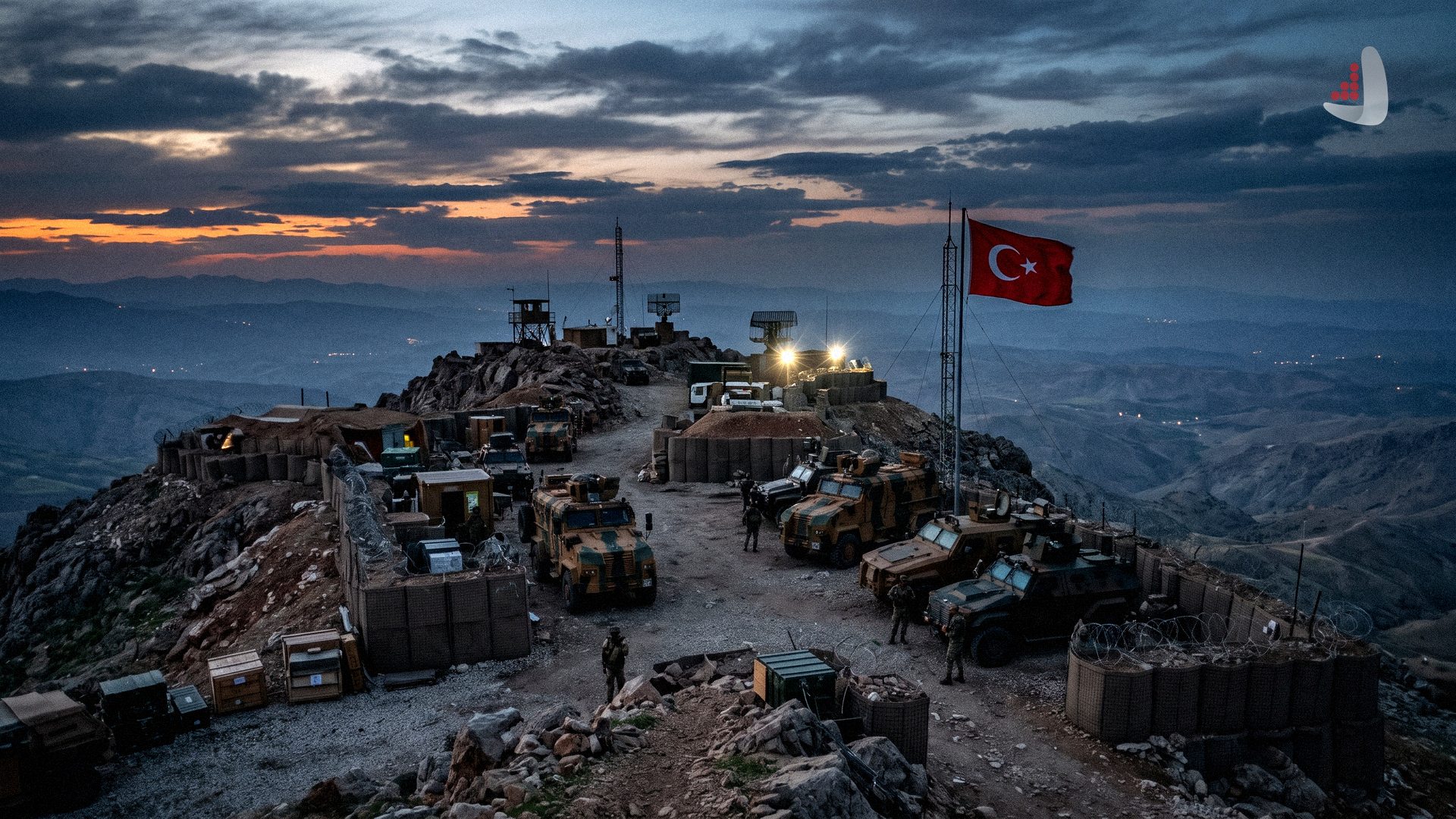
Turkish Defense Minister Yasar Guler recently stated that Turkey will maintain its military presence in Iraq and Syria until necessary border and regional security conditions are met. Turkey deployed troops into northern Syria in 2016 primarily to target the Kurdish-led Syrian Democratic Forces (SDF), and since the 1990s it has established a network of bases across Iraq’s Nineveh province and the Kurdistan region to combat the Kurdistan Workers’ Party (PKK). However, an agreement earlier this year to integrate SDF fighters into the new Syrian army under interim President Ahmed al-Sharaa, alongside an ongoing peace and disarmament process with the PKK, has undermined Ankara’s longstanding justifications for keeping these bases.
According to data from the Armed Conflict Location and Event Data Project (ACLED), Turkish strikes in Iraqi Kurdistan have plummeted since the latest PKK peace talks began—dropping from 4,861 strikes in 2024 to 634 in 2025, and to zero so far in 2026. In September, Turkey agreed to gradually vacate its Bashiqa base in Nineveh in exchange for Baghdad establishing full state authority in Sinjar and removing PKK-linked groups. Even so, analysts view the handover of Bashiqa—Turkey’s furthest base from its border—as a low-cost concession rather than a strategic withdrawal, noting that a real drawdown will only begin when forward bases along the border start closing.
Analysts argue that Ankara continually adjusts its conditions for withdrawal as regional dynamics shift. In Iraq, beyond demanding the complete disarmament of the PKK in Sinjar and Qandil, Turkey’s commitments under the trilateral “Mecca Defense Pact” with Pakistan and Saudi Arabia have prompted Ankara to factor in the weapons and drone capabilities of Iraq’s Popular Mobilization Forces (PMF) and the threat they pose to Riyadh. Moreover, a wider regional escalation in the Yemen war or the US-Israel war against Iran could compel armed factions across Iraq to abandon current arrangements.
In Syria, meanwhile, Ankara has tied any military exit to the al-Sharaa government establishing full authority across the country and the absence of Israeli military pressure. Repeated Israeli airstrikes on Syrian airbases that Turkey had evaluated for potential use have heightened the risk of direct confrontation between the two regional powers. Although President al-Sharaa announced in September that Damascus is moving to grant temporary legal status to Turkish bases in northwestern Syria—seeking to regulate and eventually reduce foreign forces much like the August agreement converting Russian bases at Tartus and Hmeimim into joint training centers—Turkey’s 900-kilometer land border with Syria makes it unlikely that Ankara will fully withdraw from northern Syria in the medium term./ Source