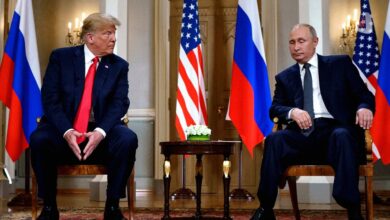
The CIA continues to help strengthen Ukraine’s military capabilities against Russia, while Trump moves closer to Putin.
According to Atlas Diplomacy, an article titled “The Pivotal Man in Trump’s Dual Policy Toward Ukraine,” written by Shane Harris and published in The Atlantic, examines the contradiction between Donald Trump’s political stance toward Ukraine and the continuation of Washington’s intelligence and operational support for Kyiv, focusing on the role of John Ratcliffe, Director of the U.S. Central Intelligence Agency. The following is a summary of the article.
The Donald Trump administration’s policy toward the Russia-Ukraine war faces an apparent divide between the White House’s political positions and the activities of the U.S. intelligence apparatus. While Trump has repeatedly criticized Ukrainian leaders and sought to establish relations with Vladimir Putin, U.S. intelligence agencies continue to play an important role in supporting Ukraine and countering Russia’s invasion. This situation reveals a contradiction in Washington’s foreign policy: on the one hand, the president seeks an agreement with Moscow, while on the other, an institution under his administration’s leadership is helping strengthen Ukraine’s capabilities to confront Russia.
Tensions between Trump and Volodymyr Zelensky, the president of Ukraine, have intensified in recent weeks. Trump has called for the election of a new president in Ukraine and described Zelensky as more difficult to negotiate with than Putin. He has also accused the Ukrainian leader of prolonging the war and claimed that, despite declaring his willingness to reach an agreement, Zelensky is not genuinely seeking a resolution to the conflict. These remarks place some of the responsibility for the continuation of the war on Kyiv, even though Russia’s military invasion is the primary cause of the current conflict.
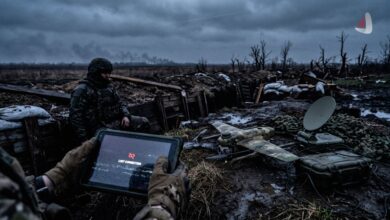
Despite these political positions, U.S. intelligence cooperation with Ukraine continues. The intelligence Washington provides to the Ukrainian military has helped the country carry out strikes deep inside Russian territory. In addition, U.S. spy satellites provide early warnings about incoming missiles and drones, a capability that is important for identifying threats, improving defensive preparedness, and reducing the vulnerability of Ukrainian forces. In this context, the U.S. Central Intelligence Agency, commonly known as the CIA, occupies a pivotal position in providing operational support to Ukraine.
Reports citing former intelligence officials and individuals familiar with security cooperation in the region indicate that the CIA’s activities in Ukraine have not only continued but have also become more aggressive compared with the presidency of Joe Biden. This assessment suggests that a change in the U.S. president’s rhetoric has not necessarily resulted in simultaneous changes across all dimensions of the country’s security policy. The U.S. intelligence apparatus continues to regard Russia as a serious threat and helps strengthen Ukraine’s ability to confront it.
At the center of this complex situation is John Ratcliffe, Director of the CIA. He must simultaneously manage two difficult responsibilities: on the one hand, he serves as an adviser to a president whose relations with Ukraine’s leadership are strained; on the other, he leads an organization whose support is essential to Ukraine’s continued resistance. This position places Ratcliffe at the intersection of the president’s political objectives and the operational requirements of intelligence agencies. Managing such a conflict requires maintaining coordination among the White House, the intelligence community, and U.S. security partners.
This situation also raises questions about the coherence of U.S. strategy toward Russia. If Washington pursues an agreement with Moscow at the political level while simultaneously increasing intelligence support for Ukrainian operations, it may send conflicting messages to the parties involved. From one perspective, continued intelligence support can preserve Ukraine’s defensive capabilities and bargaining power. From another, the divergence between political positions and operational activities can make it more difficult to develop a clear strategy for ending the war.
Nevertheless, the continuation of intelligence cooperation indicates that U.S. security considerations continue to operate beyond the personal relationships between leaders and the president’s public statements. The intelligence apparatus may adopt an approach that differs from the White House’s diplomatic rhetoric, based on its assessment of Russian threats and the operational needs of allies. Ultimately, the success of Washington’s policy will depend on the government’s ability to coordinate diplomatic objectives with security requirements, because efforts to move closer to Moscow without clarifying the extent of support for Ukraine and addressing the Russian threat could intensify America’s strategic contradictions./ Source