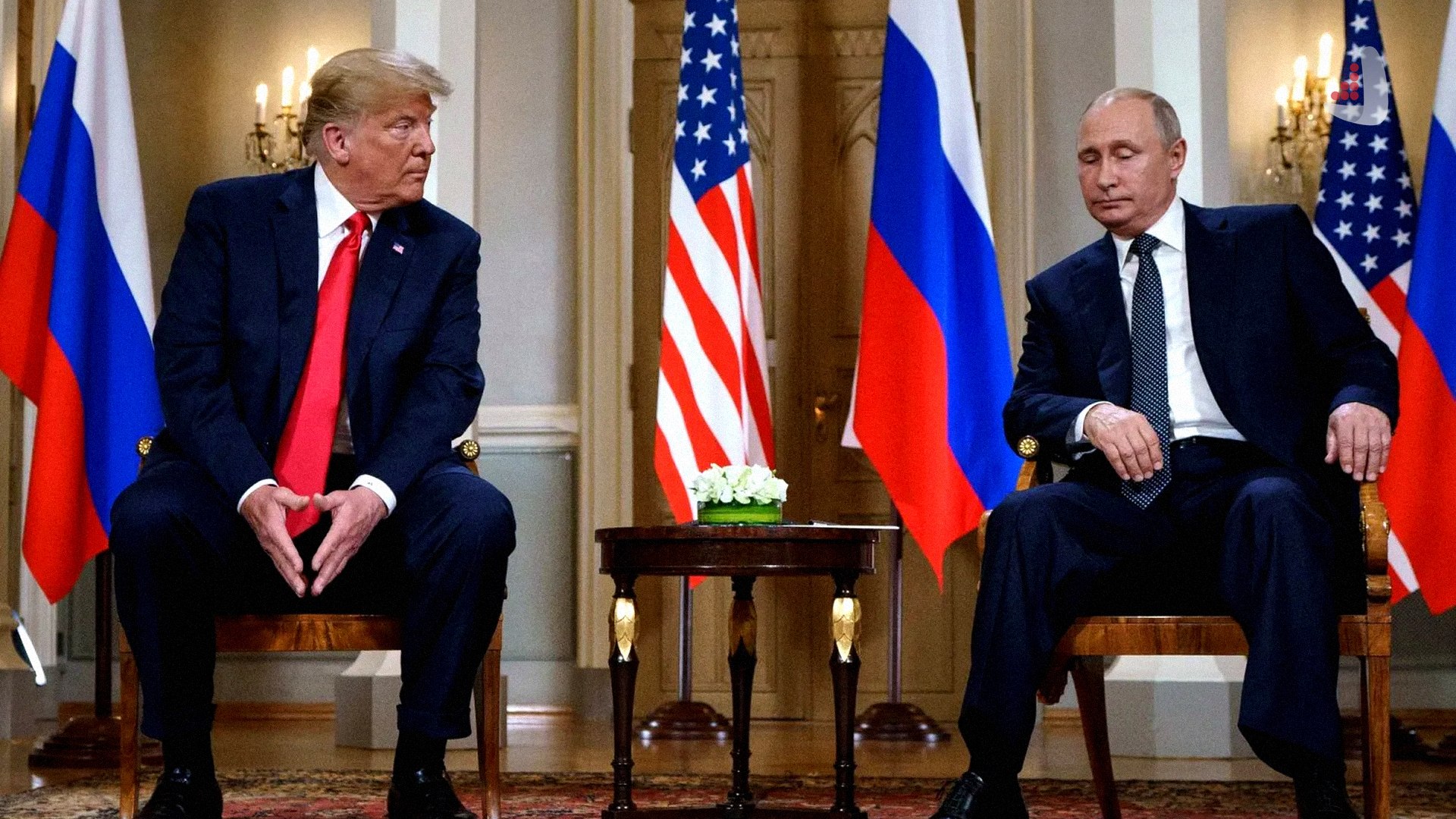
Trump cannot persuade Putin to make peace with Ukraine by relying on economic incentives.
According to Atlas Diplomacy, an article titled “Trump’s Inability to Persuade Putin to Reach a Deal,” written by Thomas Wright and published in The Atlantic, examines the failure of Donald Trump’s transactional approach toward Russia. It argues that ending the war in Ukraine requires taking Moscow’s ideological, nationalist, and strategic considerations into account, as well as establishing effective leverage over the Kremlin. The following is a summary of the article.
Donald Trump’s efforts to end the Russia-Ukraine war are based on the assumption that offering economic incentives and outlining the financial benefits of peace can persuade Vladimir Putin to reach an agreement. However, the logic governing international politics often differs from economic calculations and conventional deal-making. In conflicts intertwined with nationalism, ideology, power competition, and strategic objectives, financial offers alone cannot change leaders’ calculations. Washington’s current approach also risks overlooking this reality, a problem that not only makes reaching an agreement more difficult but could also prolong the war and expand its scope.
A historical example of this issue occurred in 1965, when then-U.S. President Lyndon Johnson proposed implementing a development program similar to the Tennessee Valley Authority in North Vietnam if Hanoi halted its support for the insurgency in South Vietnam. Johnson believed that the economic benefits of the proposal would encourage the North Vietnamese leader to accept it, but Ho Chi Minh rejected the offer. This experience demonstrated that national leaders may prioritize their political and strategic objectives over short-term economic benefits. Consequently, the transactional logic that works in business relations or domestic politics does not necessarily produce similar results in the realm of geopolitical competition.
Trump has encountered a similar limitation during his second presidential term. He initially expected Putin to quickly agree to freeze the war along existing territorial lines and provide assurances that Ukraine would not join NATO. However, the continuation of the war demonstrated that such concessions were insufficient to change the Kremlin’s calculations. In response, rather than strengthening Ukraine’s position on the battlefield or increasing economic pressure on Russia through sanctions, the U.S. administration sought to turn a peace agreement into an opportunity to secure financial benefits.
Changes to the composition of the U.S. negotiating team were also part of this approach. After the Kremlin objected to the positions of Keith Kellogg, the U.S. special envoy for Ukraine, Trump removed him from the negotiating team and replaced him with Steve Witkoff, a real estate investor and one of his close associates. Russia viewed Kellogg as excessively aligned with Ukraine’s positions. Meanwhile, Russian investor Kirill Dmitriev was considered a channel for communication between Trump and Putin. These changes reflected an effort to advance negotiations through personal connections and discussions based on economic interests.
However, the central issue in Putin’s calculations is not simply the amount of potential economic gain resulting from an agreement. Russia’s strategic objectives in Ukraine, the Kremlin’s perception of national security, the country’s position in the European order, and its competition with the West are all factors that can influence Moscow’s decision-making. If Russian leaders believe that their fundamental objectives have not yet been achieved, promises of investment, trade, or the removal of certain economic restrictions may not be sufficient to change the course of the war.
Under these circumstances, attempting to win Moscow’s approval through financial concessions without changing its strategic calculations could weaken U.S. bargaining power. If the Kremlin believes that Washington is more interested in reaching a quick agreement than in emphasizing the costs of continuing the war, it will have less incentive to retreat. On the other hand, weakening Ukraine’s position in negotiations or on the battlefield could reinforce the perception that continuing the war is more beneficial for Russia than accepting an agreement.
Therefore, achieving lasting peace requires a combination of diplomacy, effective pressure, and attention to the balance of power. Strengthening Ukraine’s defensive capabilities, maintaining economic leverage, and making the costs of continuing the war clear could change the Kremlin’s calculations. Ultimately, an agreement becomes more feasible when continuing the war is more costly for Russia than compromise and when the political and security terms of the agreement are aligned with the actual interests of the parties involved./ Source