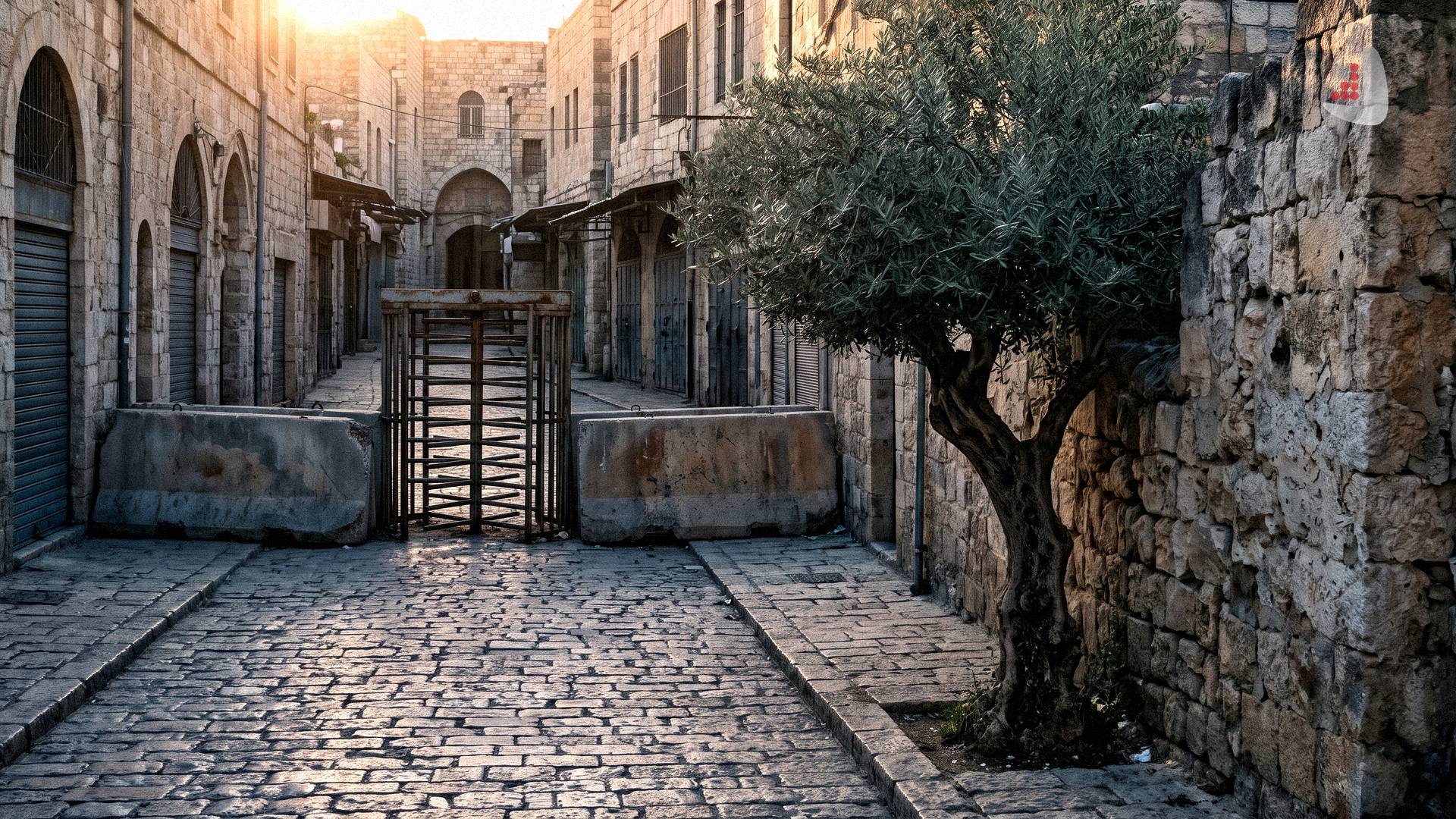
Imposing widespread lockdowns and collective punishment against Hebron residents alongside structural tolerance for settler violence exposes two unequal legal and security systems in the West Bank.
According to Atlas of Diplomacy, an opinion piece titled “Security Double Standards in Hebron: Collective Punishment of Palestinians Versus Impunity for Settlers” penned by Samer Sinijlawi was published in The Jerusalem Post. Examining the Israeli military’s sweeping operation in the city of Hebron following the October 23 shooting, this piece argues that turning the daily lives of Palestinian citizens into an instrument of political pressure while settler attacks continue without deterrence fundamentally undermines stability and security. Below is a summary of the piece.
Following the October 23 armed attack near Hebron that killed two Israeli soldiers, the Israeli military implemented sweeping measures across the city, including road closures, home raids, demolitions, and forcing families to leave their homes. The speed and scale of this response point to a pre-existing political template that expands responsibility from an individual perpetrator to their relatives, neighborhood, and entire city, turning civilian life into an instrument of pressure.
This approach becomes even more contentious when compared with how Israeli security institutions handle settler violence. When Palestinian civilians are killed, their property is burned, or their communities are assaulted, there is no military mobilization or sustained deterrent action to protect them and prosecute the perpetrators. The limited arrest of a few settlers fails to conceal the deep gap between the scale of the violence and the ineffectiveness of the law enforcement system.
Reports by the Israeli human rights organization Yesh Din have documented the direct link between settler violence, the settlement expansion project, and state institutional support for this process. The political consequence of this tolerance is clear: pressuring Palestinians to leave their land while deploying extensive military force against the broader Palestinian community has created two separate systems of protection and accountability on the same land, whose effectiveness varies depending on the identity of the perpetrator and the victim.
This contradiction is also evident within Israel’s statistical frameworks, where West Bank population tables count roughly half a million settlers while omitting the millions of Palestinians living on the same land. This indicates that Israeli military and security institutions view Palestinians not as residents with legal rights, but primarily as subjects of surveillance and security control.
Under the international law of occupation, Israel is obligated to ensure public order and safety for Palestinian residents and protect them from settler violence, and the absence of Israeli citizenship does not absolve these legal duties. When a peaceful Palestinian cannot protect their home from attack or reach their workplace due to collective restrictions, the credibility of any peaceful political path is eroded./ Source