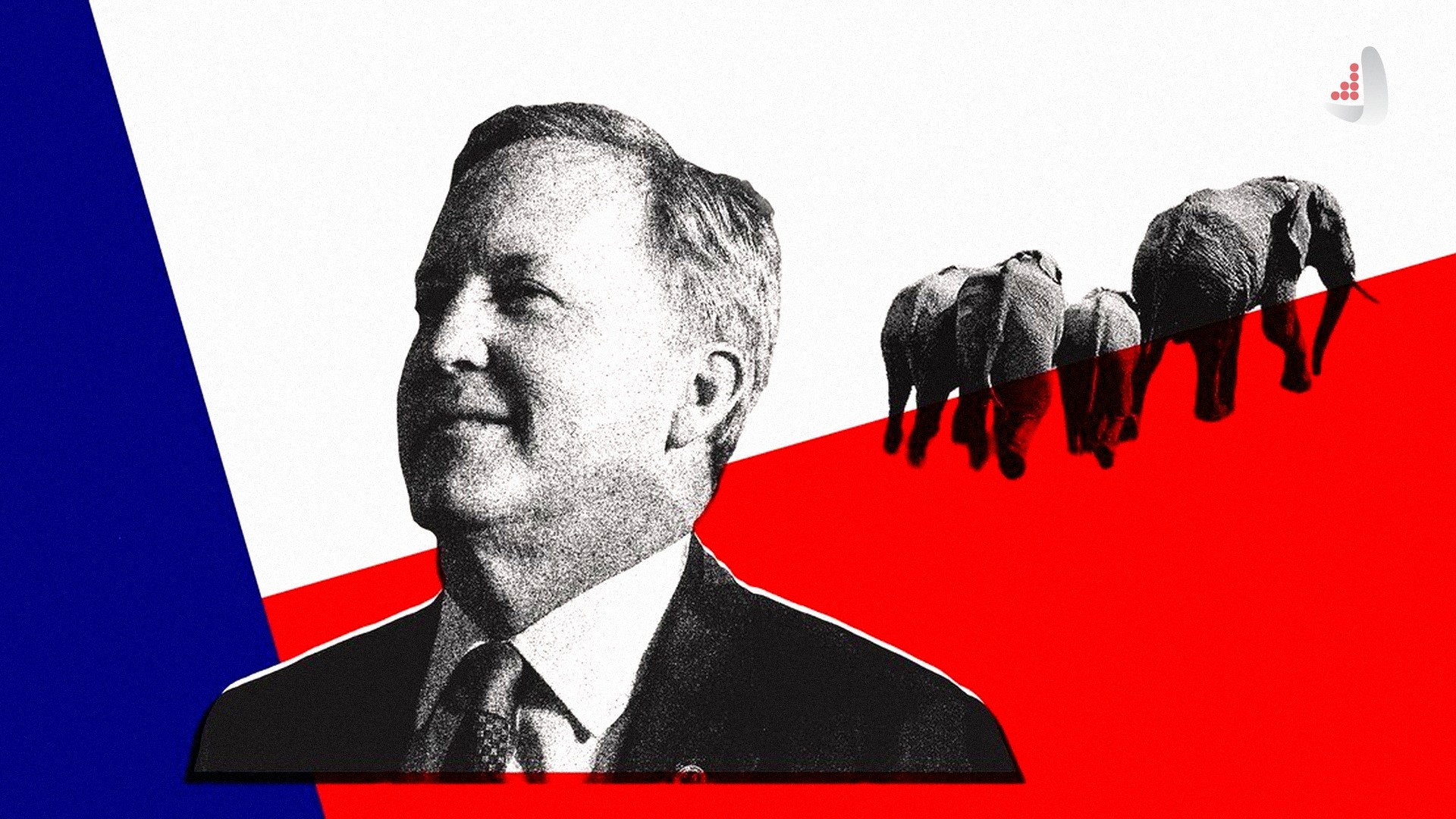
The Republican Party’s shift toward the MAGA movement has placed Texas conservatives at a political and moral crossroads.
According to Atlas Diplomacy, an article titled “The Marginalization of Texas Republicans in the Shadow of Trump,” written by Elaine Godfrey and published in The Atlantic, examines internal divisions within the Texas Republican Party over its growing alignment with the MAGA movement and its support for Ken Paxton. The article illustrates how political developments within the party have placed some conservatives in a difficult position, forcing them to navigate the tension between party loyalty and their own ethical and political considerations. The following is a summary of the article.
Political developments within the Republican Party of the United States, particularly in Texas, have exposed divisions between traditional conservatives and factions aligned with Donald Trump. These disagreements have emerged as a significant issue within the Republican camp ahead of the midterm elections, confronting some party activists and political figures with a difficult question: Should loyalty to the party and support for candidates endorsed by the MAGA movement take precedence over personal, ethical, and political considerations?
In Tarrant County, Texas, this issue has become particularly evident in discussions surrounding Ken Paxton, the state's attorney general and a prominent figure among conservatives. Some local Republicans have found themselves in a position where supporting him is no longer viewed merely as a partisan or electoral choice, but rather as a matter involving their own political principles and standards.
To examine this situation, a group of Republicans in Tarrant County has come together. The group includes individuals with diverse backgrounds and experiences, among them a former politician, a party activist, a university professor, and Hillary Shephard, the county's young Republican chair. Their discussion demonstrates that internal party divisions extend beyond competition among political figures and reach deeper questions of political identity and members' understanding of conservatism.
Hillary Shephard, who is responsible for organizing young Republicans in Tarrant County, is facing emotional and political pressures as the elections approach. The significance of this situation lies in the fact that local party activists, contrary to the common perception of a unified political organization, do not necessarily share the same views on every candidate or on the direction pursued by the dominant faction within the party.
The central point of contention is whether to support Ken Paxton. His position at the center of this dispute illustrates how the Republican Party's shift toward the MAGA movement has raised questions among some conservatives about the limits of political loyalty. Under these circumstances, supporting a candidate may be interpreted as endorsing a broader set of actions, positions, and political orientations with which not all party members agree.
These divisions should be understood within the broader context of the Republican Party's transformation following Trump's rise to power. The MAGA movement has gradually influenced the party's political identity and electoral priorities, reshaping the criteria for political loyalty within segments of the Republican establishment. In this environment, conservatives who continue to adhere to a more traditional understanding of party principles may find themselves facing a choice between aligning with the dominant faction and maintaining independent positions.
As one of the Republican Party's major strongholds, Texas provides a notable case for examining these developments. The state's significance extends beyond its electoral importance. Its diverse conservative factions and the active involvement of party activists at the local level provide an opportunity to observe the party's internal divisions. The controversy surrounding Paxton demonstrates that even in a state with a long history of support for Republicans, consensus over political leadership and party representation cannot be taken for granted.
Meanwhile, the approaching midterm elections have heightened the sensitivity of these divisions. Republican activists must strike a balance between maintaining organizational cohesion and expressing opposition to certain party figures or approaches. This situation could affect relations between different generations of conservatives and shape the ways in which they participate in electoral activities.
Overall, the dispute among Tarrant County Republicans over Ken Paxton reflects a broader question concerning the future of the Republican Party's identity: Will the party continue to accommodate a diversity of conservative viewpoints, or will loyalty to the MAGA movement become the primary criterion for political affiliation? Beyond electoral competition, this issue could also shape the party's internal relations and influence the position of traditional conservatism within the American political system./ Source