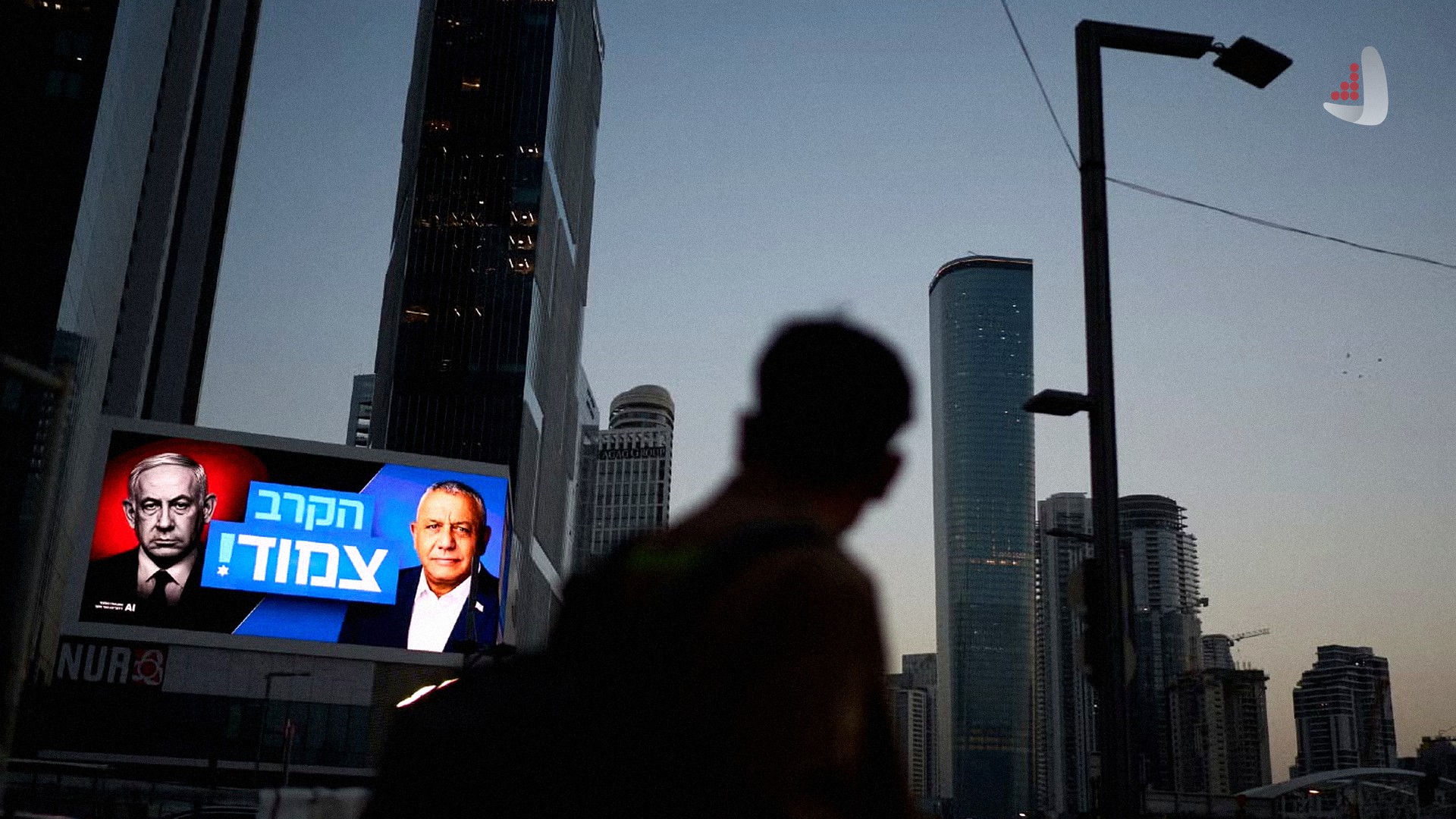
Discrimination against Palestinians and the exclusion of Arab parties have left Netanyahu’s opponents in a political deadlock.
According to Atlas Diplomacy, an article entitled “Israel’s Far-Right Elections,” written by Ben Reiff and published in The Nation, examines Israel’s electoral contests, political restrictions imposed on Palestinian candidates, and the inability of parties opposed to Benjamin Netanyahu to cooperate with Arab parties. Against the backdrop of intensifying right-wing tendencies, this situation has cast uncertainty over the formation of the next government and the future direction of Israeli politics. The following is a summary of the article.
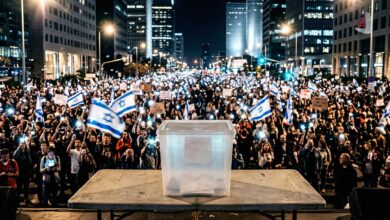
Israel’s parliamentary elections are taking place amid political divisions, discrimination against Palestinian citizens, and disagreements over the future of wars and occupied territories, leaving the country’s political system facing a multifaceted crisis. The Israeli Supreme Court’s decision to uphold the disqualification of Sami Abu Shehadeh, leader of the Balad party, is a prominent example of the restrictions imposed on political competition. The decision was based on his remarks concerning the October 7, 2023, attack, which the court interpreted as support for armed struggle against Israel. Meanwhile, a number of Jewish politicians who have made extreme statements about the destruction of Gaza and the killing of its residents remain eligible to participate in elections. The support of all Jewish parties in the Knesset for Abu Shehadeh’s disqualification demonstrates that political differences among Israeli political factions do not necessarily reflect fundamental disagreements over political equality for Palestinians.
The main contest is between the coalition supporting Benjamin Netanyahu, composed of far-right and religious parties, and a heterogeneous group of centrist and right-wing parties seeking to remove him from office. The rising cost of living, compulsory military service for ultra-Orthodox Jews, investigations into the security failures of October 7, and Israel’s declining international standing are among the main electoral issues. Nevertheless, policies related to the war and the situation of Palestinians remain on the periphery of the main electoral debate. Netanyahu’s camp includes figures with extreme positions, including supporters of expelling Palestinians from Gaza, positions that have heightened concerns about an intensification of expansionist policies.
On the opposing side, Gadi Eisenkot, the former chief of staff of the Israeli military, leads one of the principal political factions opposing Netanyahu. However, his positions on Palestinians differ only marginally from those of the current government. He has opposed the establishment of an independent Palestinian state, supported the expansion of Jewish settlements in parts of the West Bank, and called for Israel to retain at least some of the territories it has militarily occupied in Gaza, Lebanon, and Syria. Other opposition leaders have also adopted positions such as annexing parts of the West Bank and opposing the participation of Arab parties in the government. The main differences between these factions and Netanyahu’s government lie more in their approaches to crisis management, reducing international pressure, and certain domestic governance issues than in their acceptance of the Palestinian people’s national rights.
Despite their internal differences, Arab parties play a decisive role in determining the composition of the next government. According to opinion polls, the Joint List, comprising Palestinian parties, and the United Arab List (Ra’am), led by Mansour Abbas, could collectively secure enough votes to strengthen the bloc opposing Netanyahu. Most opposition leaders, however, refuse to form a coalition with these parties. Ra’am’s participation in the 2021 government has also demonstrated that the entry of Arab parties into the structures of power faces political and social resistance. As a result, Netanyahu’s opponents are caught between their objective of removing him from office and their inclination to preserve ethnic and political boundaries in the formation of a government.
Opinion polls indicate that neither bloc can independently secure a majority of 61 seats in the 120-member Knesset. Possible options include attracting lawmakers who defect from the rival camp, forming a national unity government, or relying on external support from Arab parties for a minority government. Each of these approaches faces significant obstacles, ideological divisions, and mutual distrust. If negotiations fail, another election next year is a plausible outcome, and Netanyahu could remain in office as caretaker prime minister until then.
Nevertheless, even without forming a new government, a parliamentary majority comprising opposition parties and Arab parties could take action to replace the Knesset speaker, repeal the previous government’s judicial reform legislation, establish a commission of inquiry into the security failures of October 7, and introduce restrictions on individuals facing criminal prosecution serving as prime minister. The realization of this scenario depends on maintaining cohesion among political factions that disagree on fundamental issues. Overall, Israel’s political crisis is not merely a contest over who will succeed Netanyahu; it also reflects tensions between electoral calculations, the political challenges facing Palestinians, and the difficulty of forming a stable coalition within the country’s power structure./ Source