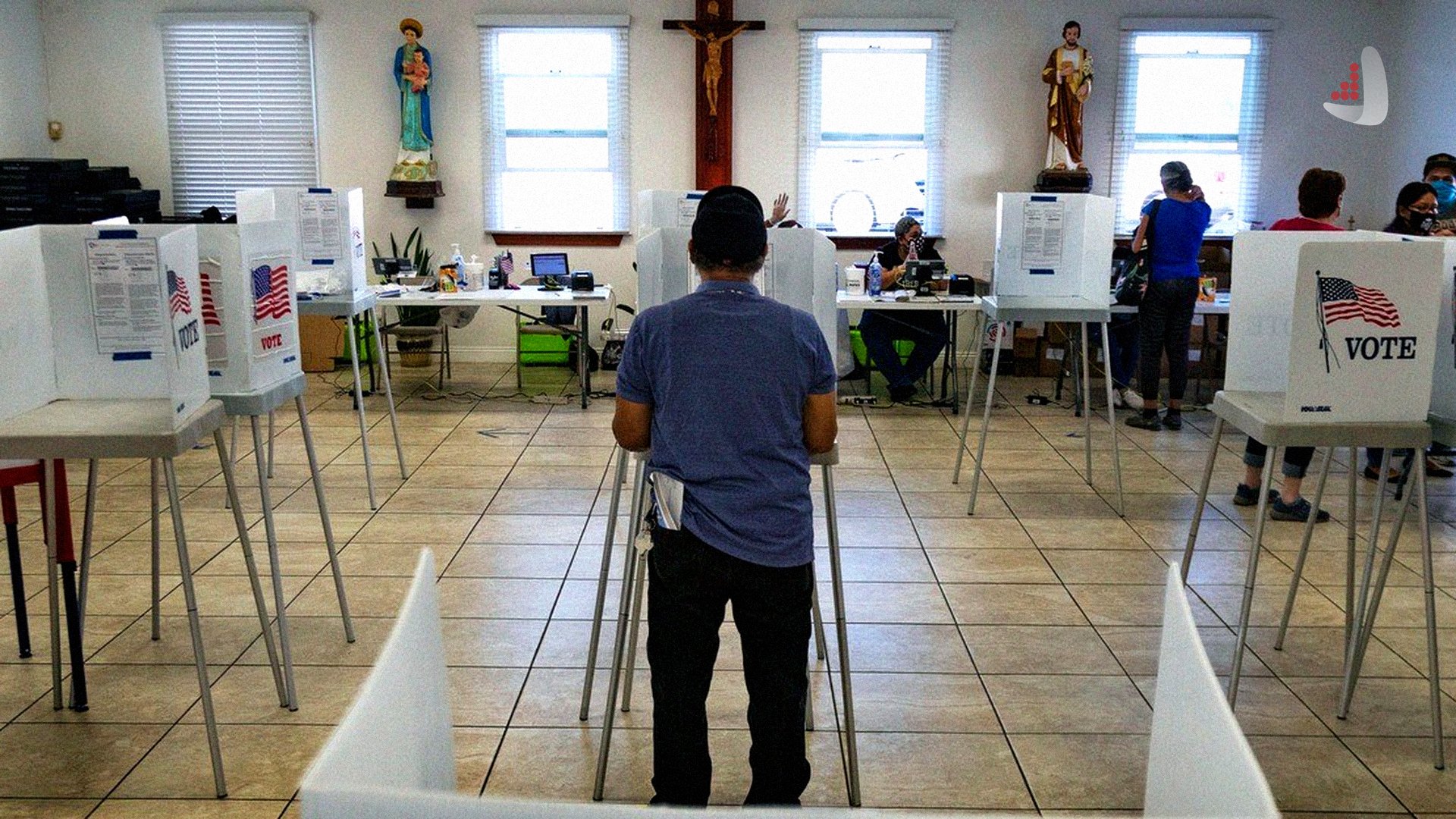
Christian voters’ exclusive focus on cultural issues sidelines human needs and health crises.
According to Atlas Diplomacy, an article titled “The Electoral Blind Spots of Christian Voters,” written by Peter Wehner and published in The Atlantic, examines the political priorities of conservative Christian movements in the United States and questions the relationship between religious values, the protection of human life, and positions on humanitarian policies and public health. The following is a summary of the article.
As the U.S. midterm elections approach, the role of religious leaders in shaping political participation and determining the priorities of Christian voters has once again attracted attention. Willie Rice, president of the Southern Baptist Convention, has urged pastors to increase their political engagement, arguing that many political issues are fundamentally moral and theological in nature and affect religious beliefs as well as the ability of individuals and communities to flourish. This approach presents politics as an arena for defending religious values and assigns church leaders a role in determining the political orientation of their followers.
Rice has placed four issues at the center of this agenda: abortion, the redefinition of marriage, transgender identity, and illegal immigration. These issues occupy a central position among segments of the fundamentalist and evangelical Christian communities in the United States and are often presented as non-negotiable principles grounded in the Bible. Within this framework, taking positions on these issues can become a measure of religious commitment and influence individuals’ political choices.
However, the main issue is not simply the importance of these topics to conservative Christians, but rather the narrowing of their moral agenda to this particular set of issues. If the guiding principle of Christian political engagement is the defense of human life and the creation of conditions in which people can flourish, this principle would be expected to apply across a broader range of areas. From this perspective, attention to moral issues should not be confined to matters relating to gender, family, abortion, and immigration; it should also encompass the effects of public policies on people’s health, security, and livelihoods.
One significant example of this potential contradiction is the reduction or dismantling of the capacities of the United States Agency for International Development (USAID) and the disruption of the U.S. President’s Emergency Plan for AIDS Relief (PEPFAR). These measures, which have emerged amid changes within the administration and the activities of the Department of Government Efficiency, known as DOGE, affect international aid mechanisms and efforts to combat infectious diseases. Such programs are associated with protecting public health, expanding access to medical services, and assisting vulnerable populations. Consequently, the human consequences of changes to these programs can also be regarded as an ethical concern.
Under these circumstances, the silence of some religious leaders in the face of the weakening of humanitarian programs, alongside their continued emphasis on specific cultural and social issues, raises questions about the consistency of their ethical standards. If protecting life and supporting human flourishing are fundamental principles of Christian political engagement, these principles should also play a role in evaluating policies related to global health and foreign aid. Otherwise, partisan and cultural priorities may effectively determine which forms of human suffering deserve political attention and which crises are left on the margins.
This debate also concerns the relationship between religious faith and partisan politics. Religious leaders may take positions on various issues based on their interpretations of the Bible. However, assessing the consistency of these positions requires examining how they respond to a broad range of humanitarian concerns, rather than focusing solely on issues that have become prominent in cultural conflicts. Such an assessment does not mean minimizing ethical disagreements over abortion, marriage, or gender identity; rather, it emphasizes the need to consider other dimensions of human life alongside these issues.
Ultimately, the central question concerns the scope of moral responsibility in politics. If religious political engagement claims to defend human life and dignity, its evaluation must also encompass the consequences of public decisions for vulnerable individuals, global health, and access to essential support. The gap between stated principles and practical priorities provides a basis for examining the role of religious values in American politics and raises the question of whether the political agenda of conservative Christians reflects a comprehensive set of humanitarian commitments or is shaped primarily by cultural and partisan controversies./ Source