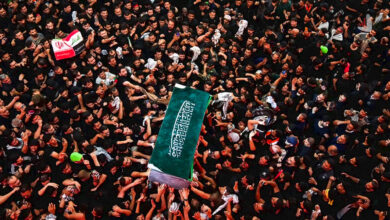
The Leader of the Revolution’s message links public mourning to a political commitment to vengeance.
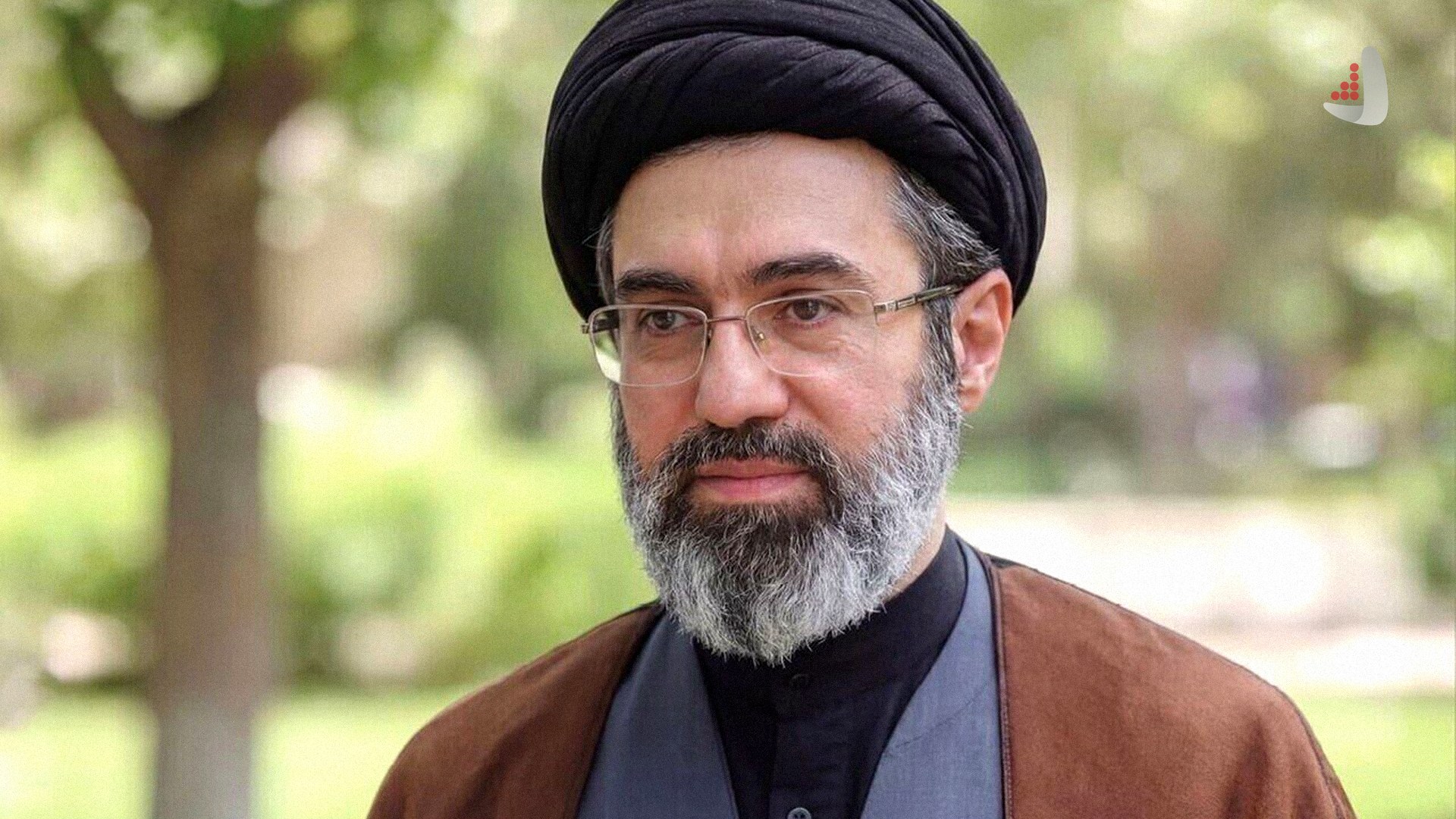
According to Atlas Diplomacy, a message entitled “The Leader of the Revolution’s Pledge to Avenge the Blood of the Martyred Imam,” issued by Seyyed Mojtaba Hosseini Khamenei and published on the official website of the Office of the Leader of the Islamic Revolution, expresses gratitude for the large turnout of Iranians and Iraqis at the funeral processions for the former leader of the Islamic Republic. It presents this collective mourning as evidence of the continued vitality of the Resistance discourse and emphasizes the need to preserve his political path and avenge his assassination by holding those responsible for the killing and the war to account. What follows is a summary of the message.
The message was issued against the backdrop of funeral ceremonies for the former leader of the Islamic Republic that became a vast display of social mobilization, religious mourning, and political solidarity across Iran and Iraq. Its central theme is the effort to connect this collective participation to the tradition of Ashura and to portray the former leader’s martyrdom as a historical continuation of Husseini resistance [resistance modeled on Imam Hussein’s sacrifice at Ashura]. In this telling, the funeral ceremonies were not merely rituals of farewell to a political figure. They were depicted as evidence of the endurance of an identity-based and revolutionary discourse that derives its legitimacy from religious belief, martyrdom, and steadfastness in the face of the enemy.
The first section presents the Islamic Revolution as a movement born from the culture of Ashura. The martyred leader, in turn, is portrayed as a figure whose ideas, political conduct, resistance, and ultimate fate can be understood within that same framework. This narrative seeks to elevate his martyrdom beyond the level of a political assassination and transform it into a historical and religious event capable of mobilizing society anew. The extensive public participation in Tehran, Qom, Mashhad, Najaf, and Karbala is likewise interpreted as evidence of an emotional and political bond between Iranian and Iraqi society, as well as the continuing influence of the Resistance discourse.
The second section focuses on renewing the covenant with the former leader’s path. Preserving his political school of thought, continuing along the course he charted, and resisting external pressure are presented as public duties. Within this framework, mourning becomes inseparable from political commitment, while the funeral ceremonies serve as a vehicle for reproducing loyalty and internal cohesion. This section also indicates that the political establishment is seeking to frame the leader’s loss not as a point of interruption, but as the beginning of a new phase in the continuation of his previous strategies. The emphasis on a turnout numbering in the tens of millions serves a purpose beyond merely describing public participation: it is invoked as a demonstration of social capital, mobilizational power, and the Islamic Republic’s symbolic deterrent capacity in the face of foreign pressure.
The most consequential and controversial section of the message is its explicit pledge to exact vengeance upon those responsible for the assassination and the officials behind the two wars. The assertion that a list exists identifying perpetrators at multiple levels—and that fulfillment of this pledge does not depend on whether current officials remain in their positions—suggests that vengeance is being elevated into a long-term policy extending beyond particular individuals. The reference to the participation of freedom-loving people throughout the world similarly expands the reach of the threat beyond national borders and connects it to a networked, international mission. Such language may be intended both to reinforce deterrence and to sustain psychological pressure on those alleged to have participated in the assassination. At the same time, however, it increases the danger of miscalculation and of an escalation in either proxy or direct confrontation.
Taken as a whole, the message performs three functions simultaneously: it expresses gratitude for a vast display of social mobilization, reinforces the connection between martyrdom and the political identity of the Islamic Republic, and declares the continuation of a policy of confrontation and vengeance. Such a framework may strengthen internal cohesion in the short term. At the regional and international levels, however, it may also heighten tensions, intensify security calculations, and widen the cycle of action and retaliation.