Waves of street unrest across Europe and a widening chasm between ruling elites and citizens signal the end of the political era shaped by the upheavals of 1968.
According to Atlas Diplomacy, an analysis titled "The Western Liberal Order Is Facing Its Own Reverse '1968'" by Fyodor Lukyanov has been published in RT. Comparing current riots in France and Italy with the global uprisings of 1968, the analysis argues that the Western liberal structure faces potential collapse due to its failure to integrate conservative challengers and its disregard for citizens’ socioeconomic priorities. Below is an abstract of the piece.
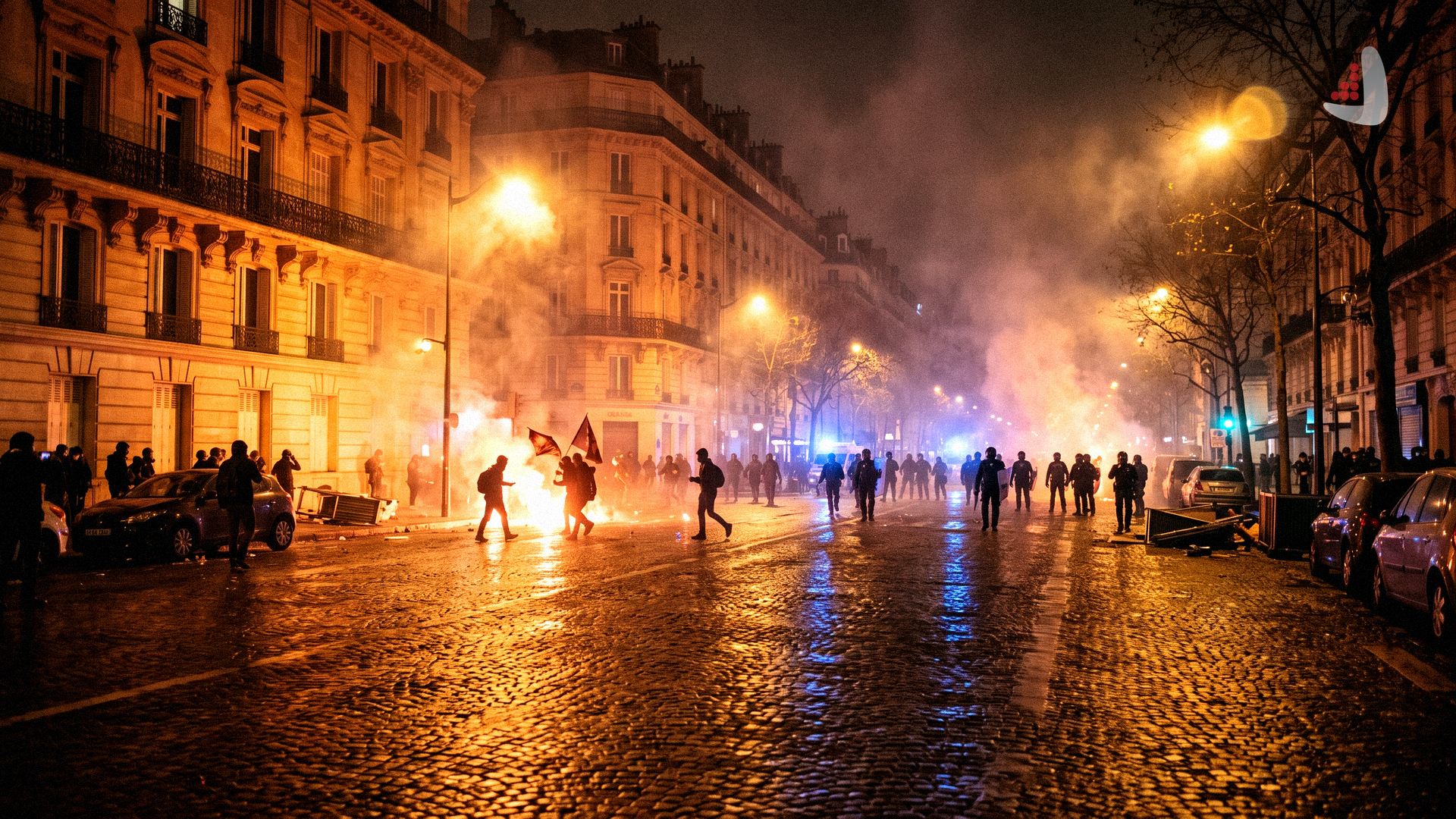
Shocking images of unrest gripping French and Italian cities—alongside turmoil in Albania, police clashes with demonstrators in Argentina, ongoing protests in India, and upheavals across the Global South—bear striking parallels to 1968. In that year, despite Cold War divisions, a simultaneous wave of political and social discontent over inequality, educational strains, aimless wars, and unresponsive political elites swept across the world. Yet while the 1968 rebellion targeted the conservative establishment and saw its ideas triumph over subsequent decades, today’s unrest points in the exact opposite direction, heralding the end of the political era that 1968 helped create.
For nearly six decades, liberalism of both the left and the right provided the framework for Western politics, but its internal contradictions have now become glaring as student protests descend into riots and looting while governments resort to political manipulation and outright repression to preserve the status quo. As in 1968, protesters have lost faith in democratic institutions, yet in the absence of a coherent revolutionary alternative, the result is an explosion of destructive energy in the streets.
The events of 1968 tested the adaptability of political systems: in Western Europe, governments initially suppressed the unrest but subsequently absorbed much of the protest movement into mainstream politics, renewing their legitimacy, whereas the socialist bloc relied solely on repression until accumulated tensions broke the system. Today’s Western Europe faces a similar test with the ideological balance reversed: this time, it is not the heirs of 1968 who need to be integrated into the political mainstream, but their opponents—those routinely dismissed as far-right populists.
Rather than accommodating these conservative movements, Western Europe’s establishment has adopted a peculiar strategy of tolerating destructive forces on the opposite end of the political spectrum, viewing them as less threatening than conservative challengers. Underlying this instability is a fundamental disconnect between governing elites and society, most evident in Europe, where the political establishment’s fixation on confrontation with Russia clashes directly with public concerns over living standards and prosperity. The longer Western European leaders refuse to recognize this shift, the greater the danger that the political system they seek to preserve will become its next casualty./ Source