Uncrewed surface vessels are complicating control of strategic waterways and raising the cost of securing commercial shipping.
According to Atlas Diplomacy, the article “The Role of Uncrewed Surface Vessels in the Battle over Vital Waterways,” written by Abbas Younesian and published by the Strategic Council on Foreign Relations, examines how uncrewed surface vessels are changing naval balances and affecting security in the Strait of Hormuz, Bab el-Mandeb, and energy infrastructure. The analysis distinguishes between the ability to disrupt maritime activity and the ability to ensure sustained security for seaborne trade. The following is a summary of the article.
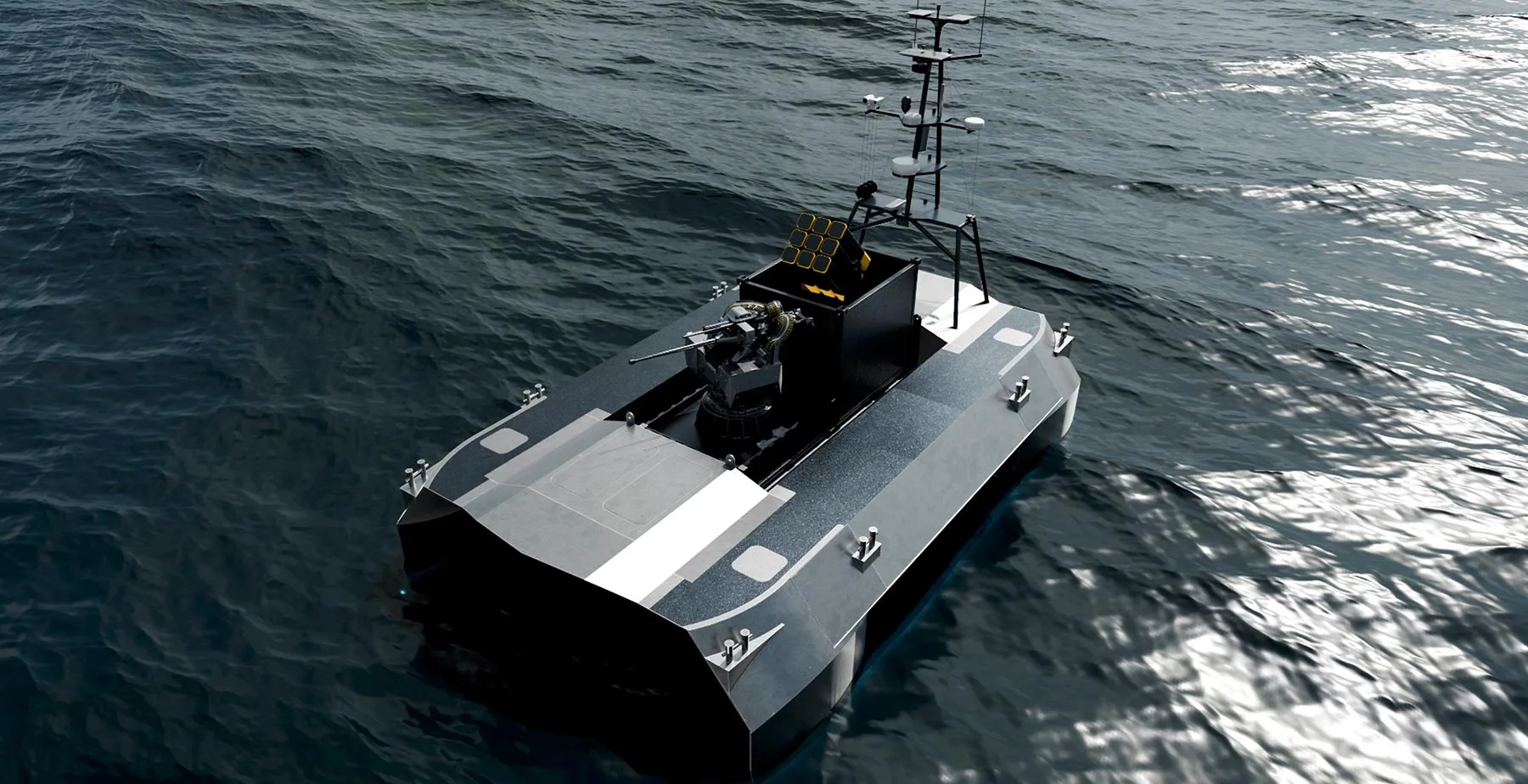
Recent military developments in the Black Sea, Persian Gulf, and Red Sea indicate that sea control no longer depends exclusively on large warships and submarines. Uncrewed surface vessels (USVs) can undertake reconnaissance, strikes, deception, and support missions at lower cost. Nevertheless, USVs are not a complete substitute for conventional fleets: their effectiveness depends on accurate intelligence, reliable communications, and resilience against electronic warfare.
A major advantage of these systems is their ability to change the cost balance between attack and defense. Large numbers of inexpensive vessels can force an adversary to deploy costly interceptors and maintain continuous protection. Naval power is therefore shifting away from an exclusive emphasis on heavy platforms toward a combination of crewed vessels, autonomous systems, and intelligence networks. Coordinating these systems remains essential to operational success.
Ansar Allah attacks on shipping and regional infrastructure have demonstrated the close connection between coastal security, commerce, and energy. Threats to the Strait of Hormuz and Bab el-Mandeb can raise insurance costs and cause shipping companies to reroute even without a complete closure. Control of coastal positions near shipping lanes can also extend the threat to short-range weapons, making the defense of commercial vessels more difficult.
In the Strait of Hormuz, U.S. military superiority does not necessarily translate into economic security or a return to normal trade. Escorting ships and striking coastal positions may reduce risks, but mines, missiles, drones, and information disruption can continue to pose dangers. Even an increase in tanker traffic may coincide with persistently high insurance premiums and energy prices. Market conditions also depend on petroleum reserves, refining capacity, alternative routes, and market expectations. Success therefore requires sustained shipping at predictable costs and risks.
Energy infrastructure is particularly vulnerable because operations are concentrated in refineries, terminals, pipelines, and storage facilities. Damage to one critical component can interrupt production and exports, with effects on global trade. Such conditions increase the appeal of asymmetric methods: a relatively inexpensive attack can impose substantial defensive costs. However, prolonged disruption also harms regional economies and may encourage states to cooperate more closely in protecting shipping routes.
The spread of USVs increases the importance of maritime awareness, coastal defense, and electronic warfare for Iran. The United States and its partners, meanwhile, will increasingly need information sharing, distributed interception, and defensive uncrewed platforms to protect waterways. Still, the ability to inflict damage or disruption must not be confused with the capacity to exercise continuous control over maritime routes.
Ultimately, competition over vital waterways is not merely a contest between warships and USVs. It concerns the resilience of energy supply chains, goods flows, information networks, and market confidence. Maritime pressure may create bargaining leverage, but without a political solution it can increase economic costs and prompt countervailing coalitions. Lasting security requires a combination of defensive capacity, commercial risk management, and diplomacy—a goal that remains difficult even for major naval powers./ Source