Persistent sectarian violence and minority distrust toward the new security structure are severely straining Syria's post-war recovery and political stability.
According to Atlas Diplomacy, an analysis titled "Protecting Minorities: A Major Test for Syria's New Political Order" by Cian Ward has been published in The New Arab. Examining recent sectarian clashes in Syria, the analysis shows that without genuine transitional justice, economic development, and meaningful minority participation in local governance, the new government in Damascus will be unable to contain security crises. Below is an abstract of the piece.
Nearly two years after the fall of Bashar al-Assad's regime in 2024, continued violence against ethnic and religious minorities is straining Syria's post-war recovery. Recent pro-government demonstrations in the Kurdish-majority areas of Hasakah and Raqqa amid the ongoing integration of the Syrian Democratic Forces into the state apparatus, alongside mob attacks on Christian homes and businesses in the Greek Orthodox town of Al-Suqaylabiyah in Hama province, demonstrate that these incidents are not isolated. Massacres targeting Alawite and Druze minorities in 2025 have further deepened fears of systemic discrimination.
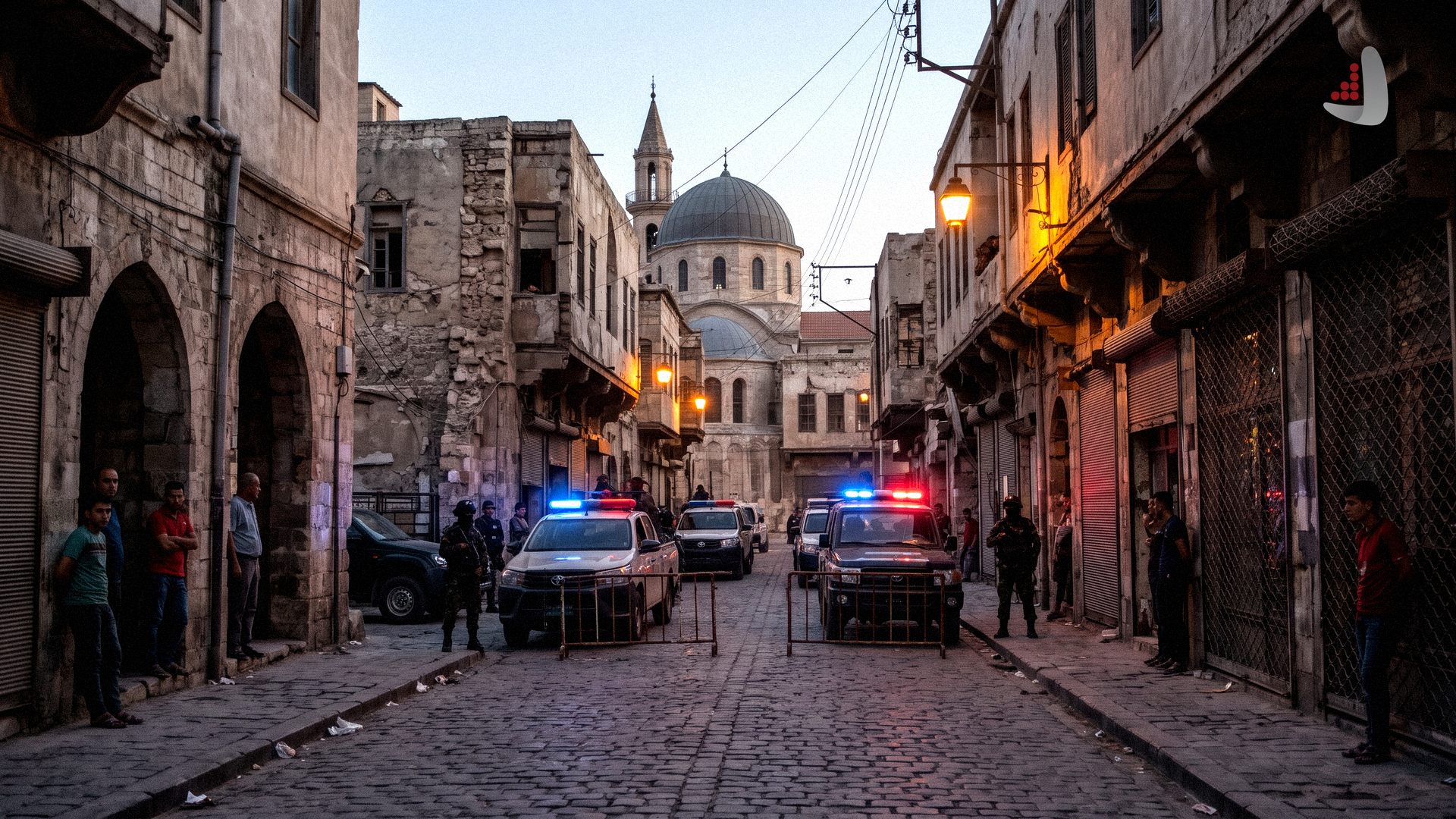
One of the primary obstacles to stability is deep communal distrust toward the security services. Local officials and security commanders are drawn mainly from the loyalist networks that toppled the former regime, while minority representation in security institutions remains largely confined to desk or traffic duties. While the Interior Ministry remains understaffed, experts warn that establishing local communal police forces along ethnic or religious lines could solidify sectarian divisions, arguing instead for stronger institutional coordination with local leaders to pre-empt sectarian mobilization.
The lack of comprehensive transitional justice has also fueled cycles of retaliation. Although the government sentenced Bashar al-Assad and several senior regime figures to death in absentia in August, many lower-level perpetrators remain at large. This vacuum gives aggrieved communities a pretext to settle scores on their own. Conversely, legitimate arrests are frequently distorted by misinformation and perceived as targeted state repression against ethnic minorities, further aggravating communal tensions.
In northeastern Syria, governance disputes and economic hardship are compounding the unrest. The integration of the Syrian Democratic Forces has sparked fears among Kurds over losing political autonomy and language rights, while rising fuel prices and living costs have intensified public protests. Simultaneously, Arab communities in the region are frustrated by the slow pace of integration and perceived discrimination, while widespread youth unemployment across war-damaged towns has created fertile ground for violent outbreaks.
Establishing civil peace in Syria cannot be achieved through securitization alone and requires devolving real decision-making authority to local bodies. The successful model of the Ismaili Council in the town of Salamiyah, which worked closely with local leaders and security chiefs to prevent isolated disputes from spiraling into wider conflict, highlights the capacity of local councils to manage public services and resolve disputes. Without meaningful accountability, improved livelihoods, and political inclusion for minorities, Damascus's efforts to restore stability will leave the root causes of the crisis unresolved./ Source