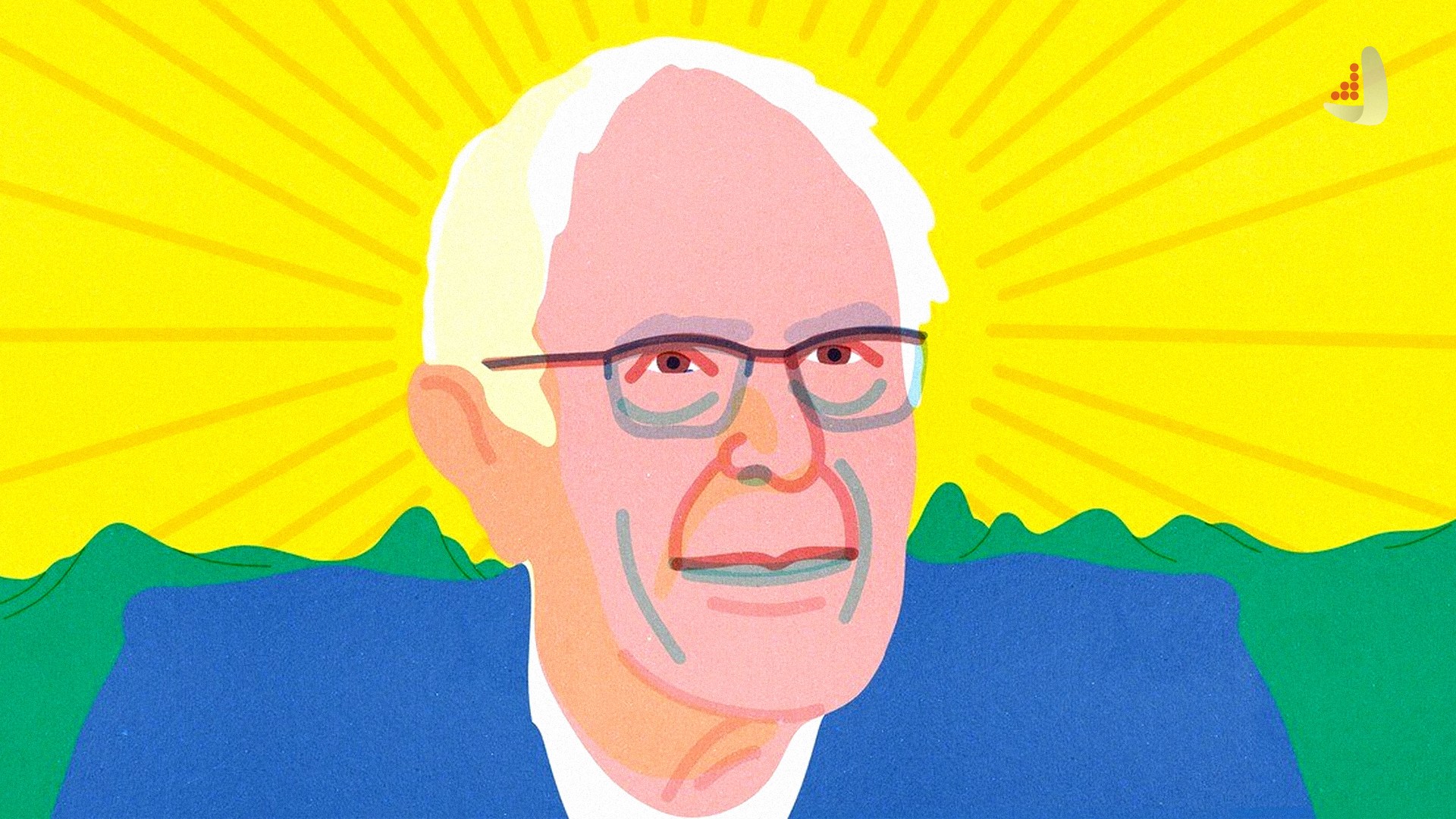
Growing demand for Sanders’s participation in election campaigns points to the expanding influence of the progressive movement within the Democratic Party.
According to Atlas Diplomacy, an article titled “Bernie Sanders’s Rising Influence in the Democratic Party,” written by Russell Berman and published in The Atlantic, examines Sanders’s growing role in Democratic election campaigns and the changing position of progressive views within the party. This trend has coincided with the increasing prominence of issues such as expanding healthcare coverage, raising taxes on the wealthy, and reducing economic inequality. The following is a summary of the article.
Bernie Sanders, the independent senator from Vermont and a prominent figure in the American progressive movement, is playing a more prominent role in supporting Democratic candidates ahead of the midterm elections. His participation in election campaigns in competitive states, including Maine, Florida, Texas, and Michigan, indicates growing demand for his political involvement compared with previous election cycles. Sanders, who was previously called upon primarily to mobilize young voters and college students, is now also campaigning to attract voters in areas that lean toward the Republican Party.
During his campaign trip to Maine, the large turnout at his rallies attracted considerable attention. Approximately 650 people gathered in Bangor, nearly 700 attended an event in Lewiston, and more than 1,000 people gathered in a high school gymnasium in Biddeford. At these events, Sanders endorsed Troy Jackson, the Democratic Senate candidate, and emphasized issues that have long been central to his political platform, including establishing a universal healthcare system, increasing taxes on billionaires, and addressing the widening wealth gap.
Sanders described economic inequality as a serious problem for American society and sharply criticized Donald Trump. Taken together, these positions demonstrate that his campaigns continue to emphasize the connection between economic justice, public access to healthcare services, and criticism of wealth concentration. Beyond Sanders’s traditional support base, these issues may also feature prominently in broader electoral debates over the cost of living, economic opportunities, and the role of government in providing public welfare.
The significance of Sanders’s participation in electoral contests should be examined in comparison with the Democratic Party’s previous pattern of behavior. In past election cycles, some Democratic candidates welcomed his endorsement during the primaries but distanced themselves from progressive economic positions as the general election approached, emphasizing capitalism and bipartisan cooperation instead. Under such circumstances, Sanders typically played a more limited role in the final stages of the campaign. His increased presence in current contests may indicate a shift in how Democrats utilize the political influence of the progressive movement.
This development also raises questions about the Democratic Party’s ideological direction. Emphasis on universal healthcare coverage, higher taxes on the wealthy, and reducing inequality reflects positions that Sanders has spent years seeking to establish within American political discourse. His increased participation in Democratic candidates’ campaigns may help bring these issues to greater prominence in public debate, although it does not, by itself, demonstrate that the party as a whole has uniformly embraced his positions.
Meanwhile, Sanders’s expanding campaign activity across different states suggests that his role is no longer limited to attracting support from young or progressive voters. Efforts to connect with voters in areas that lean toward the Republican Party represent a test of the reach of his economic message among more diverse electoral groups. The effectiveness of these messages will depend on conditions in each state, the characteristics of the candidates, and voters’ priorities.
Overall, Sanders’s increased participation in Democratic election campaigns reflects the more prominent position of the progressive movement in intra-party contests and an effort to connect economic issues with electoral mobilization. This trend may influence the issues debated within the Democratic Party and the ways its candidates communicate with voters. However, the extent and durability of this shift will depend on election outcomes and how these priorities are reflected in future policymaking./ Source