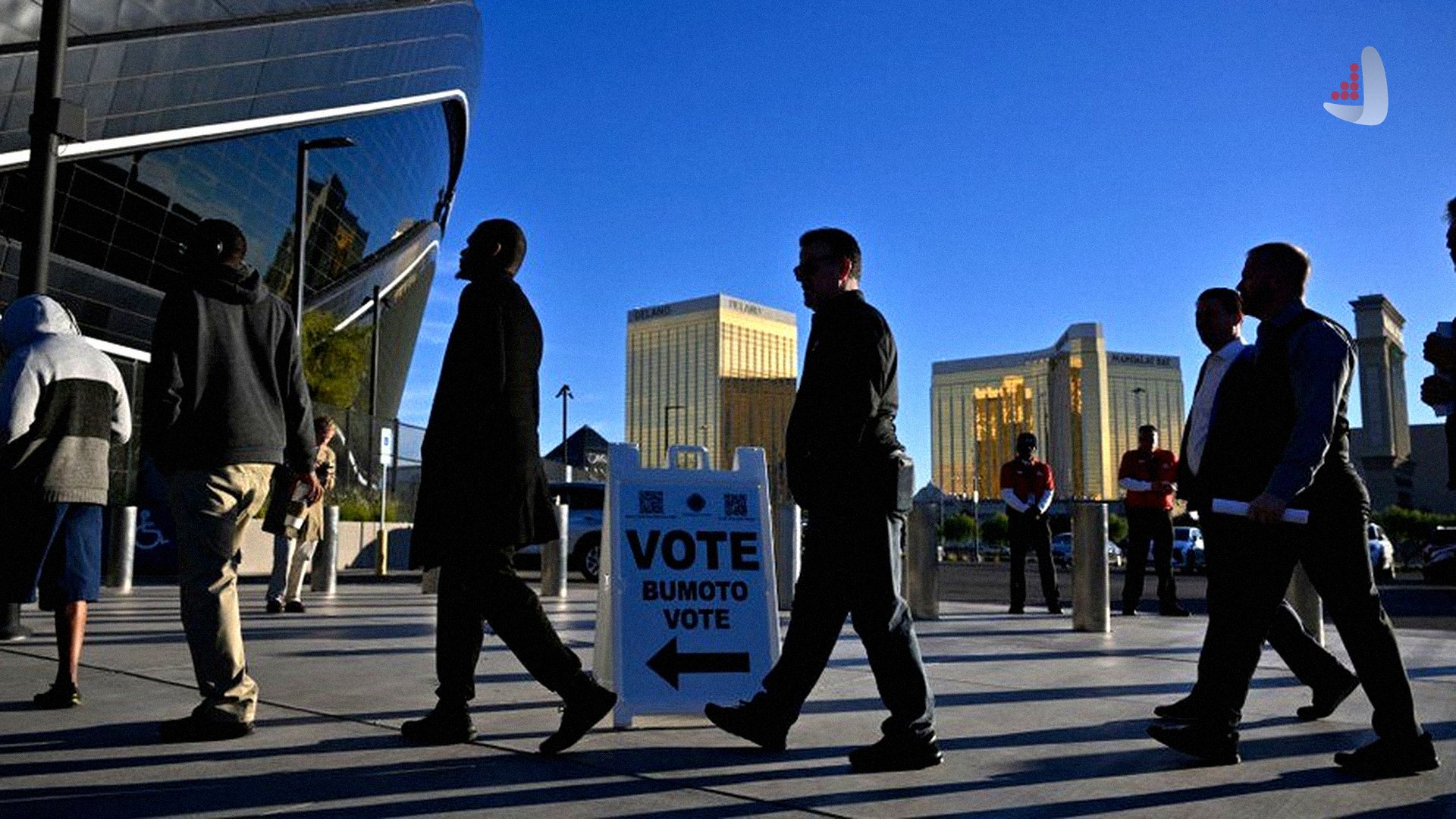
A decisive Democratic victory could thwart the Trump administration’s efforts to interfere in the electoral process.
According to Atlas Diplomacy, an article titled “The Limits of Trump’s Electoral Engineering,” written by Quinta Jurecic and published in The Atlantic, examines the Trump administration’s efforts to influence the U.S. midterm elections and the legal, administrative, and political obstacles facing these efforts. The issue has gained greater significance amid declining presidential approval ratings and the possibility of a shift in the balance of power in Congress. The following is a summary of the article.
The U.S. midterm elections are taking place amid growing controversy over the scope of the federal government’s authority in election administration, the independence of electoral institutions, and the executive branch’s ability to intervene in the voting process. The Trump administration’s efforts to alter the conditions under which elections are conducted and restrict certain methods of voter participation have raised concerns about the relationship between political power and the integrity of the electoral process. The central question is to what extent an incumbent administration can use government resources to influence an electoral contest whose outcome will affect its own power and political future.
One major aspect of these efforts has been the attempt to undermine or restrict the widespread use of mail-in voting, a method employed in various U.S. states to facilitate electoral participation. The administration has also urged states to provide federal officials with voter registration lists and threatened state and local election officials with prosecution. In addition, the possibility of deploying military personnel or federal agents at polling places has been raised, although the legal limits of such actions remain contested.
The Trump administration has also drawn attention to high-profile arrests involving individuals accused of registering to vote or casting ballots as noncitizens. These cases have been presented within the broader context of claims about widespread electoral fraud. However, the existence of isolated incidents or specific allegations does not, by itself, substantiate claims of systemic fraud. Distinguishing between individual violations and credible evidence of organized misconduct is essential to a fair assessment of electoral integrity.
Despite these efforts, many of the administration’s initiatives have encountered obstacles. Weak implementation of certain measures, insufficient evidence to support claims of widespread fraud, limitations on the federal government’s legal authority, and court rulings against some proposals have constrained the scope of executive action. The U.S. electoral system, which assigns substantial responsibility for conducting elections to the states, together with judicial oversight, can serve as a barrier to unilateral attempts to change electoral rules.
At the same time, the administration’s political standing is affecting the electoral outlook. Polls cited in the lead-up to Election Day indicate that Trump’s approval rating has fallen to levels in the range of 30 percent. Meanwhile, Democrats hope to regain control of the House of Representatives and are even competing for control of the Senate, a chamber that had appeared difficult to reclaim in the preceding period. Nevertheless, polls are not definitive, and past electoral errors have demonstrated that the gap between polling estimates and actual results can be substantial.
The potential significance of the margin of a Democratic victory lies in the possibility that a wide gap in the results could reduce the impact of certain measures restricting electoral participation. The greater the difference between the two parties’ vote totals, the more difficult it becomes to alter the overall outcome through administrative changes or reduced participation among particular groups of voters. By contrast, a closer contest could make relatively small changes in turnout or disputes over vote counting more consequential. Even so, the actual outcome depends on the geographic distribution of votes, the rules in each state, and how the law is implemented.
Overall, the dispute surrounding the U.S. midterm elections extends beyond ordinary partisan competition and concerns the limits of federal power, the independence of election administration, and the credibility of democratic institutions. Legal and structural constraints can limit the scope of government intervention, while voter responses and turnout will also shape the political environment. The election results and the potential margin between the two parties could determine the extent to which these measures affect the balance of power and what opportunities emerge in the next Congress to oversee the administration and defend electoral rules./ Source