The Lebanon file shows that a relative halt in fighting, without resolving the questions of security and legitimacy, can become a new arena for the battle of narratives.
On July 6, as families were gradually returning to their destroyed homes in southern Lebanon after the ceasefire, an attack in the Nabatieh area left four people dead, one of them a school principal. This took place while hundreds of thousands of people, despite fears that fighting might resume, had returned to southern towns and villages to rebuild their lives and livelihoods. The contradiction between the people’s return and the continuation of attacks shows that a ceasefire does not necessarily mean the end of a crisis; at times, it merely changes the crisis’s form.
Developments in West Asia in recent years have shown that competition among powers no longer unfolds only on the military battlefield or through formal diplomacy. This competition has increasingly moved into the realm of public perception, narrative-building, and the management of social calculations. In this framework, cognitive warfare means the organized use of media, political messaging, psychological pressure, and the selective representation of events to alter society’s understanding of threat, security, cost, and hope. Its goal, without the need for a decisive military victory, may be to weaken political will and shift the strategic balance.
The central message of this essay is that fragile ceasefires in the region, when accompanied by one-sided security arrangements and targeted narrative-building, are not merely tools for stopping war; they can also become mechanisms for redefining the legitimacy of actors, constraining the capacities of the Resistance, and gradually reordering power. The Lebanon file is a clear example of this process, and developments in the South Caucasus show that the same logic, in a different language, is being pursued in the competition over routes and geopolitical arrangements.
Ceasefire: From Halting Conflict to Redefining Legitimacy
In Lebanon, the ceasefire and plans for containing tensions are, on the surface, being pursued with the aim of preventing the expansion of war and restoring stability. Yet the experience of recent weeks shows that there is a considerable distance between the temporary halt of fighting and the achievement of a stable order. The ceasefire announced on June 19 also failed to prevent continued attacks and disputes over the presence of Israeli forces, the disarmament of Hezbollah, and the security arrangements in southern Lebanon. Israel has continued to insist on maintaining its presence in parts of southern Lebanon and on sustaining pressure to eliminate Hezbollah’s military capabilities.
It is natural that supporters of these arrangements would argue that consolidating the authority of the Lebanese state, deploying the army in the south, and limiting the activity of non-state armed forces are preconditions for reducing violence and protecting civilians. This argument cannot simply be dismissed; a society that has lived for years under the shadow of war, displacement, and destruction has every right to demand security and stability. But the weakness of this view lies in treating the ceasefire apart from the real balance of power and without regard for reciprocal commitments. When pressure to disarm one actor continues, while the withdrawal of foreign forces, the cessation of attacks, and guarantees for civilian security are not simultaneous and clear, a ceasefire can be transformed from an instrument of peace into an instrument of political pressure.
In such a situation, the issue is not only control of the field; control of the narrative is also decisive. If public opinion is pushed toward the conclusion that the Resistance is merely a source of cost and insecurity, and that the only path to stability is the acceptance of external arrangements, then an important part of the battle has advanced at the level of social perception before it is settled on the military battlefield. By contrast, if society can distinguish between the principle of the need for peace and the acceptance of an unequal order, the possibility of imposing solutions that appear de-escalatory on the surface but are restrictive in substance is reduced.
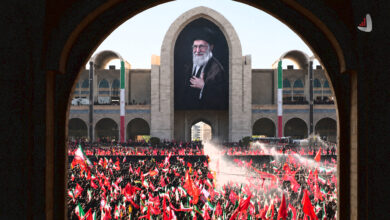
For this reason, the symbolic and social capital of Resistance forces is not merely an emotional matter. Identity ties, the memory of war, the experience of resisting occupation, and social mobilization around leaders and prominent figures, in practice, form part of the capacity to reproduce political legitimacy. Cognitive warfare usually targets precisely this capital: from discrediting leaders and symbols to portraying the Resistance as an obstacle to welfare, development, and stability. The main battle here is not only over control of territory; it is over the interpretation of political reality. Whichever side can redefine cost, benefit, threat, and hope in society’s mind has shifted part of the balance of power in its own favor.
The Caucasus: When Geopolitics Is Presented in the Language of Connectivity
The same logic can also be observed in the South Caucasus, although its tools and actors are different. The debate over corridors and transit routes between Armenia and the Republic of Azerbaijan is not merely an economic or logistical issue. These routes are tied to the influence of extra-regional actors, the redefinition of the region’s security architecture, and Iran’s position in its geopolitical surroundings. In last year’s agreement between Armenia and the Republic of Azerbaijan, the United States obtained special development rights for the proposed transit route, and the European Union also announced in early July a new package to strengthen transport, energy, and digital connectivity in the South Caucasus.
For Iran, the importance of this issue is not limited to transit. Any reconfiguration of routes that leads to the reduction of geopolitical depth, the limitation of regional ties, or the consolidation of the role of rival actors around Iran’s borders will have direct strategic consequences. Yet such changes are usually presented in the language of “development,” “regional connectivity,” and “the necessity of peace.” These terms are not necessarily false, but they can conceal the geopolitical layer of decisions. When a strategic change is represented only as an economic project or a necessity of peace, the perceptual resistance of society, and even of part of the elite, to its long-term consequences is reduced.
In both files, Lebanon and the Caucasus, the main issue is not that a ceasefire or regional connectivity is inherently undesirable. The issue is that neither should be analyzed apart from the balance of power, the interests of actors, and the narratives constructed to legitimize them. Sustainable peace does not mean the silencing of the sounds of war; peace is sustainable when security, sovereignty, and the right of local actors to make decisions are taken into account in a balanced way.
From this perspective, Iran faces two possible paths. On the first path, economic, security, and media pressures can push society toward the perception that retreating from the components of regional power is the only way to reduce costs. The consequence of such a situation would be the erosion of the connection among the field, diplomacy, and public opinion. On the second path, society and the elite distinguish between actual events and directed narratives; they accept the necessity of reducing tensions, but do not equate it with accepting an unequal order.
The realization of the second path does not require denying domestic problems or ignoring the costs of conflict. On the contrary, it requires transparent public diplomacy, evidence-based analysis, media literacy, continuous monitoring of media narratives, and an honest explanation to public opinion of the consequences of every decision. A society that has more accurate information about the objectives of actors, the real costs of crisis, and the options ahead is less vulnerable to false binaries such as “security or welfare” and “Resistance or development.” West Asia has entered a stage in which war and peace, stability and crisis, and security and insecurity are not decided only in the field; these concepts are also being redefined, at the same time, in society’s mind. Ceasefires, corridors, and security arrangements reveal their full strategic meaning only when, alongside their field dimension, they are also viewed within the framework of the battle of narratives. The central issue for Iran is not merely confronting hard threats; it is preserving cognitive sovereignty and preventing the region’s complex realities from being reduced to simplified narratives. The future balance of power in West Asia will be shaped not only by the outcome of battles in the field, but also by the fate of the battle being waged over the interpretation of those same battles in people’s minds.
Ali Rahimipour, M.A. in International Relations and Defense Management