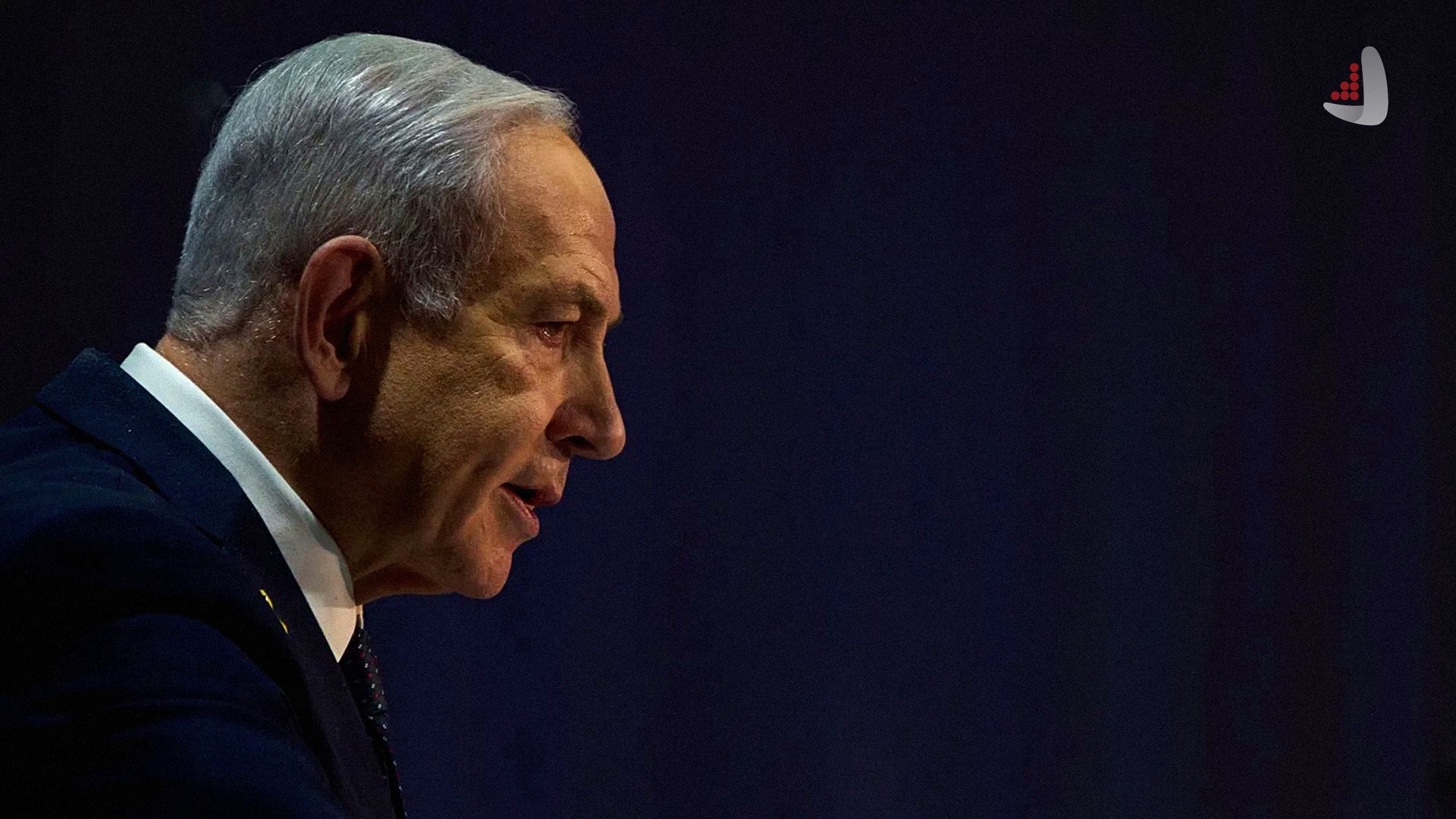
The costs of war and divisions within the Trump administration have constrained Netanyahu’s ability to influence U.S. policy.
According to Atlas Diplomacy, a commentary titled “Has Netanyahu’s Influence in Washington Declined?” published by the Tehran Institute, examines changes in the balance of political forces surrounding the Trump administration. It attributes the relative decline in Netanyahu’s ability to shape U.S. policy toward Iran to the rising costs of war, divisions within the administration, and the changing role of Republican actors—a development that does not mean the end of Israeli influence. What follows is a summary of the commentary.
Last year, Netanyahu and his Republican allies succeeded in steering Trump toward launching two wars against Iran, an indication of the considerable weight of the Israeli lobby within the U.S. decision-making structure. The current circumstances, however, differ markedly from those of the past. The protracted war, rising economic and political costs, and the emergence of divisions within the Trump administration have created conditions that constrain the Israeli prime minister’s room for maneuver in Washington.
The Ramadan War, unlike the Twelve-Day War, has continued beyond initial U.S. estimates, increasing the risk of economic and electoral consequences for Republicans. At the outset, the U.S. and Israeli governments expected the conflict to end within a short period, but Iran’s resistance and the inability to achieve the desired objectives quickly have complicated the initial calculations. Under such circumstances, escalating tensions with Iran carries greater costs for the Trump administration, making it more difficult to accept Netanyahu’s arguments for continuing the conflict.
One important factor behind this shift has been the failure of Israeli assessments concerning Iran’s resilience. The expectation that Iran could be transformed into something resembling Venezuela provided, for a time, the impetus needed for Trump to support an aggressive approach. But Tehran’s continued resistance demonstrated that such an assessment did not correspond to the realities of Iran. As a result, Netanyahu’s ability to persuade Trump to once again escalate tensions has diminished.
The political atmosphere in Washington also shows signs of this shift. During Netanyahu’s recent visit, members of the Trump cabinet stressed the need to demonstrate a genuine willingness for peace, while J. D. Vance adopted a more explicit stance against the Israeli approach. Trump’s public displeasure with the airing of certain sensitive issues also indicated that coordination between the two sides is no longer as frictionless as it once was.
The death of Lindsey Graham, one of Netanyahu’s closest allies in the United States, is another factor altering this balance. Graham had close ties with Trump and was also capable of mobilizing Republicans and the party’s public opinion in support of Israeli policies. The loss of such a link in the chain limits Netanyahu’s capacity to exert direct influence on the U.S. president.
The more significant change, however, is J. D. Vance’s increasingly prominent involvement in the Iran file. Unlike Steve Witkoff and Jared Kushner, who had broader ties with pro-Israel currents, Vance draws support from different constituencies within the Republican Party and takes a more revisionist approach to U.S.-Israeli relations. His expanding role, therefore, indicates the introduction of new considerations into decision-making on Iran.
Overall, Netanyahu’s influence in Washington has not disappeared, but it faces greater constraints than it did last year. The protracted war, domestic costs for Trump, cabinet divisions, and the removal of several key allies have altered the balance of power. Rather than signaling the end of Israeli influence, this situation is more indicative of a decline in Netanyahu’s ability to unilaterally impose his priorities on U.S. foreign policy.