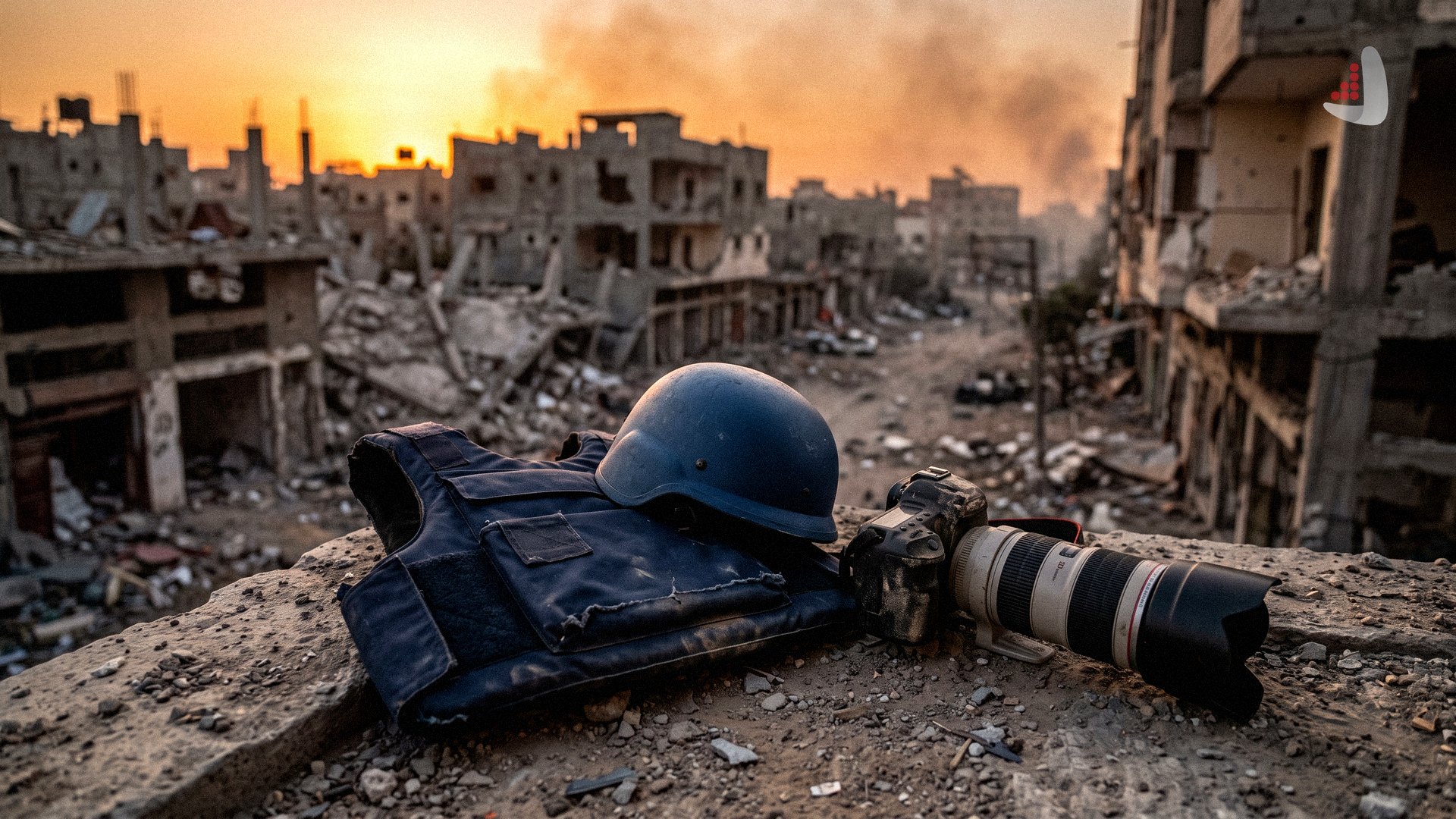
After three years of war and the killing of hundreds of journalists in Gaza, press gear has turned from a shield into a military target, leaving global awareness futile without concrete action.
According to Atlas Diplomacy, an opinion piece titled "Reporting on Gaza Is Our Duty, But Who Protects the Journalists?" by Plestia Alaqad has been published in The New Arab. Drawing on the firsthand field experiences of Palestinian journalists in Gaza, the piece chronicles the systematic targeting of media workers by Israel and the complicity of international outlets in normalizing the violence. Below is an abstract of the piece.
Around the anniversary of October 7, Palestinians are once again flooded with interview requests from Western media outlets—outlets that remember Gaza only during Israeli aggression or genocide and focus primarily on asking whether interviewees condemn Hamas. Since the genocide began, official figures indicate that over 74,000 Palestinians, including more than 21,000 children, have been killed, nearly 2 million people have been displaced, and 80 percent of the Gaza Strip’s infrastructure has been destroyed. Wearing a press vest and helmet has not protected media workers; instead, it has made them direct targets, with the Committee to Protect Journalists recording 247 journalists killed, 174 injured, and 118 imprisoned.
Journalists such as Hatem Rawagh and Mohammed Abu Safia, who reported from the ground from the earliest days of the war, have constantly been torn between their duty to document the truth and the fear that their profession could cost their families their lives. The ordeal of Al Jazeera journalist Wael Dahdouh, who had to report on the killing of his own family in an Israeli airstrike, became a constant nightmare for Gaza’s reporters. Even Belal Jadallah, founder of Press House Palestine—who trained scores of young journalists on how to stay safe in the field and choose their words carefully—was killed when an Israeli tank shell or airstrike hit his car.
Watching colleagues killed one after another proved that when the very person who taught safety protocols could not be protected, a press vest and helmet offered no deterrence. Even so, the journalists who remain in Gaza view continued reporting as their duty, though three years into the war they recognize that informing the world is not enough on its own, and that knowledge without accountability and justice means nothing.
Now, three years into the genocide, media coverage coming out of Gaza continues to dwindle because journalism itself has been made a target. While the killing of journalists in Gaza sets a dangerous precedent for the future of press freedom worldwide, many international media outlets contribute to the injustice through所谓的 "measured" language that obscures realities and normalizes violence. Bearing witness and telling the truth is the duty of Gaza’s journalists, but the responsibility to turn that truth into action cannot rest on their shoulders alone./ Source