Iraq is facing a struggle over weapons control, resistance groups, and the future of its security architecture.
According to Atlas Diplomacy, an article titled “Iraq’s Resistance Weapons at the Jurf al-Sakhr Crossroads: Actors’ Moves and Future Scenarios,” written by Sina Alizadeh and published by Institute Tehran, examines Iraq’s weapons-control debate and argues that the issue extends beyond disarming armed groups. It represents a broader attempt to redefine relations between the Iraqi state, Hashd al-Shaabi, resistance factions, Iran, and the United States while reshaping Iraq’s security architecture.
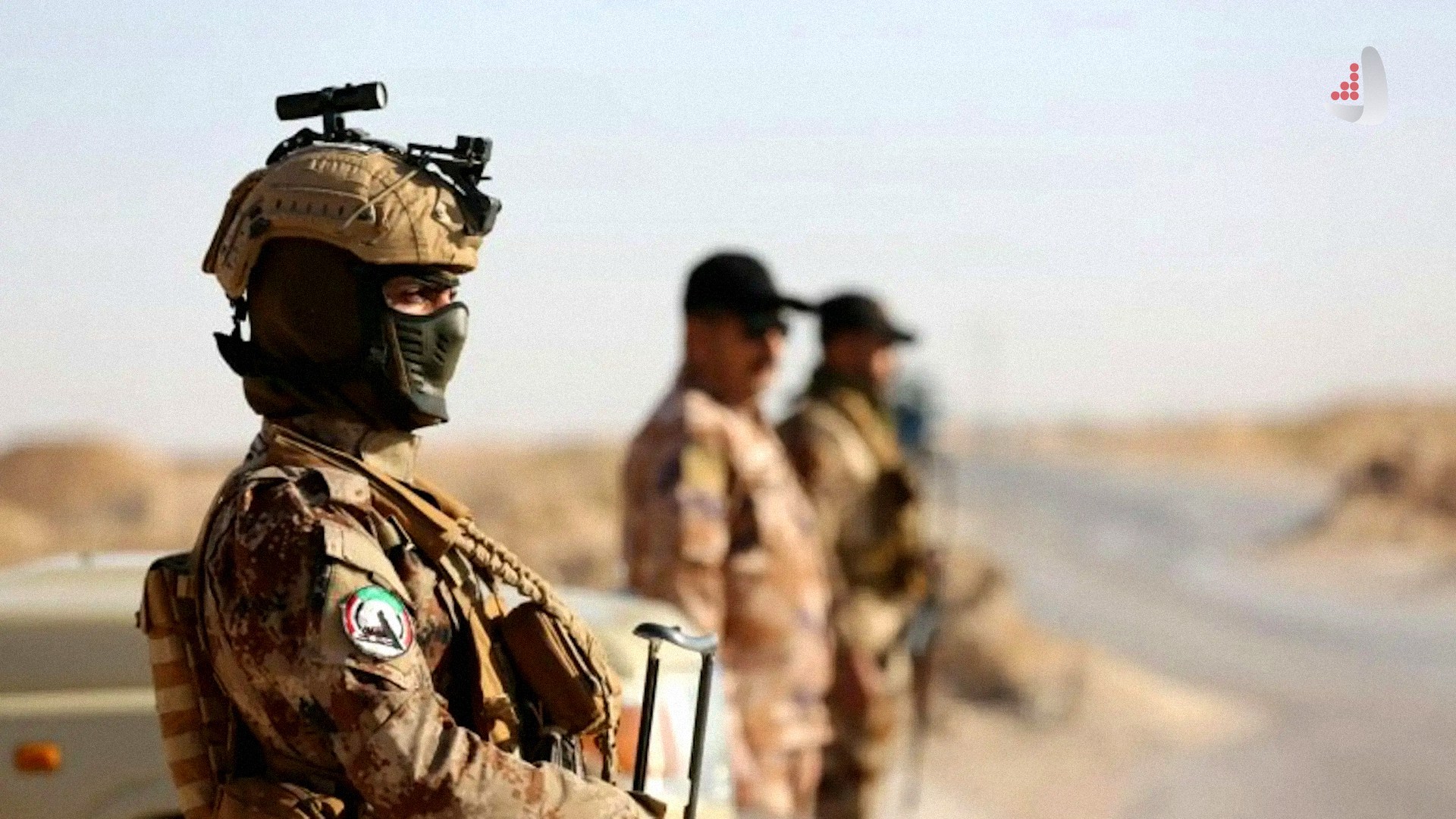
The weapons-control issue in Iraq has become one of the country’s most complicated political and security challenges. Rather than being merely a campaign to disarm armed groups, the central questions concern the position of resistance factions within Iraq’s official institutions, command authority, financial networks, strategic weapons, and the degree of independence in security decision-making. Many of these groups have been incorporated into the legal framework of Hashd al-Shaabi since 2016, making the issue less about the existence of weapons and more about how military and political power are integrated into the state structure.
The Iraqi government’s weapons-control initiative seeks to strengthen state authority over security institutions. However, distinctions between complete disarmament, transferring weapons to state control, organizational integration, and restructuring Hashd al-Shaabi remain unclear. This ambiguity creates room for maneuver by domestic and foreign actors. Linking resistance groups’ weapons to terrorism legislation could also transform a political dispute into a security crisis.
Recent developments indicate that some factions, including Asaib Ahl al-Haq and Kataib Imam Ali, have expressed readiness to place weapons under state control. However, this should not be interpreted as full disarmament, as genuine implementation requires mechanisms for verifying weapons storage, command structures, bases, and financial resources. Current developments appear to represent political repositioning rather than the elimination of military capabilities.
Meanwhile, factions such as Kataib Hezbollah and Harakat al-Nujaba continue to oppose surrendering independent military capabilities. They view weapons as part of a deterrence mechanism against foreign forces, particularly the United States, arguing that resistance capabilities must remain as long as external threats continue. This position has created divisions within the resistance camp and among Shiite political networks.
The Jurf al-Sakhr area has become a central point in this dispute. Its significance extends beyond geography, as it has become a symbol of independent factional presence and a test of state authority over sensitive security zones. Any attempt by government forces to enter the area without political coordination could risk armed confrontation, while gradual state control could signal the transfer of security authority from armed groups to official institutions.
Iran’s approach appears focused on preventing direct confrontation between the Iraqi government and resistance factions while preserving the political and deterrence role of these groups. Recent Iranian diplomatic engagements in Baghdad highlight the importance of this issue for Tehran. Iran’s likely strategy is to accept a greater role for the Iraqi state while preventing the dismantling of resistance networks.
The United States, however, views the issue beyond weapons transfer alone. Washington focuses on command structures, financial networks, external links, and operational capabilities. From this perspective, formal integration without structural transformation would not resolve the security challenge. Therefore, U.S. pressure may shift from direct disarmament toward restructuring Hashd al-Shaabi, restricting financial channels, and targeting faction leaders.
Three possible scenarios can be identified: integration of some factions into state structures while preserving political influence; limited transfer of certain weapons while maintaining existing networks; or forced confrontation with groups rejecting disarmament, which could trigger internal instability.
Overall, Iraq’s resistance weapons issue is not simply a disarmament project but a broader process of redefining power relations in post-crisis Iraq. The outcome will depend on Baghdad’s ability to balance state sovereignty, Hashd al-Shaabi’s role, U.S. concerns, and Iran’s interests. The decisive factors will be the actual transfer of weapons, changes in command structures, and Iraq’s ability to establish an independent security order. / Source