Anti-Iranian sentiment can be examined on three levels.
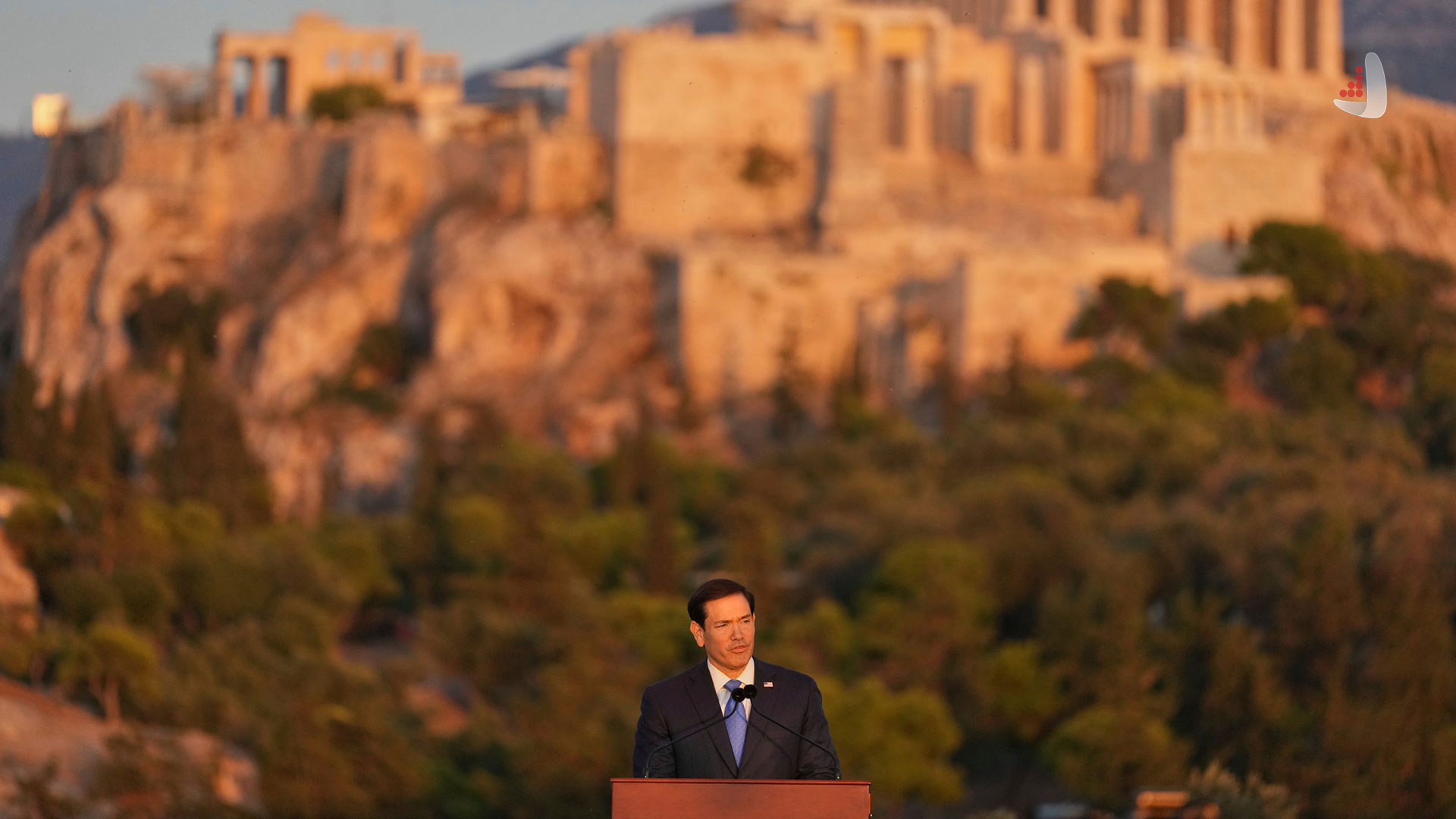
According to Atlas Diplomacy, the article “Xerxes in Athens, Rubio at an Impasse,” written by Shahram Shomali, was published by Iranian Diplomacy. Focusing on Marco Rubio’s speech in Athens and his linking of current tensions between Iran and the United States to the ancient Greco-Persian wars, the piece examines the political and strategic motives behind Washington’s civilizational narrative and Iran’s options for responding through historical, diplomatic, and cultural engagement. The following is a summary of the piece.
In October 2026, U.S. Secretary of State Marco Rubio delivered a speech at Pnyx Hill in Athens that reframed the current confrontation between Washington and Tehran in historical and civilizational terms. Referring to Xerxes’ invasion of Greece in 480 BCE and the burning of the Acropolis, Rubio argued that today’s threats have roots similar to those of the ancient world. He described the Islamic Republic of Iran as a “cult of death,” a phrase that prompted widespread reactions in Iran and was criticized as an example of the selective political use of history. The central question is why a senior diplomatic official would turn to a narrative dating back 2,500 years to explain a contemporary confrontation.
One explanation concerns the diplomatic and military context of Rubio’s visit. During the trip, the United States pursued major arms agreements with Greece, including deals involving F-35 fighter jets and advanced defense systems. As a NATO member and a longstanding purchaser of American weapons, Greece occupies a strategic position in Washington’s regional policy. In this context, invoking the historical enmity between Iran and Greece could help strengthen political solidarity and justify military cooperation. By describing Greece as a source of stability and an essential NATO ally, Rubio also sought to emphasize the importance of this partnership within the broader framework of Western security.
The second dimension involves a shift in the U.S. administration’s narrative about the war. After months of conflict and failure to achieve its initially stated objectives, the language of “counterterrorism” has given way to claims about “defending Western civilization.” This shift may indicate both the weakening of the war’s original justifications and the growing influence of neoconservative currents within American decision-making circles. By praising national power and portraying the United States as the heir to an imperial tradition, Rubio attempted to elevate the conflict from a political and security dispute to a confrontation over identity. His call for European countries to return to the values of ancient Greece can likewise be interpreted as an effort to repair transatlantic divisions and secure European support for Washington’s policies.
Rubio’s account of the ancient Greco-Persian wars, however, raises important historical questions. The burning of Athens during Xerxes’ campaign cannot be examined separately from earlier events, particularly the Ionian Revolt and the burning of Sardis in 498 BCE by rebels supported by Athens and Eretria. This historical context complicates the simplified narrative in which Persia appears solely as an aggressor and Greece solely as the defender of civilization. Selective references to the past can turn history into a tool for legitimizing present-day policies.
Three approaches are proposed for Iran’s response. First, Iran could actively reinterpret its historical legacy, including the Achaemenid administrative system, religious tolerance, and the Cyrus Cylinder, rather than limiting itself to defensive reactions. Second, it could highlight contradictions in Western narratives of civilization by pointing to colonialism, slavery, the genocide of Indigenous Americans, and wars such as those in Vietnam, Iraq, and Afghanistan. Third, it could expand public and cultural diplomacy and build political and narrative partnerships with countries in Asia, Africa, and Latin America that criticize Western-centric interpretations. Such an approach would require sustained, long-term planning rather than merely issuing reactive statements.
The piece also identifies stalled negotiations, electoral calculations, and the failure of nonmilitary instruments as factors behind the renewed possibility of war. Disagreements over Iran’s nuclear program, regional influence, and sanctions relief contributed to the failure of the June 2026 agreement, leaving both sides facing a choice between returning to negotiations and escalating the confrontation. In this environment, war could become a means of displaying strength and diverting public attention from domestic problems. Ultimately, this analysis argues that U.S. hostility toward Iran is rooted less in emotion alone than in geopolitical interests, energy resources, regional influence, and Iran’s political independence. Rubio’s derogatory language and portrayal of Iran as a dangerous “other” are also linked to the Orientalist tradition examined by Edward Said. From this perspective, Iran’s response should go beyond anger and denial, using its history, culture, and active diplomacy to strengthen an independent narrative in the international arena./ Source