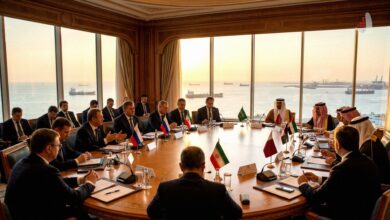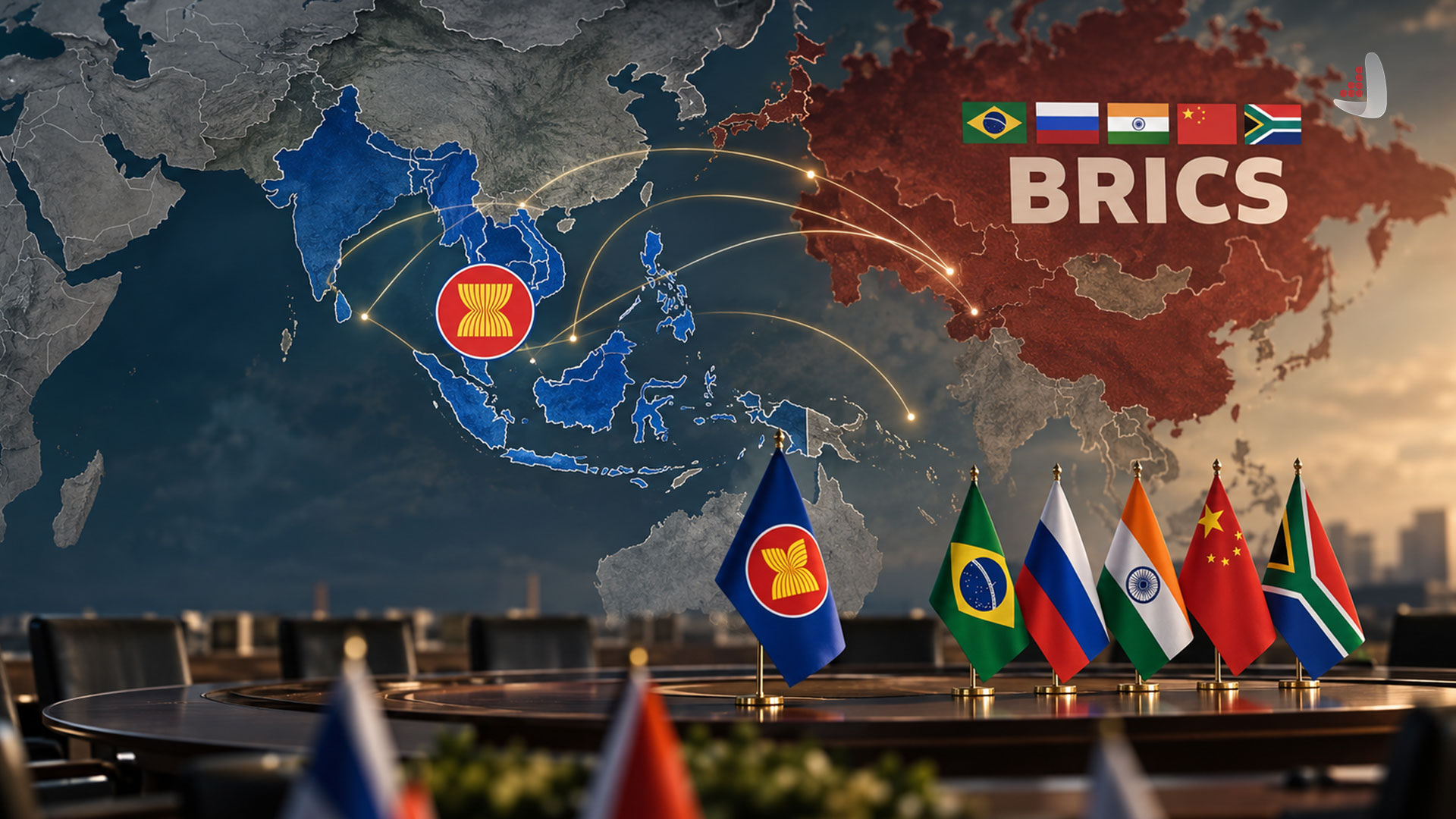
ASEAN gained a diplomatic opening at BRICS, but internal divisions limited its collective influence.
According to Atlas Diplomacy, the article “ASEAN–BRICS Engagement Expands: Opportunities and Limitations,” published in the Strategic Council on Foreign Relations, examines ASEAN’s diplomatic opportunities at the 2026 BRICS summit and the obstacles preventing its participation from translating into effective influence. The analysis argues that internal disagreements and member states’ differing relationships with major powers constrain ASEAN’s capacity for collective action. The following is a summary of the article.
ASEAN’s participation in the eighteenth BRICS summit, held in India in September 2026, signaled Southeast Asian countries’ efforts to strengthen their role in an emerging multipolar international order. The gathering of an expanded BRICS membership emphasized political, economic, and technological cooperation. However, the presence of an ASEAN representative did not amount to the region’s collective accession to BRICS or the formation of a unified position toward the West.
As host, India presented BRICS as a mechanism for strengthening economic resilience, innovation, development, and cooperation among emerging economies. Narendra Modi also distinguished being “non-Western” from being “anti-Western.” The summit agenda encompassed reforms to global governance and financial cooperation, alongside artificial intelligence, financial technology, digital infrastructure, and more resilient supply chains—all especially relevant to economies vulnerable to external shocks.
Ferdinand Marcos Jr., the Philippine president and ASEAN’s rotating chair, approached the summit primarily as a representative of Southeast Asia’s collective interests rather than as an advocate of unilateral Philippine alignment with BRICS. He identified peace and security, economic corridors, and people’s empowerment as regional priorities. Participation allowed ASEAN to emphasize sovereignty, international law, and consensus-based diplomacy, bringing its voice to Global South discussions without entering into direct confrontation.
This presence formed part of ASEAN’s strategy of balancing and hedging amid great-power competition. Regional governments seek to benefit simultaneously from economic opportunities offered by China, the United States, India, and other actors while retaining independent decision-making. ASEAN, however, is far from homogeneous: Indonesia is a full BRICS member, Malaysia and Vietnam engage as partner countries, and the Philippines has adopted a firmer approach toward China on maritime security issues.
Disagreements over the South China Sea, Myanmar’s political crisis, the Thailand–Cambodia border dispute, and territorial claims among some members complicate consensus-building. These are not merely temporary differences; they are connected to ASEAN’s consensus-based institutional structure. Members’ unequal economic dependence on China and their differing security relationships with the United States further mean that the organization’s collective bargaining capacity within BRICS can be weaker than the sum of its members’ national capabilities.
The Philippine chairmanship has not overcome these obstacles. Manila’s firm stance on Chinese actions resonates with some members but unsettles governments that prefer a more cautious relationship with Beijing. Domestic tensions involving Marcos Jr. and Vice President Sara Duterte, together with China-related political disputes, have also raised questions about the cohesion and credibility of Philippine representation. ASEAN’s presence therefore produced greater diplomatic visibility rather than transformative regional agreements.
Overall, engagement with BRICS broadens Southeast Asia’s economic and diplomatic options without requiring exclusive alignment with any bloc. This limited but meaningful achievement preserves the region’s place in discussions about the changing world order. Yet durable influence depends on addressing internal disagreements, strengthening the credibility of the rotating chairmanship, and developing defensible common positions. A seat at the negotiating table, without political cohesion, does not necessarily translate into the power to shape outcomes./ Source