Government Corruption Is Emerging as a Powerful Electoral Liability for Republicans Ahead of the Midterms.
According to Diplomacy Atlas, a note titled « Corruption on the Ballot» by Ruth Marcus, published in The New Yorker, examines how public anger over political corruption is becoming a decisive issue in the 2026 U.S. midterm elections. It analyzes the growing connection between allegations of official self-enrichment, economic dissatisfaction, and declining confidence in the Republican Party, while assessing how Democrats are using corruption allegations to challenge Republican candidates in competitive races. The abstract of this article follows.
Government corruption has emerged as one of the most prominent concerns among American voters ahead of the November 2026 midterm elections, potentially creating a significant electoral vulnerability for Republicans. Although accusations of corruption have long been a familiar feature of American political campaigns, the issue is gaining unusual importance because of widespread economic dissatisfaction and growing perceptions that elected officials are enriching themselves while ordinary citizens struggle with rising living costs. Recent voter focus groups and national polling indicate that frustration over corruption is increasingly transcending traditional partisan divisions.
The shift became particularly visible during focus groups of MAGA voters conducted in Colorado in late August. Participants spontaneously expressed anger over members of Congress accumulating personal wealth while households faced difficulties paying for gasoline and other necessities. Subsequent polling reinforced these findings. A Fox News survey published in mid-October identified government corruption as voters' leading concern, surpassing inflation, fuel prices, and health care. Approximately 88 percent of respondents described themselves as extremely or very concerned about corruption. Other surveys revealed that 89 percent of Americans believe corruption is widespread in government, representing a ten-percentage-point increase from the previous year.
The economic environment is central to understanding this development. Corruption has traditionally provided opposition parties with an effective campaign message because it appeals to voters across ideological boundaries without requiring a detailed policy alternative. However, economic hardship makes accusations of political self-enrichment considerably more damaging. When household expenses increase and financial security deteriorates, voters become less tolerant of politicians perceived to be exploiting public office for private benefit. Consequently, corruption is increasingly being presented not merely as an ethical problem but as a contributing factor to the country's affordability crisis.
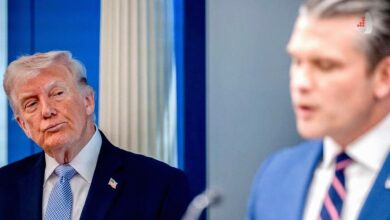
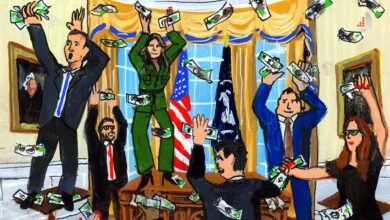
President Donald Trump's financial and political controversies have further intensified these concerns. Allegations surrounding a luxury Qatari aircraft provided for presidential use, payments to Melania Trump's production company for her documentary, and substantial cryptocurrency profits associated with the Trump family have reinforced perceptions of conflicts of interest. A Washington Post, ABC News, and Ipsos survey released on October 18 found that 66 percent of Americans believed Trump was using the presidency for personal gain, compared with 56 percent a year earlier. Particularly significant for Republicans, much of this increase came from Republican voters and independents who lean toward the party. Other polling also suggests that Republicans are more frequently associated with corruption than Democrats.
Democrats have responded by making corruption a central component of their midterm campaign strategy. According to advertising expenditure data, Democratic candidates and affiliated political organizations have spent approximately $182 million on corruption-focused advertisements in House and Senate contests during 2026, substantially exceeding Republican spending and the combined Democratic expenditure on similar campaigns during the previous four election cycles. Their strategy emphasizes the relationship between political misconduct and economic consequences, arguing that corporate lobbying, political favoritism, and conflicts of interest contribute to higher costs for ordinary Americans.
This approach is particularly visible in competitive Senate races. In North Carolina, Democratic advertisements have targeted Republican candidate Michael Whatley over his previous lobbying activities for the oil industry, connecting his professional background to rising energy prices. In Maine, Democrats have devoted approximately $3 million to advertisements questioning Republican Senator Susan Collins's ethical record. The campaign draws on reporting about an FBI investigation, discontinued in the previous year, into alleged illegal campaign contributions from a defense contractor. Collins has denied wrongdoing. Democrats are also connecting her political alignment with Trump to the allegations, seeking to present both as evidence of broader ethical problems within the Republican establishment.
Texas represents another major battleground. Republican Attorney General Ken Paxton has faced corruption allegations, including controversy over a luxury Montblanc pen reportedly taken from another lawyer. His spokesperson described the incident as a mistake. Democratic candidate James Talarico has framed Paxton as representative of a political system in which corruption and economic hardship reinforce one another. Republican Senator John Cornyn had previously used similar allegations against Paxton during their primary contest.
The electoral effectiveness of this strategy remains uncertain. The economic relationship between corruption and affordability is not necessarily straightforward, and voters may interpret ethical controversies through partisan loyalties. Nevertheless, the growing perception that political elites benefit personally while households face financial pressure creates an opportunity for Democrats to broaden their appeal. The central challenge for Republicans is that corruption allegations are no longer confined to traditional opposition rhetoric; they are increasingly resonating within their own electoral coalition, potentially weakening the party's credibility in competitive congressional races./ Source