Trump May Resume Strikes Against Iran While Preparing to Shift Responsibility for the War’s Failures.
According to Diplomacy Atlas, a note titled « Trump Searches for a Fall Guy to Blame for Iran» by Nancy A. Youssef and Jonathan Lemire, published in The Atlantic, examines the growing tensions within the Trump administration over the prolonged conflict with Iran, the political consequences of the war, and the president’s efforts to reassess the performance of his military advisers while considering renewed military action. The analysis highlights the intersection of military decision-making, domestic political calculations, and accountability within the administration. The abstract of this article follows.
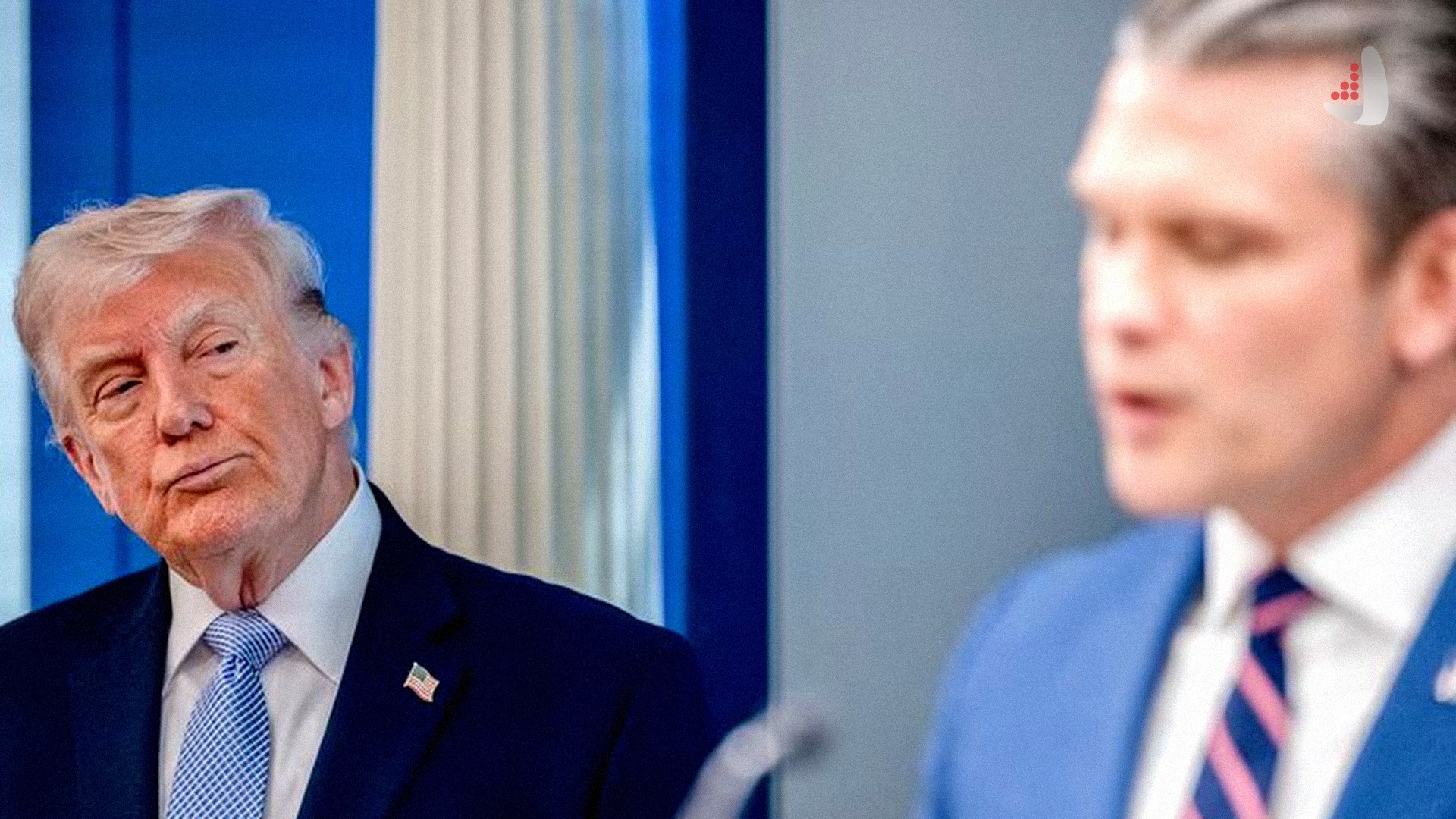
President Donald Trump is facing a difficult decision over whether to resume military strikes against Iran while simultaneously confronting the political and institutional consequences of a conflict that has failed to deliver the decisive victory initially promised. With the November midterm elections approaching, the administration is increasingly concerned that the war has weakened Republican electoral prospects. Trump has reportedly begun questioning the competence and reliability of Defense Secretary Pete Hegseth and Chairman of the Joint Chiefs of Staff General Dan Caine, both of whom were influential advocates of the campaign and initially expressed confidence in its prospects.
Tensions surrounding Hegseth have intensified amid allegations that he has presented an overly optimistic assessment of the war to maintain Trump's confidence. Several individuals close to the president believe the defense secretary prioritizes telling Trump what he wants to hear rather than providing an accurate account of military developments. The Pentagon has rejected these allegations, insisting that Hegseth provides comprehensive operational
information. His position has also been complicated by an aggressive investigation into unauthorized disclosures. Last week, he dismissed Army Lieutenant General Brett Sylvia, a senior Joint Staff planning officer, following alleged failures in multiple polygraph examinations connected to information leaks. The dismissal exposed tensions between Hegseth and the Joint Staff, which operates under Caine. The chairman initially issued a statement thanking Sylvia for his service before subsequently acknowledging that it did not adequately reflect the circumstances of his departure. The episode has raised questions about Caine's influence and the growing politicization of military leadership.
Trump's dissatisfaction is closely connected to the deteriorating political outlook for Republicans. White House officials increasingly believe the party could lose control of the House and potentially the Senate. Trump has reportedly become frustrated that his political messaging is failing to resonate with voters and now considers the Iran conflict one of the principal causes of his difficulties. Rather than accepting responsibility for the strategic consequences of the war, he appears increasingly interested in identifying officials who assured him that the campaign would be short and successful.
Meanwhile, the administration is evaluating several military options presented by Hegseth, Caine, and Admiral Brad Cooper, commander of U.S. Central Command. These range from limited strikes lasting several hours to sustained operations over several weeks. Another possibility involves maintaining the naval blockade in the Strait of Hormuz while using the threat of renewed attacks as leverage in negotiations. A prolonged campaign could again target Iranian air defenses, military capabilities, and infrastructure, while another option would concentrate on Iran's nuclear facilities. However, attacks on infrastructure serving both civilian and military purposes could endanger civilians and raise serious questions under international humanitarian law.
Supporters of renewed military action argue that economic pressure and additional strikes could compel Tehran to negotiate. Nevertheless, previous operations have failed to produce the expected political concessions. Following the extensive U.S.-Israeli campaign that began in late February, subsequent limited attacks strengthened Iranian resistance and triggered retaliation against American assets and regional allies. Further operations could also accelerate the depletion of U.S. munitions stockpiles without guaranteeing strategic gains. Iran's regional partners, particularly the Houthis in Yemen, remain another unresolved challenge, with recent attacks against Saudi Arabia demonstrating that the network of threats has not been eliminated.
Diplomatic efforts are continuing alongside military preparations. Vice President JD Vance recently sent a letter to Iranian security official Mohsen Rezaei proposing renewed direct negotiations, with Iran's nuclear program identified as an essential issue from the outset. However, Washington has not clarified what concessions it might offer Tehran. International mediators are seeking a meeting around the time Trump is expected to decide whether to resume military operations. Meanwhile, renewed hostilities could increase oil prices, intensify economic pressures on the United States and its allies, and provoke Iranian retaliation. Senator Chris Murphy has warned that another campaign could produce devastating escalation and undermine the United States' commitment to international law.
The internal situation at the Pentagon further complicates the administration's calculations. Hegseth has dismissed or forced out more than two dozen senior generals and admirals, creating uncertainty within military leadership. Some officials suspect that weakening the Joint Staff could help Hegseth distance himself from the war's consequences. The historical precedent of the 2006 midterms also
illustrates the risks: after Republicans suffered major losses over the Iraq War, President George W. Bush dismissed Defense Secretary Donald Rumsfeld but subsequently escalated the conflict through a troop surge. Similarly, electoral defeat may not persuade Trump to abandon military action. The central dilemma is therefore not simply whether to strike Iran again, but whether renewed escalation can produce a sustainable political and strategic outcome before its military, economic, and institutional costs become even greater./ Source