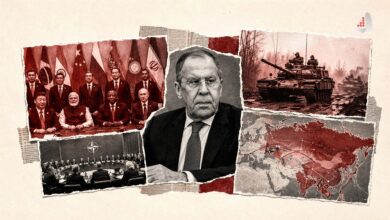
BRICS must build a more inclusive model of global governance without imitating Western blocs.
According to Atlas Diplomacy, the article “How Can BRICS Move Toward Global Governance?” by Timofei Bordachev, published by the Valdai Discussion Club, examines BRICS’s potential to become an effective institution of global governance. It argues that the group’s success will depend on avoiding bloc politics, addressing the fundamental interests of its members, and advancing development projects that benefit the majority of the world’s countries. What follows is a summary of the article.
BRICS is expanding at a time when the global hierarchy of power is shifting and traditional institutions of international governance are facing declining legitimacy and effectiveness. The group could become one of the pillars of the future international order, but only if it avoids copying Western models or turning itself into a closed bloc designed to compete with others. Its principal advantage lies not in the concentration of military power, but in the diversity of its membership and its capacity to connect national interests with the broader needs of developing countries.
Most of the world’s established international organizations were created to stabilize a balance of power, coordinate the foreign policies of their members, or protect a particular political camp. BRICS, by contrast, was not founded on the basis of a formal hierarchy among its members, nor was its original mission to formulate a common policy against a particular group of states. Greater cohesion must therefore begin with the definition of goals that both address members’ domestic priorities and enable cooperation among countries that differ in size, capabilities, and political systems.
The experiences of the European Union, the Association of Southeast Asian Nations (ASEAN), and the Shanghai Cooperation Organization (SCO) show that international institutions are most effective when they are created to solve specific problems faced by their members. European integration helped stabilize the economic and political position of countries devastated by the Second World War. ASEAN sought to reduce conflict among the newly independent states of Southeast Asia, while the SCO emerged with the aim of strengthening stability in Central Asia and in the broader security environment of Russia and China. All three organizations, however, encountered serious limitations when they moved beyond their original missions.
The Group of Seven (G7) and the North Atlantic Treaty Organization (NATO) offer a different model. In addition to preserving the internal cohesion of the West, both structures coordinate Western policies toward other actors. The G7 no longer possesses the capacity to direct the entire global order, yet it continues to function as a center of political and economic coordination for the West. NATO, for its part, remains an instrument for maintaining military readiness and preserving the power structure of the Western camp. Transforming BRICS into a comparable institution would weaken its very raison d’être and push the world toward a new division among rival blocs.
Following the expansion of its membership in 2024 and 2025, BRICS’s central challenge is to build internal stability without diminishing its external appeal. The solution lies in advancing projects that protect the essential interests of its members while also delivering tangible benefits to countries outside the group. Sustainable development could serve as the central pillar of such cooperation, since many countries across the Global South face shortages of resources, weak infrastructure, and unequal access to international financial institutions.
Developing financial and operational mechanisms for development would move BRICS closer to becoming an influential institution of global governance rather than merely a political forum. The launch of joint initiatives in West Africa could provide a practical example of this approach, provided that such cooperation is grounded in the needs of regional countries, capacity transfer, and mutual benefit. The future of BRICS will depend on its ability to provide public goods, address development challenges, and avoid bloc politics. Success along this path could produce a more inclusive model of global governance—one based not on coercion, but on participation and shared benefit.