Moscow seeks its future security in a Eurasian, post-Western order.
According to Atlas Diplomacy, the article “Beyond the War in Ukraine: Lavrov’s Account of Russia’s Historic Confrontation with the West,” written by Saeed Khavari-Nejad and published by the Institute for Iran-Eurasia Studies, IRAS, examines the Russian foreign-policy establishment’s perspective on the collapse of trust in the West, the end of Europe’s independent role, and the emergence of a Eurasian security architecture. It presents the war in Ukraine as part of a broader struggle over the future world order. What follows is an abridged version of the article.
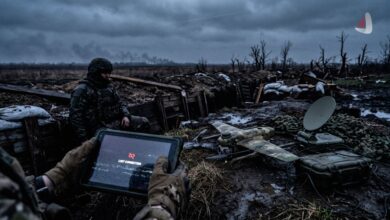
From Moscow’s perspective, the war in Ukraine is no longer merely a dispute over borders, territory, or NATO membership. Rather, it is regarded as part of a much broader confrontation over the shape of the future world order. Russia sees the present crisis as the result of a long process involving NATO’s expansion, the European Union’s growing influence in Eastern Europe, and Western support for political change in countries along Russia’s periphery. In this view, Ukraine is not the principal cause of the crisis, but the arena in which a deeper conflict between two competing conceptions of security and international order has become visible.
At the heart of this worldview lies the complete collapse of trust between Russia and the West. From Moscow’s perspective, the negotiations of the past two decades were not instruments for resolving disputes, but a cover for the gradual advance of Western institutions toward Russia’s borders. The Orange Revolution, the events of 2014, the Minsk agreements, the security proposals made before the war, and the Istanbul negotiations are all placed within a single continuum—one that Moscow believes was designed to constrain Russian power and limit its sphere of influence. For this reason, even a ceasefire or political agreement would not necessarily restore trust, because, in Moscow’s view, the fundamental issue concerns the nature of Western conduct, not merely a temporary dispute.
Within this framework, Russia portrays itself as a defensive power responding to the military, political, and economic expansion of the West. This interpretation frames Moscow’s actions not as an expansionist project, but as an attempt to prevent the further contraction of Russia’s security and geopolitical space. Understanding this perception is essential to analyzing the Kremlin’s foreign conduct, even if its legitimacy or accuracy remains contested.
Another significant change is the end of Russia’s view of Europe as a potential partner or mediator. In the early years following the collapse of the Soviet Union, Moscow distinguished between Europe and the United States and hoped that the European powers could pursue policies more independent of Washington. Europe is now regarded as part of a united front whose objective is to defeat Russia and use Ukraine as an instrument for sustaining strategic pressure. The end of the war, therefore, would not necessarily lead to the restoration of the former relationship between Russia and Europe.
Moscow’s preferred alternative is not the reconstruction of Europe’s previous security order, but the creation of an inclusive security architecture spanning the whole of Eurasia. This project is linked to multipolarity, Greater Eurasia, the expansion of BRICS, and the strengthening of the Shanghai Cooperation Organization. In this vision, the center of gravity of global politics is gradually shifting from the Euro-Atlantic sphere toward Eurasia, while non-Western powers gain a greater role in setting international rules. Overall, Russian foreign policy is moving beyond temporary security responses toward a civilizational and post-Western narrative. This narrative depicts Russia as an independent civilization, the West as an order in decline, and Eurasia as the center of the world’s future structure. From this perspective, the war in Ukraine is less a limited conflict than the principal arena for the transition from the post-Cold War order to a more multipolar and competitive international system