Pakistan is likely to avoid direct involvement in the Yemen war.
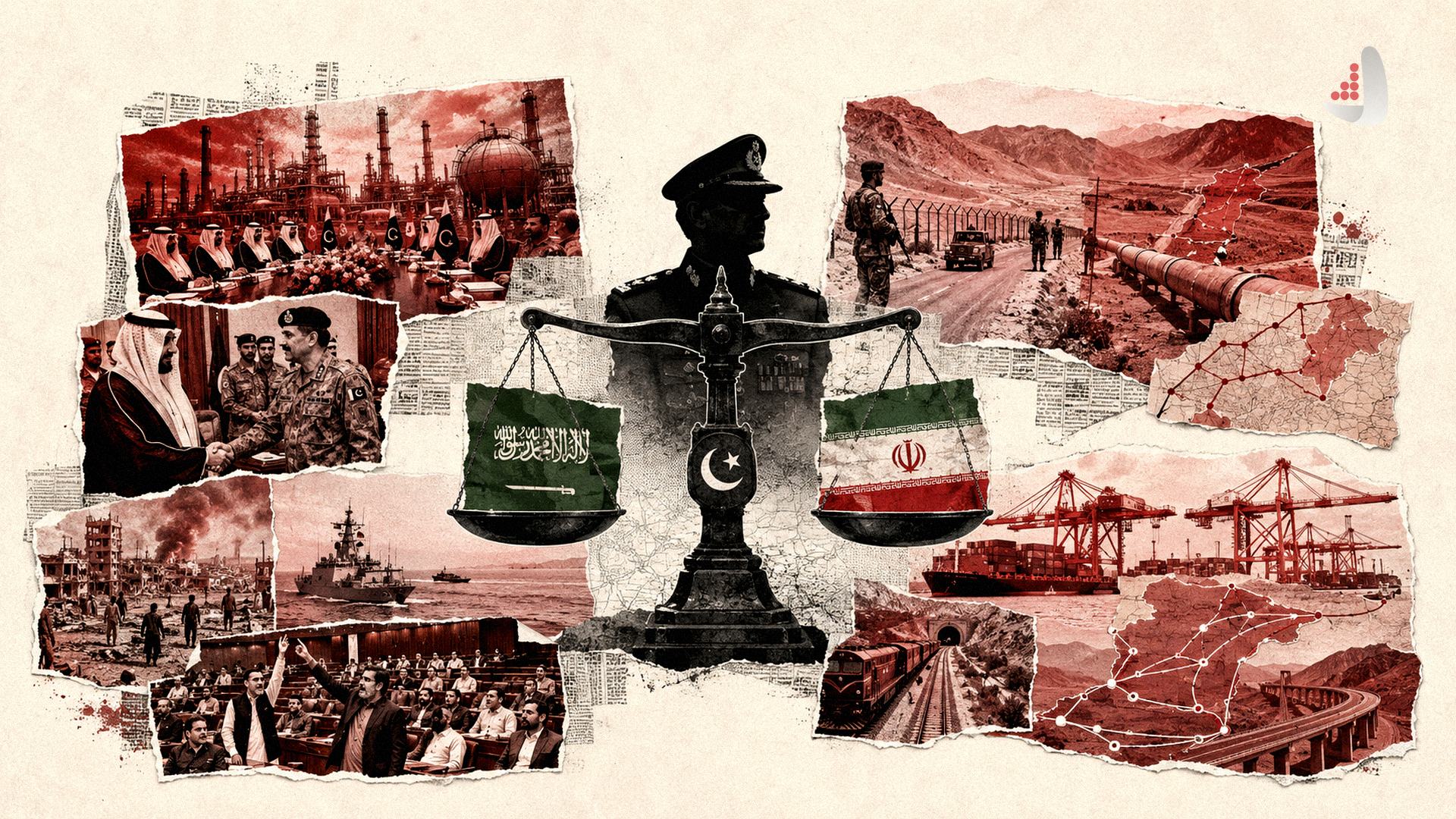
According to Atlas Diplomacy, the article “Islamabad in the Eye of the Storm: Pakistan’s Strategic Balancing Among Tehran, Riyadh, and Sana’a,” written by Parisa Ehteshamnia and published by the Institute of Iran-Eurasia Studies (IRAS), examines Pakistan’s constraints and options amid the escalating Yemen crisis and the rivalry between Tehran and Riyadh. It argues that economic, security, and domestic considerations are pushing Islamabad toward limited support for Saudi Arabia while preserving its relationship with Iran. What follows is a summary of the article.
Amid intensifying regional rivalries, Pakistan faces a multilayered strategic equation that simultaneously affects its energy security, economic relations, defense requirements, and domestic stability. The widening crisis in Yemen, mounting tensions between Iran and Saudi Arabia, and the possibility of an intensified confrontation between Riyadh and Ansar Allah have placed Islamabad in a position where any overt alignment could jeopardize its strategic interests. Pakistan’s geographic position, its military and nuclear capabilities, and its shared border with Iran make complete neutrality difficult.
Economic vulnerability is one of the principal factors shaping Pakistan’s behavior. The country is heavily dependent on energy imports, and rising oil prices or growing insecurity along maritime routes could place direct pressure on its foreign-exchange reserves, balance of payments, and domestic costs. At the same time, Saudi Arabia and the United Arab Emirates are among Pakistan’s most important financial partners. Economic assistance, investment, and the employment of Pakistani workers in Arab countries have made Islamabad’s relations with Riyadh and Abu Dhabi an economic necessity.
Iran, by contrast, is of direct security and economic importance to Pakistan. The shared border, the sensitive situation in Balochistan, cross-border trade, and the energy needs of adjoining regions mean that a deterioration in relations with Tehran would impose significant costs on Islamabad. Excessive alignment with Saudi Arabia could undermine security along Pakistan’s western border and weaken relations with Iran, while distancing itself from Riyadh carries the risk of reduced financial and political support from Arab states.
Pakistan’s experience during the Yemen war in 2015 shows that it draws a distinction between defense cooperation with Saudi Arabia and direct participation in war. At the time, parliament opposed military involvement in the conflict, a decision consistent with security pressures along the border with India, the Kashmir issue, domestic insecurity, and conditions in Balochistan. Those same constraints continue to make the deployment of combat forces to Yemen unlikely.
A more likely scenario is an expansion of intelligence, technical, training, and defense cooperation with Saudi Arabia, particularly in the areas of air defense, maritime security, and the protection of critical infrastructure. This level of support could address Riyadh’s expectations without turning Pakistan into a direct party to the war. At the same time, Islamabad will have to preserve its channels with Tehran so that cooperation with Saudi Arabia is not interpreted as a hostile move against Iran.
Domestic considerations also constrain the room for maneuver available to the government and the military. Pakistan’s religious and ethnic diversity means that involvement in a conflict with sectarian dimensions could heighten the risk of deepening internal divisions. The economic crisis and public sensitivity to the costs of war further reduce the incentive for direct intervention.
At the international level, Pakistan must reconcile expectations from the United States and Western countries for greater participation in maritime security with its strategic relationship with China. Beijing has little to gain from an expanding crisis that threatens energy routes and the China-Pakistan Economic Corridor. Taken together, these pressures are pushing Islamabad toward a strategy of “limited support and active mediation”—an approach designed to preserve relations with Saudi Arabia, prevent tensions with Iran, and avoid becoming trapped in a protracted war. The success of this policy will depend on Pakistan’s ability to simultaneously manage pressure from Riyadh, sensitivities in Tehran, and its own domestic fragility.