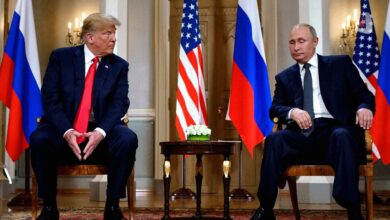
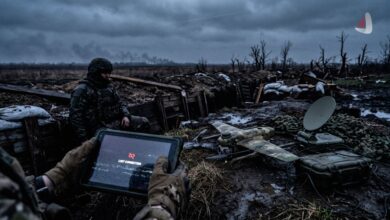
Trump is seeking to turn military failure into political gains by shifting pressure into Iran’s domestic arena.
According to Atlas Diplomacy, an article titled “What Is Trump’s Project? Where Do We Stand in the Game?”, written by Mohammad Zaeimzadeh and published by Farhikhtegan, examines the Trump administration’s approach after failing to achieve its initial war objectives. It argues that Washington’s strategy has shifted from direct military pressure toward a combination of blockade, sanctions, psychological pressure, and efforts to stimulate internal divisions in Iran. The emerging approach seeks to move the arena of confrontation from the external battlefield toward Iran’s domestic political and social environment. The following is a summary of the article.
Six months into the war, the initial objectives expected by the United States and Israel have not been achieved. Goals such as the collapse of Iran’s political structure, the fragmentation of the country, or a fundamental change in public behavior have not materialized. This has left the Trump administration seeking a way to transform the substantial costs of the war into a political achievement. Within this framework, direct military pressure has increasingly been supplemented by a broader set of coercive instruments, while attempts to influence Iran’s domestic environment have gained greater importance.
This shift can be observed in the simultaneous use of measures such as blockade, expanded sanctions, psychological operations, and actions below the threshold of a full-scale war. The objective is to maintain sustained pressure without immediately entering another major military confrontation. From this perspective, Washington’s diversification of pressure tools can both represent an attempt to confuse Tehran and indicate that some of its previous instruments have failed to deliver the desired results.
For Iran, the central challenge is presented as consolidating the gains of the war and establishing deterrence. This approach is based on the premise that external pressure should not lead to the erosion of social cohesion or the intensification of domestic divisions. From this standpoint, maintaining national unity and preventing political disagreements from turning into prolonged internal conflict become part of the national-security equation.
One example is the domestic dispute surrounding developments in southern Lebanon and the “Ali al-Taher” affair. According to the text, disagreements over this issue could, if simplified or politically exploited, become a source of greater social anxiety and declining political capital. The complexity of regional security issues also makes it difficult to attribute developments to a single factor, such as an Iranian decision, the actions of one commander, or Iran’s acceptance or rejection of an agreement.
The article identifies two forms of domestic political behavior as potential threats. The first involves groups seeking to deepen political divisions through polarization and accusations against officials and military figures. The second consists of actors who, by focusing on internal disputes following the crisis, downplay the actions of the United States and Israel while shifting responsibility for developments toward Iran. From the perspective presented, both approaches can divert national energy away from the central challenge of confronting external pressure.
The outlook emphasizes the need to distinguish the wartime environment from domestic electoral and political competition. As long as external confrontation continues, intensified internal disputes could contribute to achieving part of the strategic objective of external pressure. Maintaining national cohesion therefore does not mean eliminating expert disagreements. Rather, it means managing their timing and presentation and preventing them from becoming sources of social exhaustion.
Overall, the article argues that after failing to achieve its direct wartime objectives, Trump’s emerging strategy is increasingly focused on creating pressure within Iran’s domestic environment. From this perspective, Tehran’s central challenge is not merely responding to external pressure, but preventing that pressure from becoming connected to internal divisions. / Source