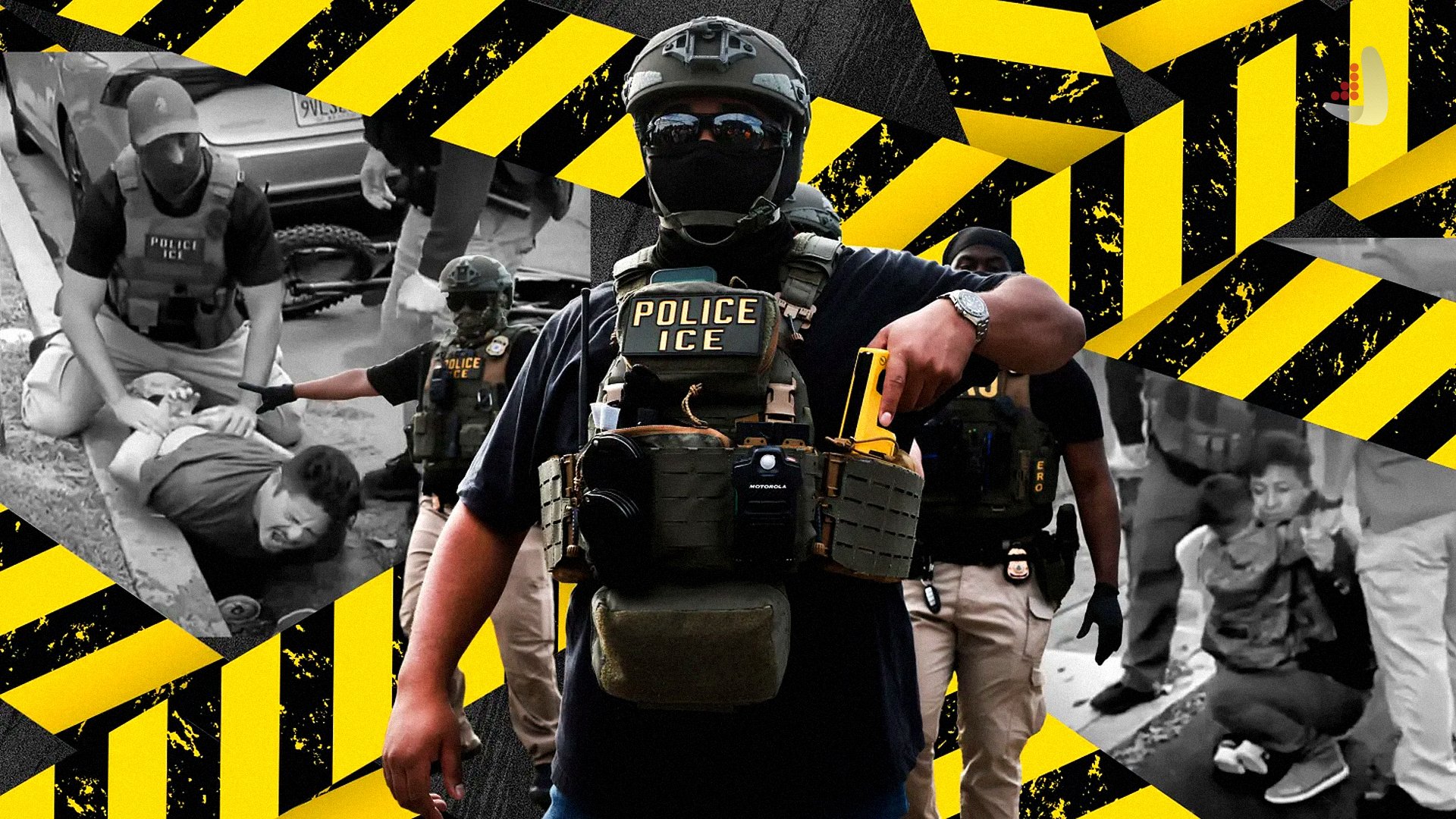
Immigration enforcement is spreading fear beyond migrants and weakening confidence in equal citizenship.
According to Diplomacy Atlas, a note titled “The Normalization of Cruelty in America Amid ICE Operations”, written by Adrian Carrasquillo and published by The Bulwark, examines how the Trump administration’s immigration enforcement policies have expanded beyond deportation into surveillance, intimidation, and the erosion of equal citizenship, affecting immigrants, naturalized Americans, and U.S. citizens alike. The analysis connects individual enforcement incidents with historical patterns of racial exclusion, restrictive asylum policies, and the growing use of immigration authorities in everyday disputes. Below, you can read the abstract of this note.
The expansion of immigration enforcement under President Donald Trump has intensified concerns about the treatment of migrants, the use of federal surveillance, and the protection of constitutional rights. Immigration and Customs Enforcement (ICE) has become central to the administration’s mass deportation agenda, while its operations have also contributed to an atmosphere in which immigration status, ethnicity, and perceived foreignness can expose individuals to intimidation and coercive treatment. These developments raise questions about accountability, due process, and the boundaries of executive authority.
The case of Ricardo Gonzalez, a U.S. citizen and former municipal employee in Long Beach, California, illustrates these concerns. Video footage reportedly shows an unmarked vehicle swerving toward Gonzalez before a masked agent orders him to the ground. Gonzalez identifies himself as an American citizen and says the vehicle struck him. Witness accounts and available footage indicate that agents restrained him while he complained of a broken arm. Reports also state that he was subjected to repeated tasering. Long Beach Mayor Rex Richardson subsequently filed a complaint seeking a formal investigation into the encounter, including the use of force and the apparent delay in providing medical assistance. The incident highlights the risks of enforcement conducted without adequate transparency and independent oversight.
Other encounters demonstrate the potential consequences for families. In Boston, 24-year-old Sebastian was reportedly forced off the road by ICE agents while taking his two children to a babysitter. Footage showed agents separating the distressed children from their father before eventually allowing him to leave with instructions to report to immigration authorities. He was reportedly not the individual agents had intended to locate. Such incidents demonstrate how enforcement operations can expose children and other bystanders to fear and trauma, even when the intended target is uncertain.
The broader implications extend to naturalized citizens and minority communities. An ICE investigative operation targeting Representative Ilhan Omar, a naturalized U.S. citizen, was described as part of efforts that could threaten her citizenship and expose her to deportation. The episode reinforced concerns that political hostility toward Somali Americans and other minority groups can intersect with immigration enforcement. Immigration historian Mae Ngai characterizes this phenomenon as “alien citizenship”: the treatment of American citizens as outsiders because of their racial or ethnic backgrounds. Historical precedents include the Mexican repatriation campaigns of the Great Depression, during which approximately 450,000 people of Mexican descent were removed from the United States, about half of them U.S. citizens. Japanese American internment during World War II similarly demonstrated how citizenship failed to protect minority populations from state coercion.
The effects of immigration policy are also visible in daily social interactions. Threats to summon ICE have reportedly been used to intimidate Latino students, while an employment dispute involving a former worker accused of improperly using a company payment card culminated in her arrest by immigration authorities when she appeared in court. The circumstances surrounding any referral to ICE remain unclear, but the case illustrates how immigration enforcement can become entangled in personal disputes. Fear of family separation has also reportedly contributed to increased school absenteeism among Latino children, demonstrating the wider social costs of enforcement.
Administrative measures reinforce these concerns. The administration has reduced naturalization activity and disrupted established pathways for skilled-worker visas and asylum. Contradictory State Department assessments reportedly characterize the safety of several Latin American countries differently in public travel advisories and materials provided to asylum officers, potentially undermining asylum claims. A new annual asylum fee, applied retroactively, has created additional uncertainty. Although an advocacy organization secured a district court ruling against the government’s fee-collection procedures, the fee itself remained in place.
Meanwhile, plans for a $100 million domestic surveillance initiative reportedly include intelligence contractors analyzing classified and publicly available information to identify networks and potential targets. Such capabilities could expand the government’s capacity to monitor individuals and groups.
Despite these pressures, civic resistance has emerged. Residents in Houston have placed voting stickers at a memorial honoring immigration activist Lorenzo Salgado Araujo, connecting remembrance with political participation. The broader situation illustrates how aggressive enforcement, racialized suspicion, and surveillance can weaken public trust, while community solidarity and electoral engagement remain avenues for challenging policies and demanding accountability./ Source