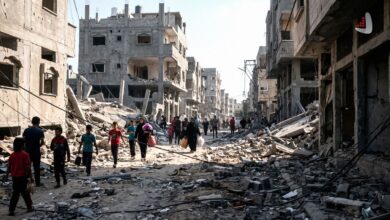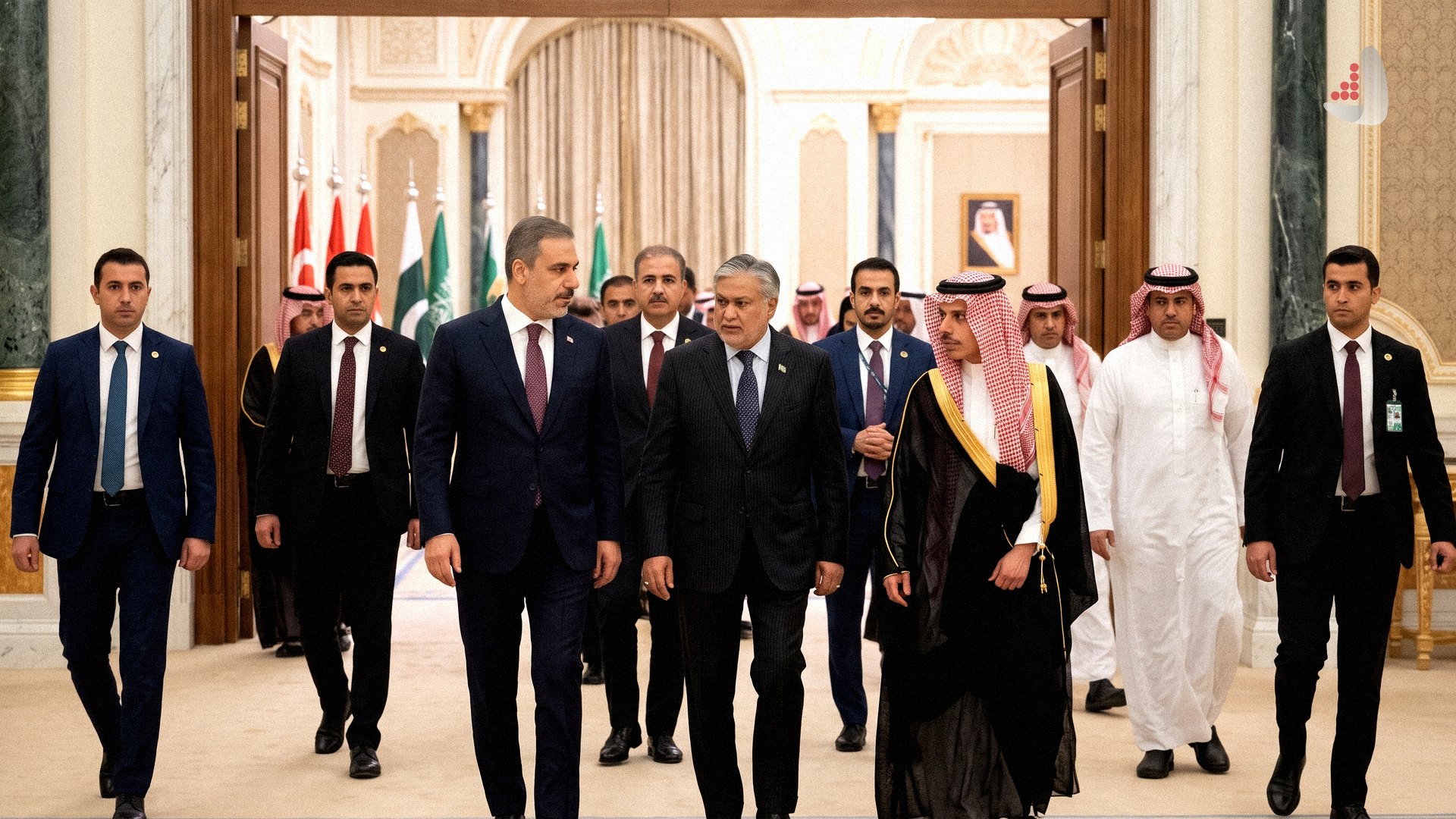
To counter the fallout of the Iran war and reduce reliance on Washington, Persian Gulf Arab states are building a new defense network with Asian and European powers.
According to Diplomacy Atlas, a report titled "Persian Gulf Arabs’ Security Pivot Toward Middle Powers Amid Growing Doubts About the US" by Taylor Luck has been published in The Christian Science Monitor. The report examines how Persian Gulf Arab states' frustration with the American security umbrella during the war with Iran has pushed them toward defense pacts and military technology transfers with middle powers across the Middle East, Asia, and Europe. Below is a summary of the piece.
The land and skies over the Persian Gulf have become an internationalized arena: British and French warplanes patrol overhead, Pakistani, Turkish, and Italian troops are deployed on the ground, and Ukrainian interceptor drones alongside South Korean air-defense systems stand at the ready. As the United States warns its regional allies of a potential escalation in the war against Iran following the midterm elections—a nightmare scenario for Persian Gulf Arab states—these countries are turning to a network of middle powers across the Middle East, Europe, and Asia for their security.
The Iran war, which began on February 28, has exposed the vulnerabilities of Persian Gulf states stemming from their reliance on expensive air defenses against cheap drones, the lack of domestic production for interceptor munitions, and dependence on a United States whose priorities have diverged from regional interests. A gradual US military drawdown, damage to American bases from Iranian missiles, and depleted interceptor stockpiles have called Washington's reliability into question. According to observers, Persian Gulf capitals are deeply frustrated that while the US sent an additional Patriot system to Israel, it failed to provide similar missile-defense enhancements to Arab allies.
In response to this vacuum, new defense alliances have been activated. Following Houthi attacks in October on Saudi airports, ports, and residential areas, British and French warplanes came to Riyadh's aid, and the "Mecca Pact"—signed in August between Saudi Arabia, Pakistan, and Turkey—was triggered. That same month, Turkey and Pakistan dispatched troops, advisers, and anti-drone systems to Saudi Arabia and Aden in Yemen, while Egypt's parliament approved sending troops to the kingdom. Additionally, South Korea sent emergency missile resupplies for the "Cheongung-II" batteries deployed in the UAE, and French, British, and Italian forces have been stationed in Bahrain and Qatar.
From the perspective of regional officials, middle powers are more credible security partners than China due to military compatibility, strategic trust, and the nature of their relations with Iran, while Russia is viewed by Riyadh and Abu Dhabi as an unsuitable option because of its entanglement in the Ukraine war, outdated hardware, and support for Iran. Furthermore, after spending hundreds of billions of dollars on US weaponry since 2000, the goal of Persian Gulf states is now to localize arms production by leveraging their own financial resources and technology transfers from middle powers.
Under the "Mecca Pact," the Turkish firm Baykar plans to establish drone manufacturing factories in Saudi Arabia. Qatar also signed a quadrilateral defense industry agreement with Indonesia, Turkey, and Pakistan, under which Turkey provides technical expertise in radar, electronic warfare, and drones, Pakistan and Indonesia supply manufacturing capacity, and Doha provides financial investment. Although experts believe these patchwork alliances—in which each state pursues its own separate path—cannot yet replace superior US intelligence and firepower, the next round of hostilities will serve as a serious test of the effectiveness of these new security partnerships./ Source