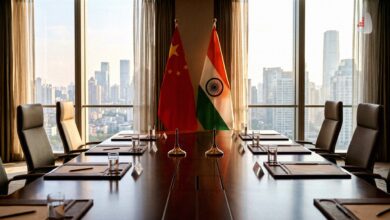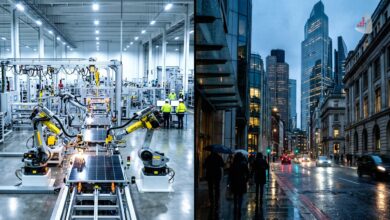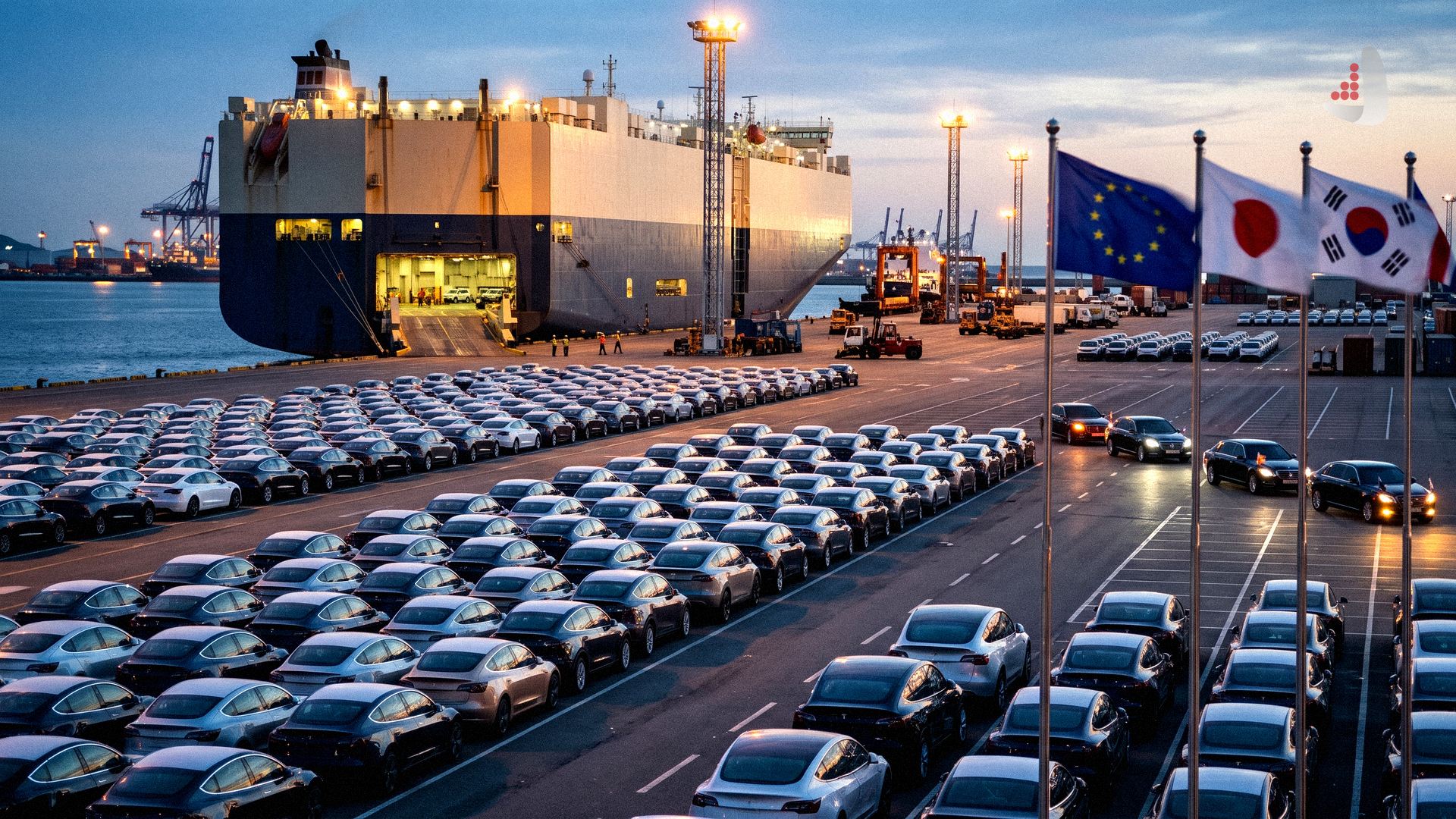
Friedrich Merz's effort to build a trade coalition targeting China met sharp resistance from Japan and South Korea over European protectionism.
According to Atlas Diplomacy, an opinion piece titled "German Chancellor Returns Empty-Handed from Asia After Tokyo and Seoul Pushback" has been published in Global Times. Reviewing German Chancellor Friedrich Merz's Asian tour, the piece argues that the European Union's proposed regulations aimed at curbing Chinese electric vehicles directly harm Japanese and South Korean automakers first, illustrating the self-defeating nature of Brussels' protectionist policies. Below is an abstract of the piece.
German Chancellor Friedrich Merz's Asian tour concluded in disappointment for Berlin. One of Merz's primary objectives was to build what he described as a "global alliance of like-minded partners to defend rules-based trade"—diplomatic phrasing for an exclusive bloc targeting China. However, public opinion and officials in both Japan and South Korea showed little enthusiasm for the initiative, instead voicing strong concern over the European Union's proposed electric vehicle (EV) regulations—a level of opposition Merz admitted had surprised him.
The backlash stems from the EU's proposed Industrial Accelerator Act (IAA), which imposes strict local-content requirements under the banner of supporting European green industries. In practice, these rules would exclude most established global automotive supply chains from the EU's subsidy framework. Although the proposal was designed to target Chinese EVs, protectionism in a globalized economy cannot be confined to a single country.
Japanese automakers have long held roughly 10 percent of the European auto market, with many models exported directly from Japan. South Korea, meanwhile, has a comprehensive free trade agreement with the EU that guarantees non-discriminatory market access. Should the new EU regulations take effect, Japanese and South Korean automakers would directly lose their price competitiveness. Consequently, the first casualties of Brussels' regulatory walls against Chinese supply chains are the very Asian partners Europe is attempting to court.
During their meetings with Merz in Tokyo and Seoul, leaders from both nations raised their objections to the proposed EU rules in blunt terms. Unable to offer concessions during the talks, the German chancellor could only promise to relay their feedback to Brussels for further discussion. This outcome underscores that the practical costs of implementing the EU's exclusionary policies far exceed initial expectations.
Bilateral trade between China and the EU reached 5.93 trillion yuan (approximately $860 billion) in 2025, alongside deep industrial ties linking Europe with Japan and South Korea. Attempting to divide the global economy into "insiders" and "outsiders" through exclusionary rules ultimately leaves Europe boxed in by its own narrow clique, demonstrating once again that trade protectionism remains unpopular and counterproductive regardless of its rhetoric./ Source