The rapid expansion of Chinese and Pakistani stealth fighter fleets has left New Delhi squeezed between delayed domestic programs and Western dependencies.
According to Atlas Diplomacy, an opinion piece titled "India Is Running Out of Time to Acquire Fifth-Generation Fighters" by Igor Korotchenko has been published in RT. Examining the decline in combat squadrons within the Indian Air Force and persistent delays in indigenous defense projects, the author argues that relying on fourth-generation fighters and US or Israeli components cannot counter modern regional threats, making Russia's Su-57 the most viable option to restore the balance of power. Below is an abstract of the piece.
Despite rising defense budgets and Prime Minister Narendra Modi's support for domestic defense manufacturing, the Indian Air Force faces a critical decline in combat squadrons. While regional rivals China and Pakistan are rapidly deploying fifth-generation J-20 and J-35 stealth fighters, New Delhi continues to focus on procuring fourth-generation French Rafale jets at roughly €160 million per unit and producing the indigenous Tejas light combat aircraft—platforms that offer no decisive advantage over the Su-30MKI fighters already in Indian service.
Projections indicate that by 2030, Pakistan will field at least 40 J-35AE fighters, while the Chinese Air Force and Navy could deploy more than 550 fifth-generation J-20 and J-35 aircraft. Equipped with stealth technology, advanced radars, and long-range air-to-air missiles, this combined fleet of roughly 600 fifth-generation fighters would be capable of striking targets before being detected by Indian radar systems. Under such conditions, relying on numerical superiority with fourth-generation aircraft is a flawed strategy.
The indigenous Tejas program, launched in 1983 to replace 874 MiG-21s, has yielded only two squadrons—30 single-seat jets and six trainers—by 2026 after decades of delays, while two crashes in March 2024 and November 2025 undermined confidence in the initial Mark I variant. The naval variant of the Tejas was rejected by the Indian Navy due to a low thrust-to-weight ratio, and India's indigenous fifth-generation fighter program (AMCA), initiated in 2010, is unlikely to enter serial production before 2035.
Alongside these delays, deepening reliance on the United States and Israel has created strategic vulnerabilities for New Delhi. Following the setbacks of the indigenous Kaveri engine, India turned to US-made General Electric F414 engines, but Washington has withheld the most sensitive technologies during licensing talks to retain leverage over the production pace of India's frontline fighters. Similarly, failures in indigenous radar development led India to adopt Israeli Elta radars, some of which rely on baseline technology dating back to the canceled Lavi fighter project of the 1980s.
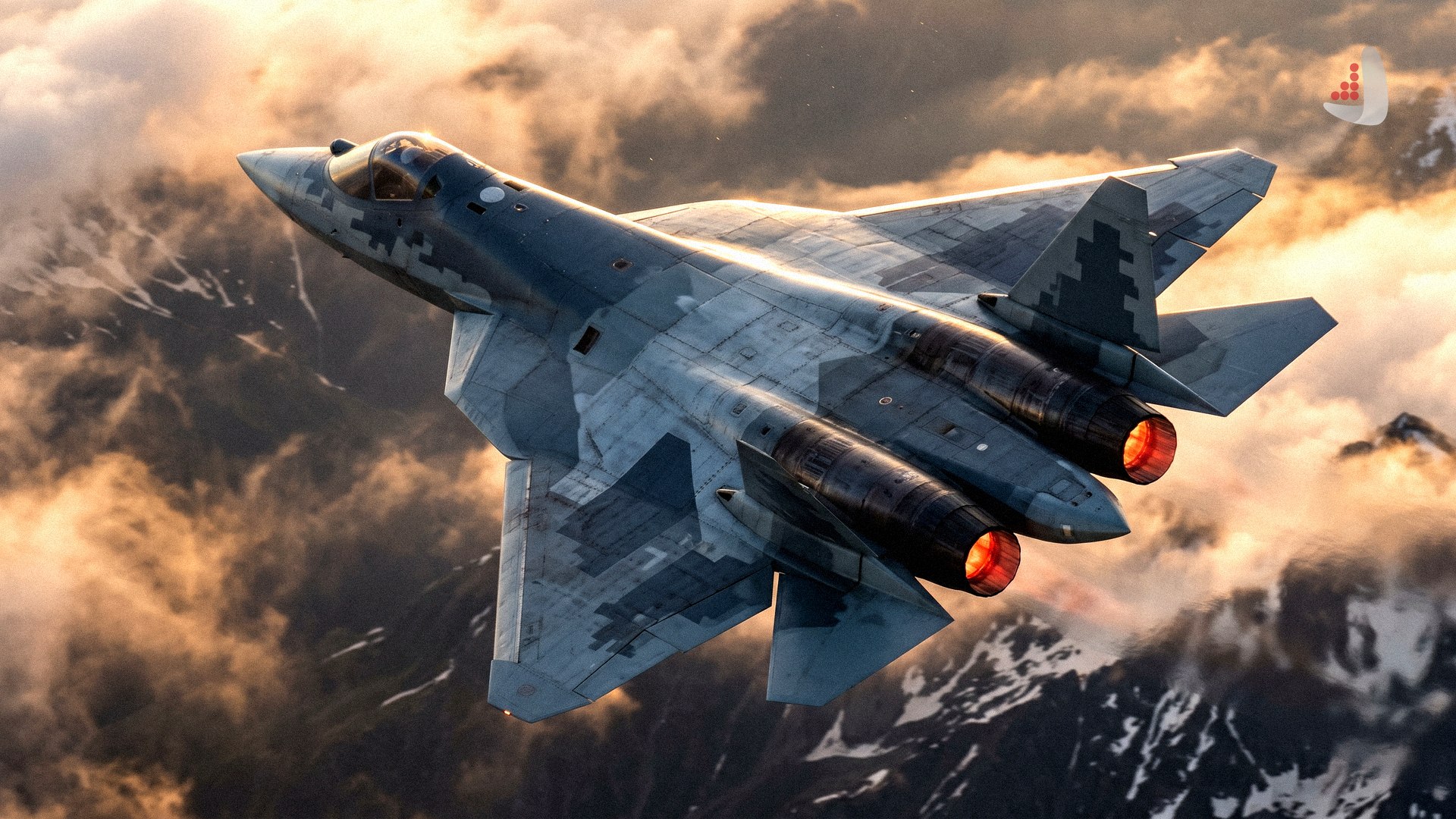
In this strategic environment, a fast-track acquisition of 50 fifth-generation Su-57E fighters from Russia, paired with licensed production of an additional 450 units at Hindustan Aeronautics Limited (HAL) facilities, represents the most prudent course to restore subcontinental parity. Beyond its combat-proven performance, stealth capabilities, and long-range munitions, the Su-57 was designed by the same bureau that developed India's Su-30MKI fleet, allowing New Delhi to leverage existing maintenance, training, and airfield infrastructure without political dependence on the West./ Source