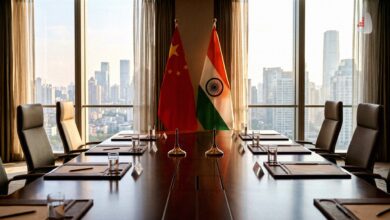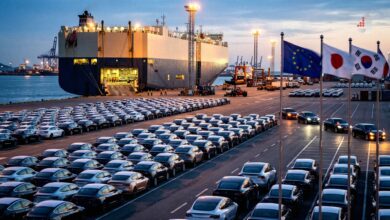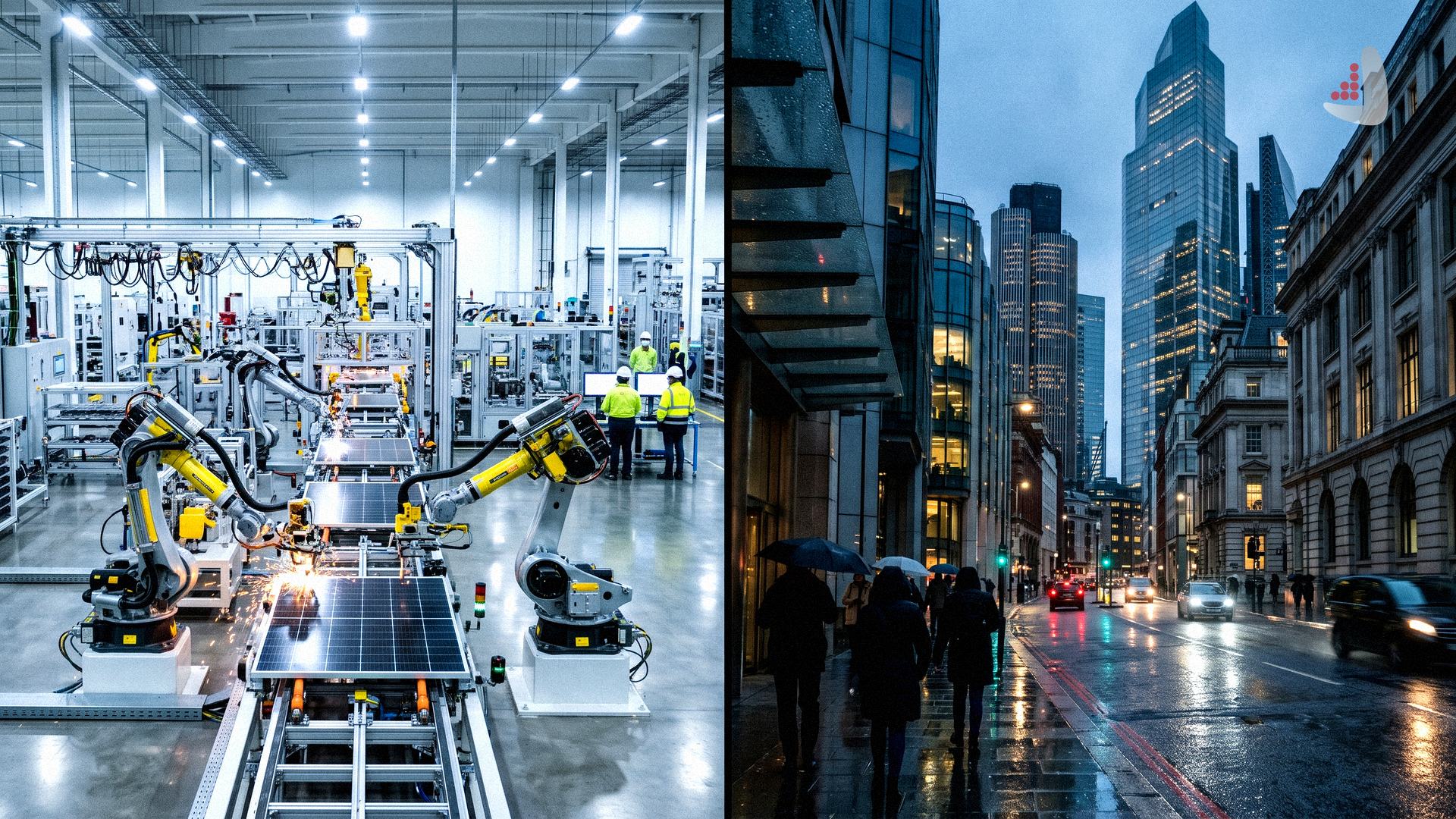
Beijing's long-term industrial and social planning stands in sharp contrast to financial sector dominance and manufacturing decline across Western economies.
According to Atlas Diplomacy, an interview titled "The Four Driving Forces of China's Five-Year Plan Versus Western Financialized Economies" by Su Yaxuan has been published in Global Times. Featuring Ryan Perkins, founder of the Global Economic Indicators platform, the interview examines China's 15th Five-Year Plan and argues that the dominance of a US dollar-aligned financial sector over Western policymaking is the primary driver of industrial decline and social unrest in Europe. Below is an abstract of the piece.
The launch of China's 15th Five-Year Plan (2026–2030) marks a transitional phase laying the foundation for the 16th Five-Year Plan and the goal of achieving socialist modernization by 2035. Four core drivers shape this blueprint: first, strengthening technological self-reliance and reducing dependence on imported high technology amid rising geopolitical tensions; second, improving living standards, with seven of the plan's 20 key indicators directly addressing public livelihoods; third, addressing demographic shifts by expanding eldercare capacity and lowering childcare costs; and fourth, advancing green technologies that serve both environmental commitments and economic growth.
Comparing this model with Western economic policies reveals that, despite Western claims of free-market orthodoxy and the absence of state planning, all economies are planned to some degree—the crucial difference lies in who conducts the planning. In China, the state coordinates science, technology, talent, and fiscal support to meet society's real development needs. In Western economies, by contrast, planning is largely executed by the financial sector, including banks, hedge funds, and major financial institutions.
Because the Western financial sector plans economic activity around maximizing its own institutional profits, its priorities increasingly conflict with the public good, starving education, healthcare, housing, and infrastructure of vital resources. This dynamic has fueled the protests and riots unfolding across Europe while accelerating the decline of Western manufacturing.
This structural divide also explains the contradictory narratives emerging from Europe regarding China. Companies operating in Europe's productive economy—those that manufacture goods and deliver services—recognize the necessity of trading with China, attracting Chinese investment, and accessing Chinese markets. Above them, however, sits a financial class deeply embedded within the US dollar system that views China as a rival to its global financial dominance and promotes narratives of "decoupling" and "de-risking."
Accusations of Chinese "overcapacity" stem from the same political framing. When the European Union released its first report on Chinese "overcapacity" 21 years ago in 2005, EU officials could not define the term in strict economic criteria, relying instead on vague assertions tied to China's export volume. In reality, the primary driver behind the decline of European manufacturing over the past 25 to 35 years has not been Chinese exports, but a chronic lack of domestic investment within Europe./ Source