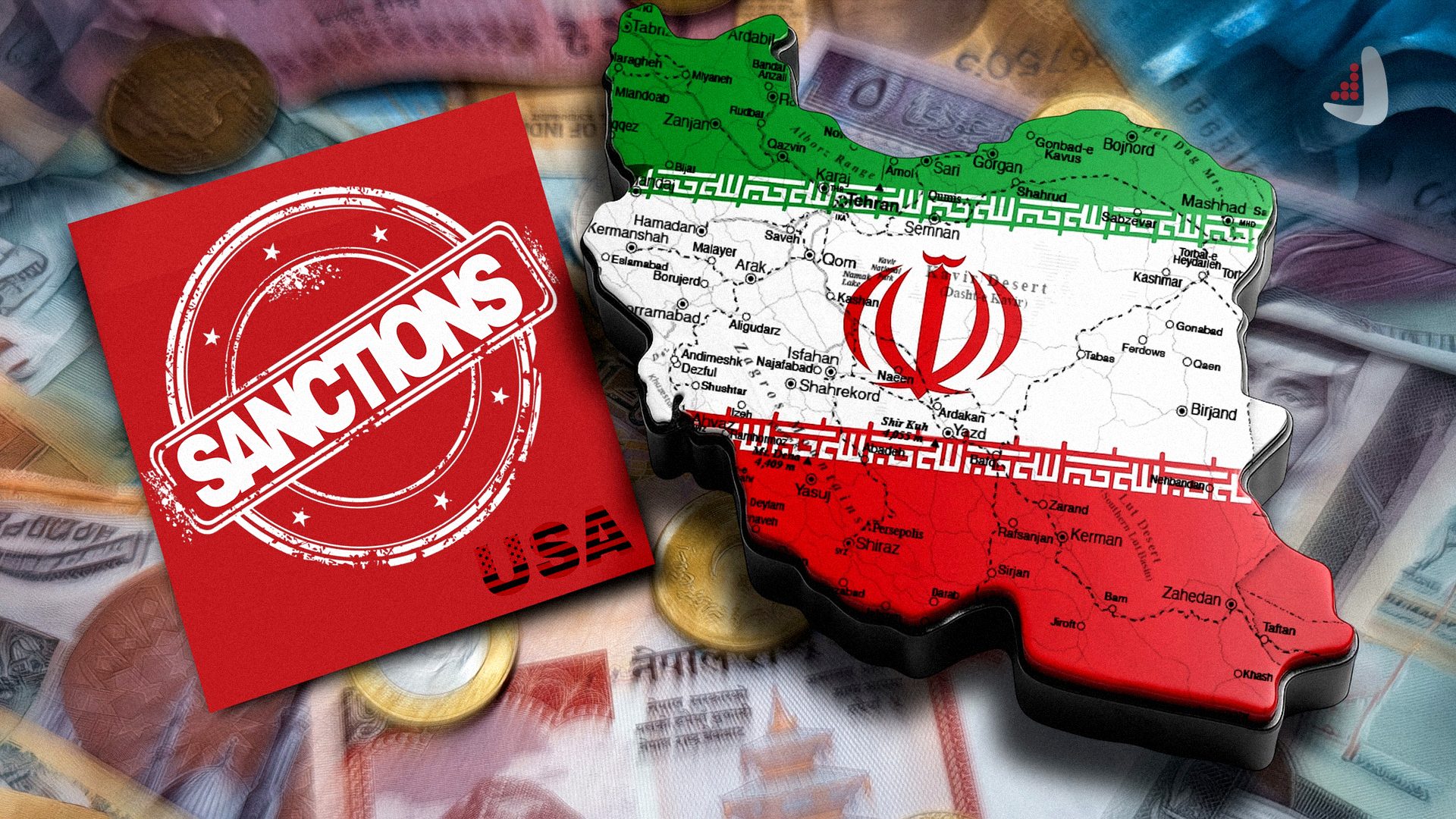
Following its military failure, the United States is intensifying economic pressure on Iran.
According to Atlas Diplomacy, the commentary “Return to Sanctions: Making Up for Military Failure Through Economic Pressure,” written by Shahab Shahsavari Alavijeh, was published by the Islamic Republic News Agency (IRNA). Focusing on Washington’s shift from direct military confrontation toward intensified financial and sanctions pressure, the piece argues that the domestic costs of war, the practical limitations of an economic blockade, and Iran’s capacity to adapt to sanctions cast serious doubt on the effectiveness of this strategy. A summary of the article follows.
After six months of military confrontation with Iran, and amid a war that has failed to deliver Washington’s stated political objectives, the U.S. administration is shifting the center of gravity of its pressure campaign from the military arena to economic instruments. This change in approach comes as the domestic costs of the war are mounting, fuel prices are rising, inflation is increasing, and economic growth is slowing—factors that, on the eve of the midterm elections, have intensified political pressure on the White House. Under these circumstances, reducing the costs of direct confrontation and turning to sanctions as a less costly option have become part of Washington’s new calculations.
The centerpiece of the new plan is to tighten restrictions on Iran’s oil revenues and the channels through which foreign currency is transferred into the country. By combining financial pressure, restrictions on transportation and trade links, and threats of secondary sanctions, Washington is seeking to make Tehran’s access to foreign markets more difficult. One option is to pressure neighboring countries to restrict Iran’s overland corridors, preventing alternative trade routes from offsetting the effects of maritime restrictions. Iran’s extensive borders, its large number of neighbors, and their mutual economic interdependence, however, create practical obstacles to imposing an effective and sustainable land blockade.
Another major component of this strategy concerns China. A significant share of Iran’s oil exports depends on Chinese refineries, and the United States is seeking to expand sanctions against independent refineries and, potentially, major Chinese financial institutions. Such a move could increase pressure on Iran’s revenues, but it would simultaneously carry the risk of escalating tensions between Washington and Beijing. At a time when the two countries are already contending with trade and tariff disputes, an expansion of secondary sanctions could also increase the economic cost of this policy for the United States itself.
A third target is the informal network of money transfers, exchange houses, front companies, and alternative financial instruments operating in the United Arab Emirates, Turkey, and Hong Kong. The United States is seeking to constrain the channels through which Iranian revenues are converted into usable currencies, while simultaneously putting pressure on cryptocurrency-related and financing networks. Nevertheless, several decades of sanctions have shown that Iran’s financial and commercial structures are capable of adapting and creating alternative channels, and completely shutting down these networks is both time-consuming and costly.
The fundamental issue is the ambiguity surrounding the ultimate political objective of these pressures. If the goal is to force Iran into surrender or compel an immediate change in its behavior, the record of the “maximum pressure” campaign demonstrates that sanctions alone provide no guarantee of such an outcome. At the same time, combining severe sanctions with a blockade and pressure on Iran’s trading partners could also affect energy markets, U.S. relations with China, and Washington’s ties with Iran’s neighboring countries. The return to economic pressure, therefore, is less a sign that the crisis is being resolved than an indication of a U.S. effort to reduce the costs of direct confrontation and find new sources of leverage in a conflict that still lacks a clear political pathway toward its conclusion./ Source