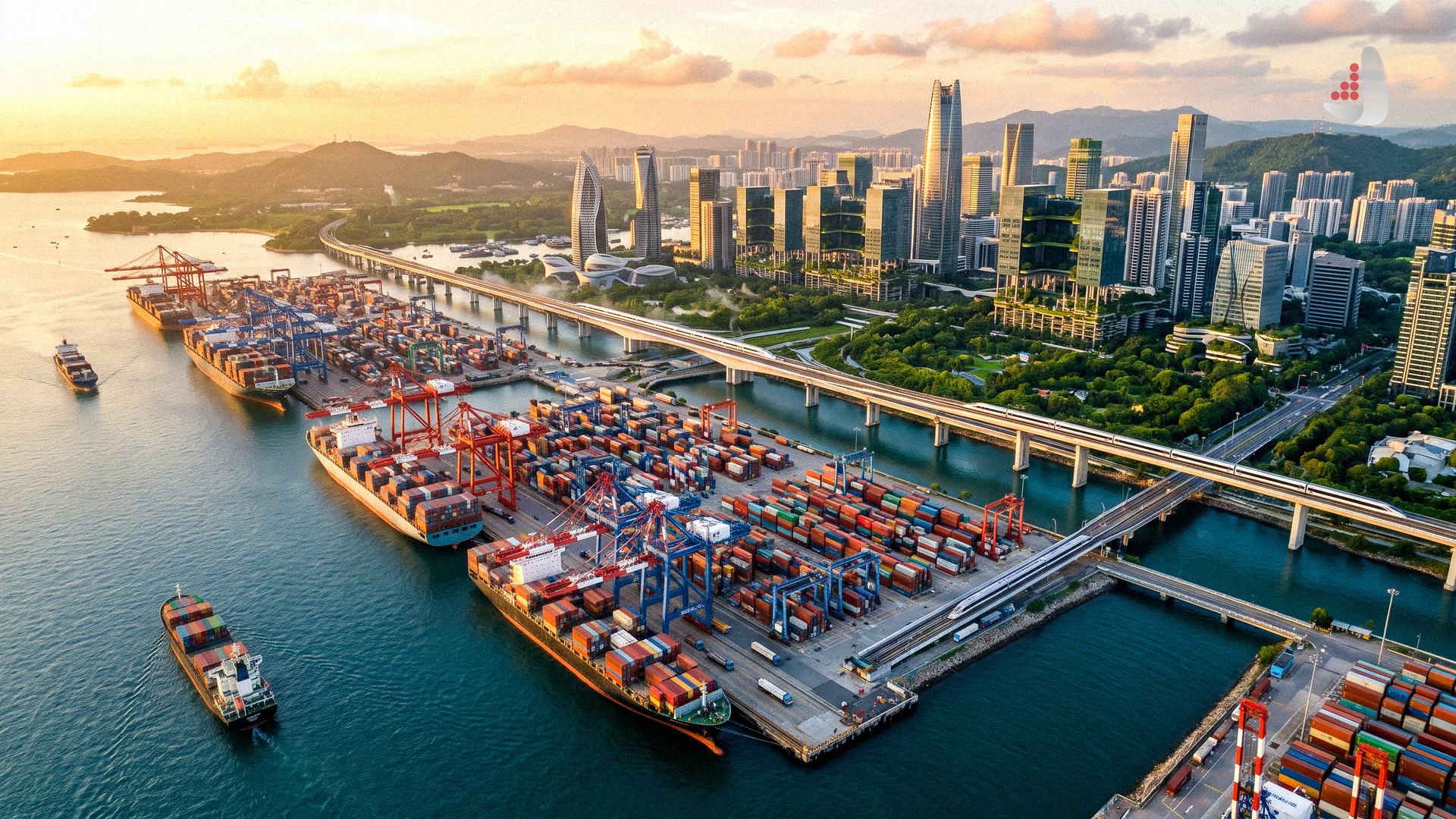
Aligning China’s 15th Five-Year Plan with the ASEAN Community Vision 2045 steers bilateral cooperation toward supply chain integration, the digital economy, and the green transition.
According to Atlas of Diplomacy, a report titled “Solidifying China-ASEAN Mutual Trust Along the Path of Shared Global South Development” was published in Global Times. This report reflects the key themes of the “Global South Dialogue: China-Indonesia Roundtable Forum” in Jakarta, where experts and executives from both sides emphasized deepening infrastructural, technological, and industrial localization ties between Beijing and Southeast Asian nations. Below is a summary of the piece.
The “Global South Dialogue: China-Indonesia Roundtable Forum” was recently held in Jakarta with over 150 guests from various sectors of both countries to explore ways of strengthening regional cooperation between China and the Association of Southeast Asian Nations (ASEAN). Shobichatul Aminah, head of the Center for Strategic and Global Studies at Universitas Indonesia, noted at the forum that the ASEAN Community Vision 2045 and China’s 15th Five-Year Plan (2026–2030) can reinforce each other across four areas: customs facilitation and digital trade rules, joint innovation in artificial intelligence and data security, clean energy investment, and human capital training.
Ren Yuanzhe, a professor at China Foreign Affairs University, pointed to the risks posed by intensifying conflicts in the Middle East to ASEAN’s food and energy security, emphasizing that cooperation between Beijing and the bloc has entered a new phase of industrial coordination. Due to Southeast Asia’s geographic location and rich resources, Chinese companies in the region have moved away from isolated operations to establish a complete industrial ecosystem and an intertwined supply chain.
Regarding people-to-people and economic ties, Sandiaga Salahuddin Uno, Indonesia’s former Minister of Tourism and Creative Economy, announced plans to send quarterly delegations of young Indonesian entrepreneurs to China to leverage bilateral connectivity for sustainable tourism projects. Henny Saptatia Drajati Nugrahani, head of the Department of Global Strategic and Area Studies at Universitas Indonesia, also identified expanding academic exchanges and direct contact between researchers as essential for building lasting mutual understanding.
Meanwhile, Anggawira, chairman of the Indonesian Energy, Mineral, and Coal Suppliers Association, assessed the strong presence of Chinese technology, energy, and automotive firms in the Indonesian market and the ASEAN Plus Three framework (China, Japan, and South Korea) as a major driver of innovation transfer.
Hang Yajuan, general manager of China National Chemical Engineering Group in Indonesia, stated that cumulative two-way investment and the turnover of construction projects contracted by Chinese enterprises in ASEAN have exceeded $500 billion. Nevertheless, regional experience shows that merely transferring capital and technology is insufficient; the lasting success of Chinese companies depends on respecting cultural diversity, training local workforces, developing domestic supply chains, and integrating into host communities./ Source