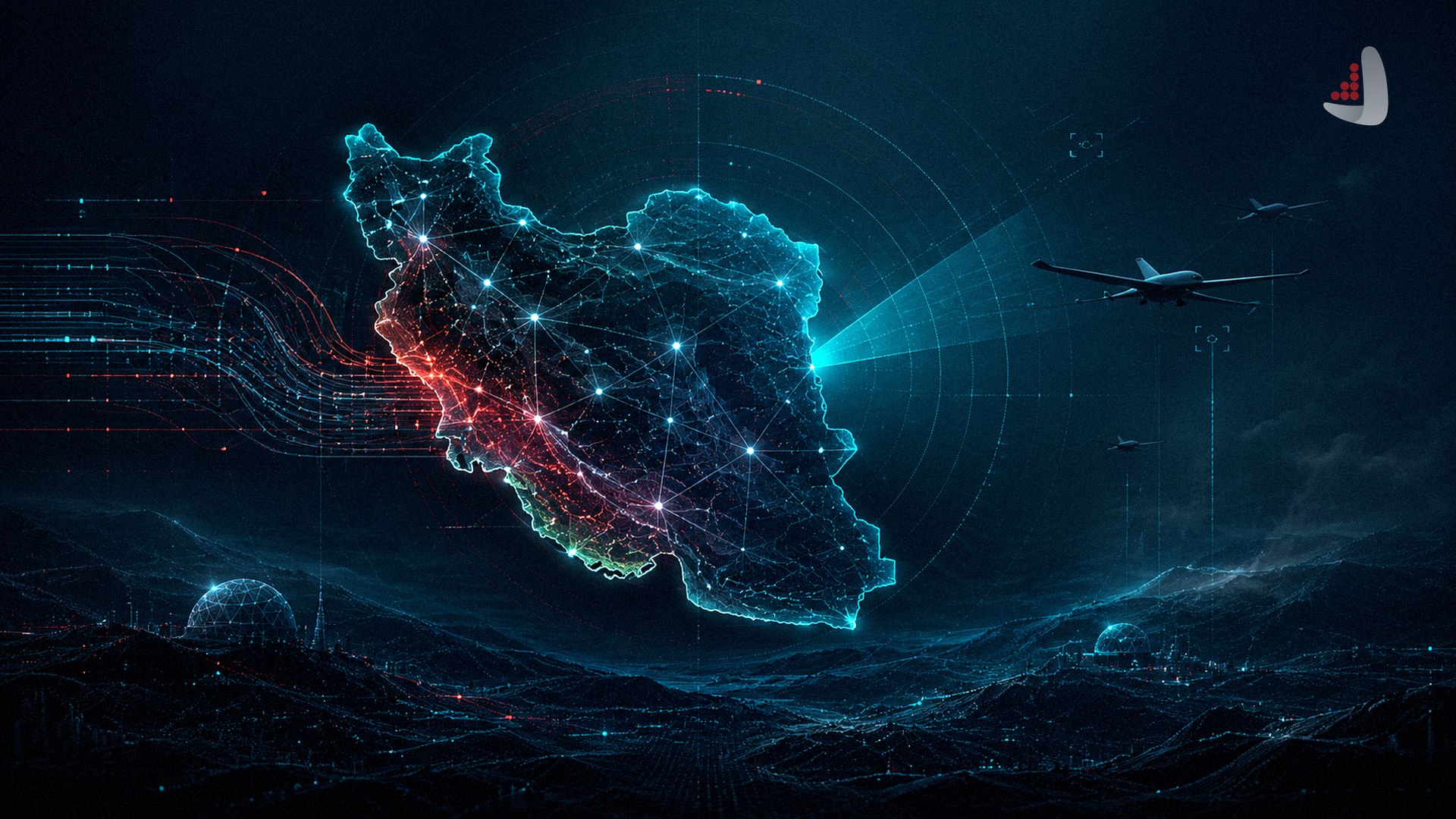
The transformation of the battlefield and the growing role of AI have underscored the need for Iran to rethink the relationship among intelligence, operational autonomy, and deterrence.
The 2026 war against Iran, which continued into the summer and in which the use of AI became increasingly prominent in intelligence-data processing and targeting, demonstrated that warfare is moving ever further away from classical confrontation between armies and into the realm of gray-zone warfare. For Iran, the challenge is no longer simply one of countering missiles or tanks; it is also one of confronting “intelligence dominance” capable of placing human assets and critical infrastructure at risk. At the same time, joint U.S.-Israeli attacks on Iran have intensified the pressures arising from the country’s strategic isolation. Under such conditions, the development of autonomous weapons could form part of an active deterrence posture—one capable of strengthening Iran’s ability to neutralize deception operations, raise the costs of hostile action, and push the other side toward genuine diplomacy.
Intelligence Dominance and the Need for Autonomy
The pattern of targeted assassinations of key Iranian figures points to a shift in the instruments of threat. The combination of human intelligence (HUMINT) and signals intelligence (SIGINT) with advanced identification algorithms has expanded the capacity to analyze individuals’ “digital footprints” and behavioral patterns. The use of AI to process vast volumes of surveillance data has likewise carried this penetration beyond the cyber domain, turning it into a physical and nuclear threat. In such an environment, data becomes a tool for precisely identifying security vulnerabilities and planning operations before they are carried out—and, as a result, a form of “weapon.”
In response to threats of this kind, Iran needs to move beyond systems that remain exclusively under human control and toward “autonomous weapon systems” (LAWS). Developing such systems is no longer merely a means of improving combat capability; it is part of adapting to fast-moving, complex, data-driven battlefields and a strategic necessity for preserving defensive capacity. That imperative begins with the limitations of human decision-making and extends to operational continuity, force protection, and increasing the costs of hostile action.
On high-speed battlefields, human beings cannot process enormous volumes of data in fractions of a second. AI-based systems can accelerate the decision-making cycle, or OODA Loop, analyze multiple streams of data more rapidly, and assist in identifying targets. If properly designed and supervised, this capacity can reduce some of the cognitive burden placed on human personnel, as well as certain errors associated with high-stress conditions.
The need for operational independence becomes even more important in contested environments, because one of the greatest challenges of future warfare will be electronic warfare and the disruption of communications between units and command centers. Autonomous systems can, in “anti-access” environments and under conditions in which communications are disrupted or severed, continue part of a predetermined mission without live human direction when satellite or radio links are unavailable. Such operational autonomy can help prevent a complete paralysis of defensive capabilities when communications networks are disrupted and preserve mission continuity.
Alongside operational continuity, the use of autonomous systems in high-risk missions and areas under enemy control can make it possible to carry out certain sensitive operations without directly exposing human personnel to danger. Reducing the human presence in hazardous environments, in addition to protecting lives, can strengthen the country’s defensive resilience both operationally and psychologically.
The same logic extends to deterrence. Against militaries with technological superiority and enormous budgets, lower-cost, intelligent, and scalable autonomous weapons can help offset part of the existing imbalance. The ability to deploy such systems at scale would increase the cost and complexity of an attack on Iran and could influence the other side’s deterrence calculations.
From Data-Driven Defense to Smart Deterrence
The transition toward autonomous weapons must proceed alongside a shift toward a “data-driven defense doctrine.” AI should not be confined to weapons systems; it can also be employed within counterintelligence to identify anomalous patterns and potential threats, track infiltration attempts, and strengthen early warning against assassination and espionage operations. The objective should be to move from “responding to damage” toward identifying and neutralizing threats at their source before they can develop into successful operations.
Ultimately, the purpose of this technological transition is to achieve “smart deterrence.” Deterrence in the twenty-first century is not simply about possessing the capacity for destruction; it also involves the ability to create uncertainty in an adversary’s calculations. By demonstrating its ability to employ autonomous weapons, AI, and data-driven defense, Iran must convey the message that attempts at infiltration or assassination will be met with a rapid, precise, and intelligent response—one whose costs exceed the potential gains of hostile action.
National security in the new era depends more than ever on mastery of information and operational autonomy. The indigenous development of autonomous weapons and intelligent systems is one of the most essential means of reducing vulnerability to assassinations, cyber infiltration, and disruptions to command networks. By relying on such a doctrine, Iran can move away from a purely reactive model and toward becoming a more intelligent and proactive power—one that strengthens its security through data-processing capacity, faster decision-making, and greater operational precision.